

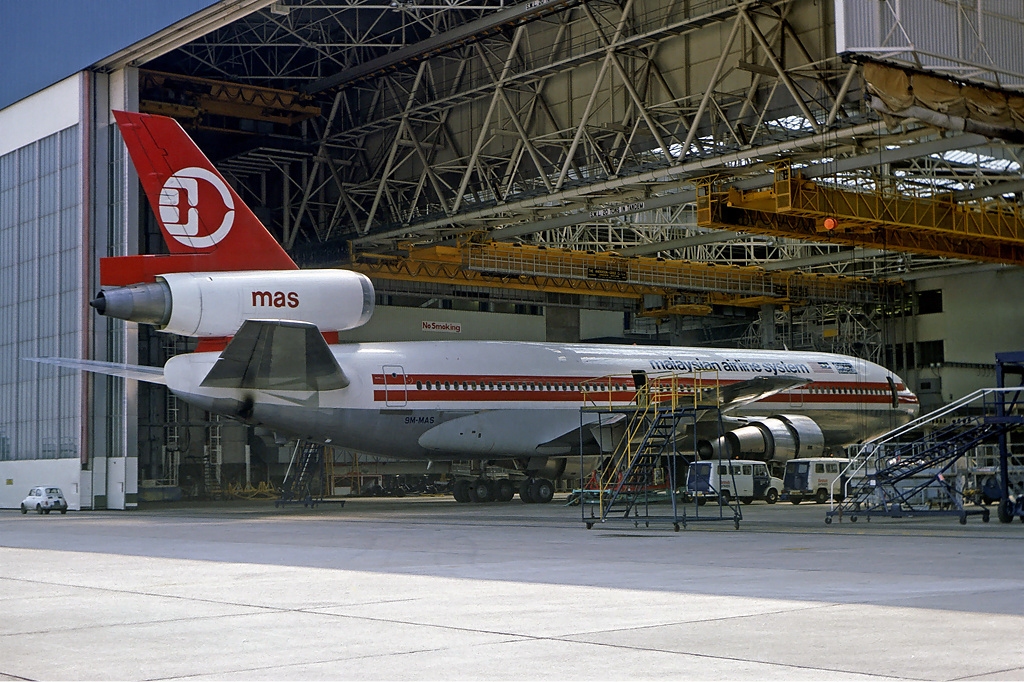
The MAS-AEU Strike of 1978–79
The five months between December 1978 and April 1979 was a watershed moment for the class struggle in Malaysia. A ferocious historic battle erupted between thousands of workers organized under the Airlines Employees’ Union (AEU) and, with full backing of the Barisan Nasional government, the bosses of the then-state-owned Malaysian Airlines System (MAS). This initially promising fight which ended in defeat, while not without its bitter legacies, offered extremely crucial lessons for the country’s working class and its organizations today.
Capitalism in crisis
The late 1970s was a period of immense crisis in world capitalism. Severe inflation and wage suppression followed the oil shocks of 1973 and 1979. While Malaysia, a major oil producer, benefited somewhat from the general surge in oil prices, the net effect was negative as the nation’s economy was export-dependent (rubber, tin), exposing it to price fluctuations no less than other postcolonial capitalist nation-states.
Meanwhile, the political organizations that had once claimed to represent labour had entered a prolonged decline. The Socialist Front, formed by the Labour Party and Parti Rakyat Malaysia, had emerged in the early 1960s as the principal left-wing opposition and enjoyed significant support among workers and the urban poor. Yet years of repression, arrests, internal crises, and strategic miscalculations culminated in its collapse by the end of the decade. The Labour Party disappeared from the political scene, while PRM, though later renamed PSRM (S for Sosialis), survived as a much smaller force with limited influence within the organized working class. The MCP, for its part, remained a shadow of the movement that had once stood at the head of the post-war labour upsurge in 1945-48, having long subordinated the independent political role of the working class to a nationalist strategy and subsequently retreated into guerrilla struggle.
Despite the lack of political organization, waves of relatively independent and militant industrial actions came crashing throughout the 1970s, led by workers not only in aviation but also in electrical manufacturing, transport, textile, and plantation among other sectors. And despite heavy state repression of labour laws and union rights in the wake of the May 13 incident in 1969, the following decade saw strikes and pickets break out most notably among women workers concentrated in “Free Trade Zones”, imperialist enclaves more bluntly. They received widespread support from progressive layers of society — not least among the youth who in late 1974, alongside poor farmers in Baling severely affected by the collapse of rubber price (down from 60 to 15 sen per kati), took to the streets by the tens of thousands. The state responded by deploying the FRU, arresting over 1,000 students (among them a young Anwar Ibrahim) under the routinely used ISA, and amending AUKU to further curb politics in campus.
Already well underway was the New Economic Policy, primarily a reaction toward the failure to furnish workers with dignified wages and humane conditions on the part of state capitalists such as the then-owners of MAS, tied by a trillion threads as they were to the government’s broader state-capital restructuring agenda. Launched in 1971 by a newly reopened Parliament after the Tun Razak-led MAGERAN dictatorship had served its purpose of suppressing opposition and centralizing state power under the Malay-nationalist leadership of UMNO, the NEP laid the basis for the consolidation of the BN regime and an ideological shift toward state-led redistribution along racial lines.
At the same time, the post-1970 restructuring of the Malaysian economy increasingly turned toward export-oriented industrialization, as import-substitution weakened and gave way to rapid integration into the world market. This strategic shift was anchored as we saw in the creation of FTZs (from which such crisis-ridden state governments today as Penang and Johor desperately seeks to increase rent), where labour-intensive manufacturing was developed under terms designed to attract transnational capital, via tax incentives, tariff exemptions, and generally capital-friendly labour regimes. This led to, on the one hand, wage suppression across sectors, deregulation of labour policies, heavy-handed crushing of labour organizations, and more divisive state policies to mitigate working-class unity. On the other hand it threw “big government” into a crisis of legitimacy, consequently setting the stage for the neoliberal era in which we live and breathe today.
The “strike”
It was under these explosive economic and social conditions when, in November 1978, wage negotiations broke down between MAS management and the AEU (Peninsular Malaysia). Representing thousands of MAS workers across major sections of the airline, the AEU’s demand for better allowances and working conditions too had fallen on deaf ears. Then-DAP chief Lim Kit Siang, proposing “not to discuss increases” but merely “to deal with the manner and style of the Labour Ministry’s intervention in the dispute”, nonetheless noted from the Opposition bench that “the basic salary for MAS’s lowest paid worker is only $154, which is much lower than the $195 bottom scale for government workers”. According to the government’s account presented to Parliament in March 1979, the AEU initially demanded an 80% wage increase and a 314% increase in allowances, later reducing its wage demand to 40%.
For over a week from December 5 to 13, the AEU initiated a series of “work-to-rule” actions. These in general meant a de facto strike against hidden unpaid labour, performing in practice the bare minimal labour as stipulated in the employment contract. Chiefly in the case of MAS, it meant collective refusal of overtime and extra duties. Crucially, the industrial action crippled both passenger services and cargo operations, seeing as the AEU covered workers across the airline’s operations, ranging from ground crew, cabin crew, clerical workers, to technicians, maintenance personnel, and other operational staff.
It goes without saying such industrial actions were, and still are, deemed “illegal” under the capitalist law, let alone in a national transport industry whose workers held the power to clog up the arteries and veins of global capital. The consequent international flight delays and cancellations threatened not just the profit motive of state capitalists whose bottomlines were already thinning, but with respect to the international prestige that came attached to a national airline, also their reputation both at home among the masses and abroad among the investors.
As when the workers succeeded in pressuring the bosses to briefly resume talks at the turn of the year, on January 8 the Registrar of Trade Unions ordered the deregistration of 874 AEU leaders and members, particularly its most militant layers, as part of the state’s efforts to preempt the negotiations, from which the union was duly banned. Labour minister Richard Ho justified this as a way to rid the AEU of “mafia elements”, blaming the December strikes on “foreign agitators”.
In opposition, Lim Kit Siang wrote: “No fair-minded person could deny that the foreign and international union organizations got involved in point of time well after the MAS-AEU dispute had escalated into a full-scale confrontation, with the deregistration of 874 AEU members, the attempt to deregister the Union, the ban on negotiations, mass suspensions and dismissals and the detention of AEU officials and activities under the Internal Security Act.”
Work-to-rule among other forms of go-slow actions and workplace boycott promptly resumed. In all this no violent sabotage was reported; disruptions came only from absenteeism and slowdowns. This was a testament of the remarkable discipline and determination within the AEU’s rank and file, as well as the confidence of its leadership.
More remarkable still was the international solidarity most notably acted upon by partner unions connected through the International Transport Workers’ Federation. The ITF went so far as to initiate a global boycott of MAS aircraft in protest of the crackdown. The struggle increasingly took on an international dimension, bringing into the fight thousands of workers, a majority of whom were unionized. Australian and European workers for instance refused to service MAS flights; striking Australian airport workers left MAS planes unloaded in Melbourne and Sydney. For ten days in March, from March 9 to 18, a MAS DC-10 was stranded in Sydney as Australian trade unionists refused to service the aircraft. The Malaysian state, as a result, was mortified before the world.
The state strikes back
The government reacted about as viciously as one might expect. On February 14, Defence and Internal Security authorities executed full-blown raids. Troops were deployed to key sites such as Port Klang, whereas the police arrested, under the ISA, 22 union and ITF officials, including chief representative Donald Uren and assistant secretary Johann Hauf. All MAS flights were grounded for two days after these arrests. The government accused the unionists of “tampering with aircraft” as a pretext, though curiously no charges were ever filed. In Parliament, the BN majority condemned “foreign and international interference” in domestic labour affairs, met with rather cautious opposition as we saw in Lim’s polemic. Meanwhile no negotiations occurred while the union was banned; every collective bargaining channel was suspended.
The workers, on the other hand, stood isolated without effective leadership. Strike committees had largely disintegrated, and most strike funds had tanked. Mounting economic pressures forced many back to work. By February 20, when the dust settled, the balance of forces had shifted decisively in favor of management and the state, who rejoiced as MAS finally resumed international flights (domestic flights had been back online earlier, on February 17).
But the bosses did not stop at the workers’ leadership and organization. Immediately after the February arrests, MAS suspended and ultimately fired hundreds of workers who had participated in the boycott.
It was not until these defeating blows had been struck that concessions, however partial and modest, were won by the workers. To “resolve” the dispute, then-deputy PM Dr. Mahathir himself and Home Minister Tan Sri Ghazali Shaffie jointly held a press conference on April 15 announcing, though short of doing so in Sabah and Sarawak, a 17.9% across-the-board wage increase, which New Nation noted was “just over double the 8.8% offered last December”.
The brutal treatment under the ISA certainly took a toll on the arrested leaders. On April 17, 60 days after his release from detention, Donald Uren urged the ITF to end the boycott and resume talks with MAS. The Business Times reported that he “looked well” on television when he “said he regretted his role in escalating the industrial dispute between the now disbanded AEU and the government.” As for the AEU leaders who had by then remained under detention, as opposed to those conditionally released, Uren “said that all the 13 could be free if they wanted to, and that the ITF had nothing to do with their present state.” Then followed as overt a character twist as one could muster: “If you have the brains God gave us — as I have, otherwise I would not be free today — then you would have no problems.”
By late April the confrontation was brought to a formal close. All MAS employees suspended or dismissed during the dispute were eventually recalled by April 1979, and the pay raise was implemented.
However, the union as a workers’ institution was gone. Later that year, In the ashes of the far more independent, militant, and industry-wide AEU, rose the Malaysia Airlines System Employees Union (MASEU), till this day the inhouse union designed to keep all labour affairs under management-friendly control. What remained of the former AEU leadership who refused to bow down to the new structure had either to find other work or be ostracized.
Meanwhile opposition politicians decried the state’s repression as heavy-handed. A parliamentary amendment proposed by the DAP called for restoring the AEU’s rights and releasing all ISA detainees. Yet without an independent class program to rally workers from other key sectors to both the defense and advancement of the airline workers’ struggle, these demands remained moral aspirations and no more. For all its intents and purposes, the reformists neither scored nor for that matter made much of a political point. In fact in under a year came new legal restrictions on strikes and collective bargaining. More were to follow throughout the 1980s, setting the stage for a whole new range of attacks under the emerging neoliberal world order. Today, these among a long list of weapons old and new resting in the arsenal of the capitalist class are far more firmly trained on what is now a rapidly growing labour movement.
The political question
Trade unions, as Marx pointed out, are schools of class struggle. By collectively organizing against low wages, long hours, poor working conditions, layoffs, etc., the adversities and aspirations borne by workers as a class come increasingly into conflict with the realities of the capitalist system itself.
In times of crisis, capital’s barbaric drive to concentrate ever more profits in ever fewer hands reveals all the more starkly two sides of the same coin. Etched on its one side are the limits of trade unionism in and of itself, of cycles of “collective” bargaining from which concessions too often arrive, if at all, too little and too late. On the flip side lies the function of the state as an instrument of class rule, wielded through judges, MPs, ministers, cops, thought leaders.
But capitalism, fast losing legitimacy among the masses and not least the youth, can be patched up no more than it can prevent the question of politics from being posed before the proletariat. Every genuine, spontaneous reaction toward the various economic woes confronting the workers as a class in itself contains the seed of an united, conscious struggle for political power by the workers as a class for itself.
Industrial action is especially empowering to the class struggle. What otherwise gets drowned beneath the day-to-day grind breaks through the swells. During strikes and on picket lines, workers show their bosses as well as themselves and their coworkers who the real boss is. It reminds society at large that without labour, production and services cease pure and simple.
The great strike waves of the 1940s in Malaya and Singapore, confronted in the ruin of war with economic devastation and an emasculated British Empire, demonstrated this colossal power. In the years preceding national independence, hundreds of thousands of workers took part in industrial action across plantations, mines, docks, railways, and urban industries. Struggles prior to and during the war, from which the working class had gained invaluable experience in organization and mobilization, had injected immense confidence into the labour movement.
The most robust display of this came first in January 1946 when 200,000 workers in Singapore and Johor participated in what was the largest strike then, organized by the newly formed General Labour Union. Shortly later on October 20, 1947, some 70% of Malaya and Singapore’s workforce took part in the All-Malaya Hartal of 20 October 1947 which, under the leadership of the Pan-Malayan Federation of Trade Unions, went down in history as the biggest still and most politically significant general strike. Between 1946 and 1948, nearly 700,000 man-days were lost to industrial action, crippling the profit motive of the British regime.
By all means of repression — emergency regulations, arbitrary arrests, deportation and straight up murder of union leaders and communists, restrictions on organizing and labour laws — the colonial state systematically weakened the militant labour movement that had emerged after the war. Inheriting and codifying these were the according tasks of Parti Perikatan under the leadership of Tunku Abdul Rahman. The British crown, unpopular as it was, clearly favored the bourgeois nationalists over the anti-imperialist PUTERA–AMCJA coalition on the role as gatekeepers of its neocolonial interests.
The defeat of the pre-Merdeka generation did not eliminate trade unions, domesticated as their leaders were to become in the decades that followed. The labour movement that had survived the onslaught found itself increasingly confined within legal and institutional boundaries designed to curb its political agency. Although unions remained, their scope of action and capacity for independent political intervention were fast diminishing. The collective leadership of the rank and file was in the meantime being replaced with a bureaucracy set about drowning the struggle in endless cycles of collective bargaining, while discouraging militant action and separating economic demands from broader political questions.
Precisely from this historical context erupted the MAS dispute of 1978–79, arguably the last major demonstration of industrial power in the commanding heights since Merdeka. For nearly half a century has such extraordinary display of discipline and solidarity alluded the Malaysian working class. The subjective factor that contributed to this historical retreat, crucially, was more than just external repression. Just as many if not more lessons were found in the strategy pursued by the leadership of the left.
The subjective factor
Back then as Japan was facing imminent defeat in WWII, the MCP had come to possess an authority unmatched by any other political force in the country. Through the anti-Japanese resistance, its cadres had won enormous prestige among workers, peasants, and youth. The possibility existed, at least in embryo, for the labour movement to emerge from the war as an independent political force capable of challenging, more than colonialism, capitalism itself.
Yet this possibility was never consciously pursued. Bound as it was by the Stalinist theory of stages, the MCP subordinated the independent interests of the working class to a compromised pact with so-called “progressive” sections of the national bourgeoisie. To this end the working class, mobilized not as a contender for power in its own right, was reduced to an auxiliary force in the PUTERA–AMCJA coalition, tasked to “critically support” such fairweather allies as the tycoon Tan Cheng Lock.
The consequences would haunt the movement for decades. The tremendous industrial power displayed in the post-war strike waves found no corresponding political expression. No mass workers’ party emerged capable of uniting these struggles under a socialist programme, and in the case of MAS workers, also of generalizing their struggle beyond the airline industry itself. The post-colonial state, more than its British predecessor, understood this weakness and moved ruthlessly to exploit it.
This lesson acquires renewed significance today. Since the defeat of the MAS workers, the neoliberal transformation of Malaysian capitalism has advanced considerably. SOEs have been corporatized into GLCs. Outsourcing and subcontracting have fragmented workplaces. Union density has fallen to historic low. Labour law remains heavily weighted toward employers. What was once a state-owned MAS now operates through profit-driven structures overseen by entities such as Khazanah Nasional, while even the most basic workplace rights are increasingly subordinated to the imperatives of competition and shareholder value.
Yet the fundamental contradiction remains unchanged. Capital depends for its life upon labour. Every airport, bank, factory, warehouse, hospital, port, and logistics hub continue to function only because workers make them so. Of late struggles by workers in finance, electronics, healthcare, delivery, among other strategic sectors demonstrate that the power of the working class, beneath the surface of apparent passivity, remains enormous.
Still, formal parties of the left today, Parti Sosialis Malaysia most notably, offer no path toward the independent political organization of the working class. From the mounting economic and social discontent, particularly among the youth, still the party leaders are armed with no method with which to draw socialist conclusions. Instead they have their followers and supporters debating the fine print of what sets aside an electoral “pact” from a “coalition”, obscuring the more fundamental question of why a socialist party should enter an electoral arrangement with a liberal party at all — in this case the self-proclaimed “social-democratic” MUDA. Either way PSM leaders know full well, as do a growing number of members and supporters of the party, that MUDA not only does not interest itself with anti-capitalist ideas but actively promotes cross-class politics.
Whether an electoral pact or coalition, therefore, PSM cannot escape the pressure from its liberal “partner” to water down its class perspective and program which, after all these years of compromises, have been smothered to anything but. To this day the party shies away from demanding a minimum wage commensurate with the cost of living. It speaks of strengthening trade unions but does not extend that privilege to the millions of gig workers. It condemns racism but defends Article 153, leaving the codification of racism in the bourgeois constitution without a class-based alternative. In all matters of programme the leaders’ hands are tied by the terms and conditions of cross-class cooperation, thus unable to consistently advance demands that pit the independent interests of the working class against those of capital. So it is that the country’s most prominent socialist party increasingly limits itself to reformist activism, so as to make up for its inability to meet the growing radical layers among workers and youth.
In many ways does the backwardness of the subjective factor in the 1970s resemble that in the current period. Then as now, the working class ran into no shortage of grievances, only that of a political leadership capable of transforming economic discontent into a conscious struggle against capitalism. Today the objective conditions are, if anything, more ripe than ever. Stagnant wages, soaring living costs, precarious employment, deepening social inequality, and the growing inability of the existing political establishment and union bureaucracy to offer lasting solutions have created fertile ground for class struggle. Yet without an organization prepared to unite these experiences under a socialist programme, discontent remains fragmented and episodic.
The challenge before the labour movement, therefore, is not merely to rebuild trade unions, important though that task is. The challenge is to overcome the separation between economic and political struggle that has crippled the movement for generations. The central question remains what it was nearly half a century ago. It is not whether workers have reasons to fight, but whether there exists a political force capable of giving that fight a clear direction and purpose.
The socialist alternative must therefore be posed in concrete terms — the necessity of an independent mass workers’ party, rooted in workplaces and communities, capable of uniting scattered struggles under a coherent programme directed against capitalism, which however cannot be limited to abstract calls for socialism. It must advance transitional demands that emerge from workers’ immediate needs while demonstrating in practice that the interests of labour cannot be secured within the framework of capitalist ownership and control, effectively bridging the gap between present struggles and the broader question of political power.
To push this all-important question to the forefront of the class struggle by means of a transitional programme remains the fundamental task of all socialist parties, accomplishable only upon a revolutionary perspective. Clearly, that this perspective must be internationalist, the experience of 1978–79 alone was proof enough.
The courageous struggle waged by MAS workers against their exploiters and oppressors, and their ensuing defeat, is both a warning and a guide. History showed beyond doubt the immense power of organized labour on the one hand, and the tragic consequences on the other of confronting a capitalist state without an independent political alternative. 47 years later, that lesson remains as relevant and urgent as ever.