

Labour · Solidarity · Liberation
A history of workers’ struggle in Malaya
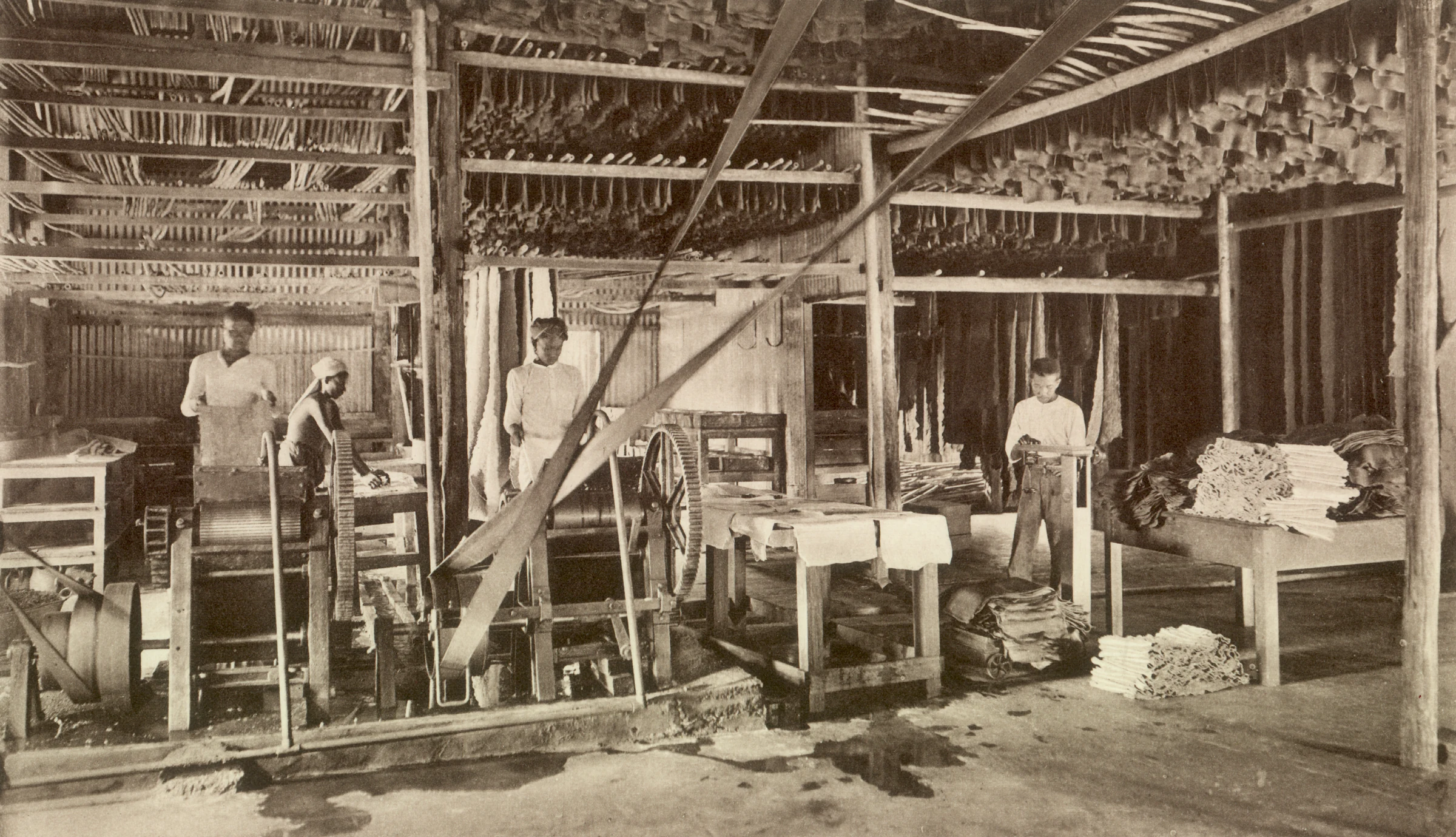
Malaya’s wealth was built by workers. From the estates, mines and docks to the Hartal of 1947, their struggles over wages, dignity and political power shaped the country’s future.
25 events and developments · 6 chapters
Follow the dates. Explore the archive photographs. Open each account to read the sources.
Select any photograph to view it in full.
1910–1930
The making of a working class
Recruitment, dependence and the colonial export economy.
Indian indenture ends; dependence continues
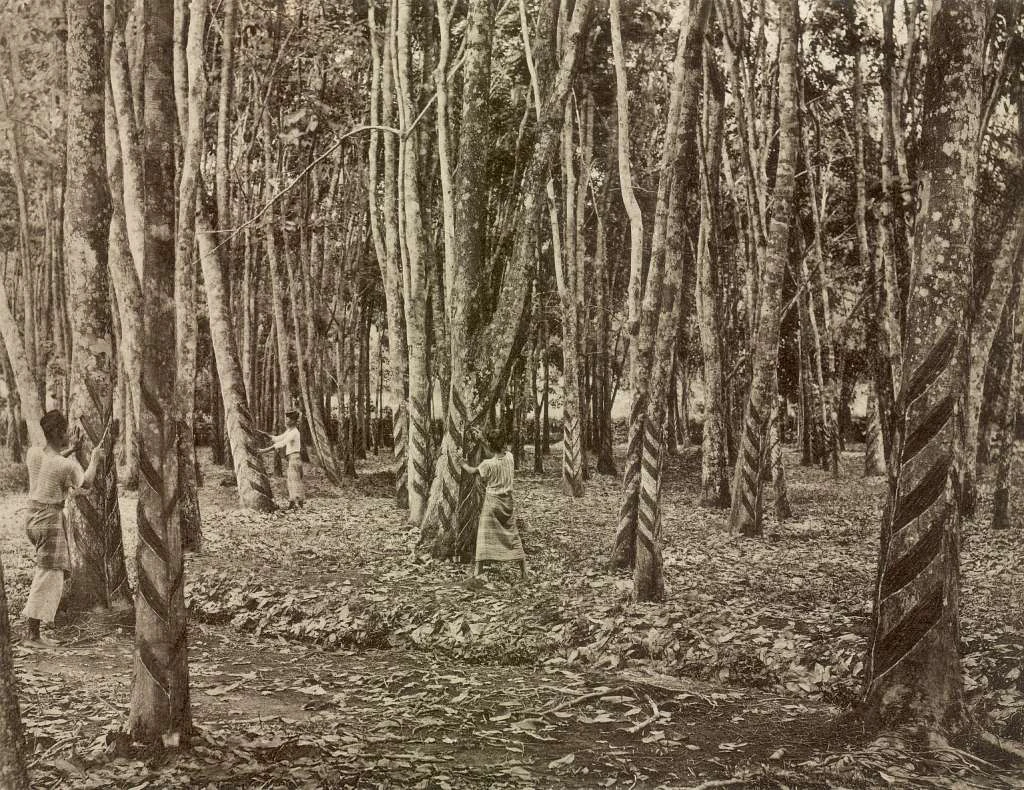
Recruitment of Indian indentured labour for Malaya ended in 1910. Kangany recruitment continued, connecting employment to networks of recruiters and estate supervision.
Read the account & sources
Ending one recruitment system did not end workers’ dependence on employers. Recruitment, housing and access to employment remained central questions of workers’ freedom.
Chinese contract labour: a separate turning point
Singapore’s Labour Contracts Ordinance curtailed Chinese indentured labour. Its date and jurisdiction differ from the ending of Indian indentured recruitment in 1910.
Read the account & sources
Workers’ experiences differed across ports, mines, estates and communities. A single abolition date cannot describe every labour system in colonial Malaya.

The crisis reaches rubber and tin
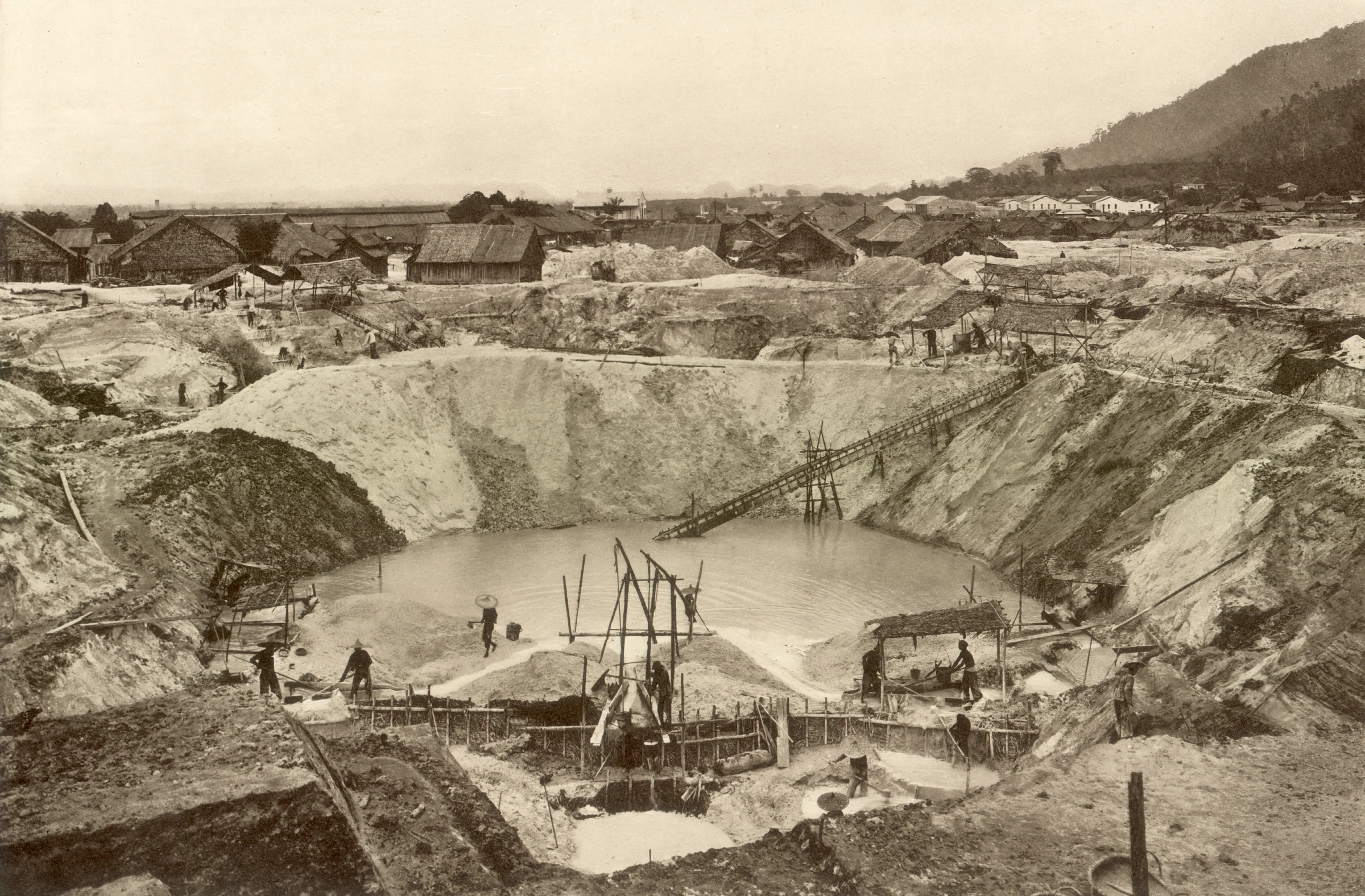
The Great Depression exposed Malaya’s dependence on export commodities. Falling demand and prices brought unemployment and insecurity to workers and their families.
Read the account & sources
Read the crisis from the workplace: who bore the cost when commodity markets collapsed? Workers’ living conditions belong alongside trade and production figures.
Communist organisation and labour politics
The Communist Party of Malaya was founded in 1930. It became an important force in labour organising and anti-colonial politics.
Read the account & sources
Workers’ organisations and a political party are distinct institutions. Their connections matter, but party affiliation alone does not explain every strike or worker’s motivation.

1936–1941
Workers confront colonial power
Wages, hours and the freedom to organise.
Batu Arang: wages, hours and protection
Coal workers demanded higher wages, an eight-hour day, an end to certain deductions and fines, and protection for their representatives.
Read the account & sources
Their demands also opposed banishment. The dispute joined everyday workplace conditions to the freedom to organise under colonial rule. Kaur reproduces the demands from a contemporary report.
Strikes spread; troops patrol the strike areas
Labour unrest spread across Selangor and Negeri Sembilan. Contemporary reporting described troops patrolling strike areas, estate workers returning to work, and police action at Klang.
Read the account & sources
Batu Arang belongs within this wider wave. Contemporary newspapers help establish the sequence, but their official and employer perspectives need critical reading.

Legal recognition arrives after workers have organised
Trade-union legislation passed in the Straits Settlements in 1940 and took effect in 1941. Legal registration was a new stage in a longer history of collective organisation.
Read the account & sources
Distinguish the Straits Settlements from the Malay states; legislation did not take effect everywhere on one date.
Klang estate workers challenge plantation power
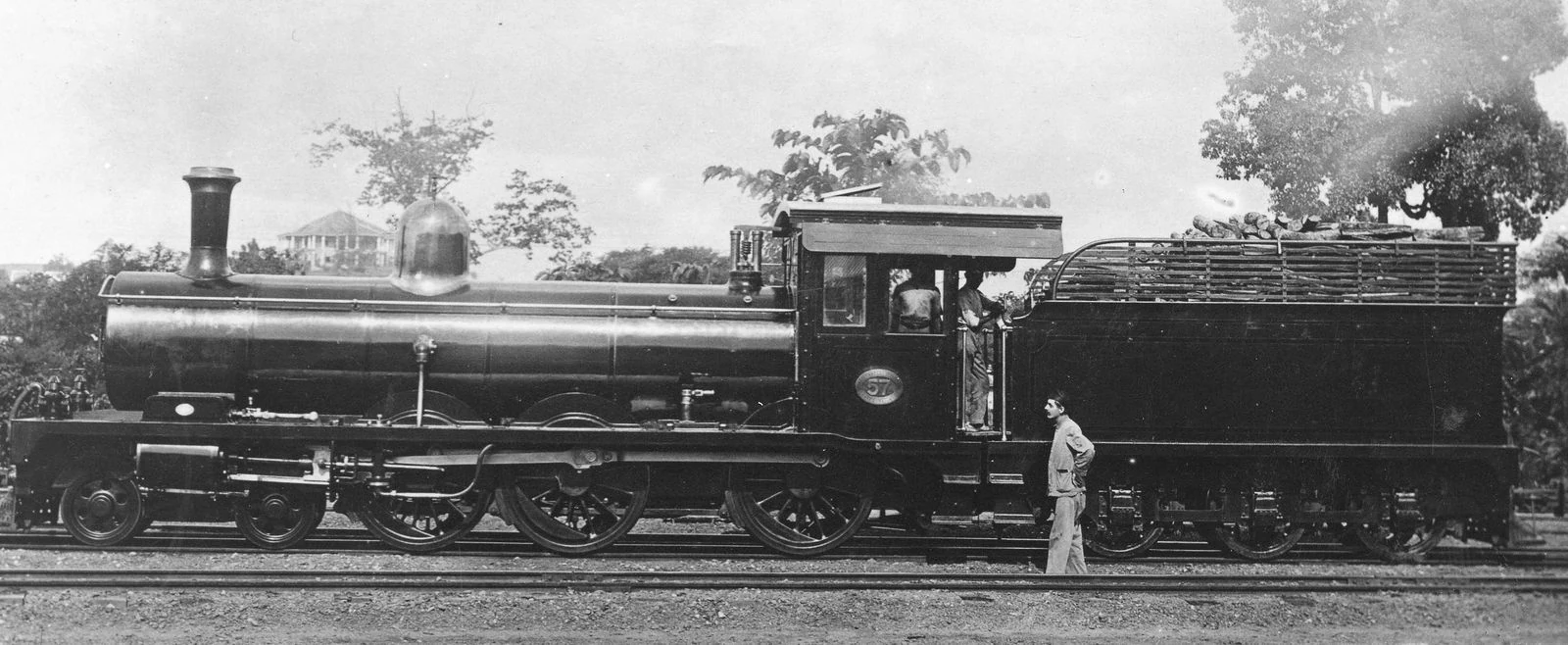
Indian estate workers in the Klang district struck in 1941. Wage struggles developed into a confrontation involving workers’ organisation, arrests and colonial force.
Read the account & sources
A return to work was reported at the end of March; renewed conflict followed in May. These were successive phases, rather than a single uninterrupted stoppage.

1942–1945
War, survival and reorganisation
Occupation and the unsettled return of British rule.
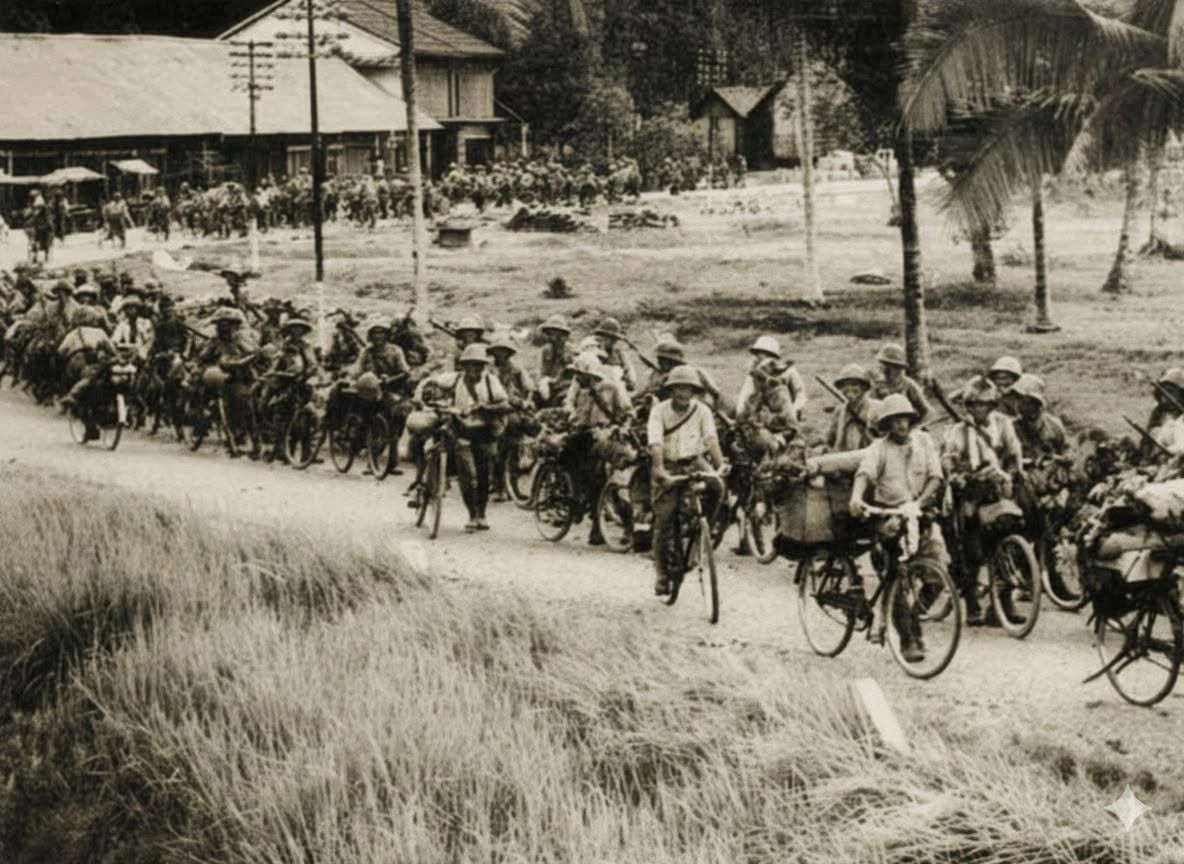
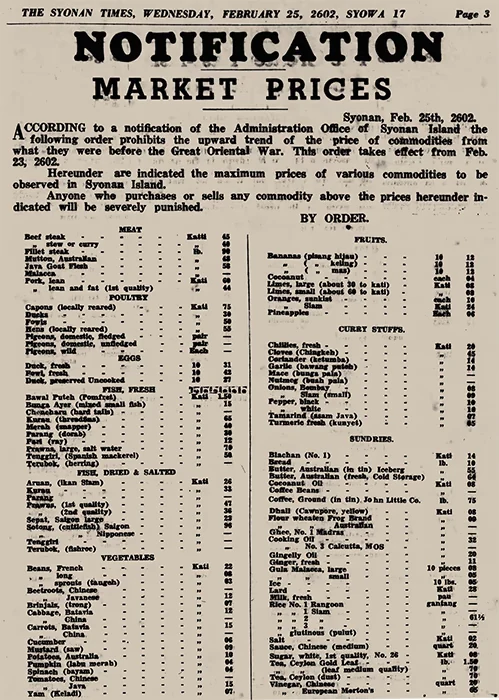
Occupation disrupts work and organisation
Japanese occupation transformed life across Malaya and Singapore. Labour mobilisation, coercion and wartime repression reshaped workers’ lives and the conditions for organising.
Read the account & sources
Anti-Japanese resistance created networks that later entered postwar politics. The MPAJA was a major resistance force; resistance was not confined to one organisation.

Dock workers act after Britain’s return
The return of British rule did not bring industrial peace. On 22 October, the Straits Times reported a stoppage at Singapore’s docks.
Read the account & sources
The report described idle wharves and gave the port authorities’ response. It is evidence of early postwar collective action; its account should not substitute for workers’ own testimony.


1946–1947
From the workplace to political action
Strikes and federations turn grievances into collective demands.
A general strike links Singapore and Johor
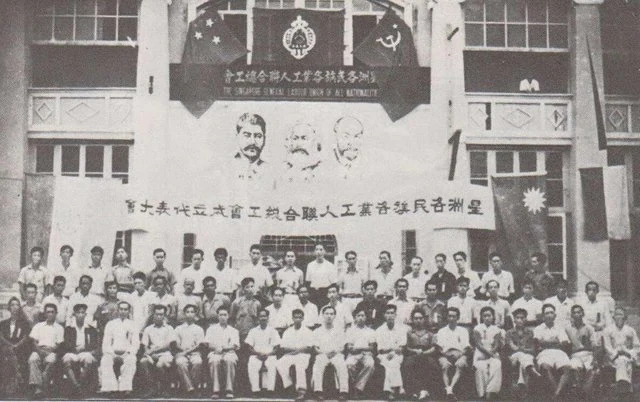
The General Labour Union called a general strike in Singapore and Johor against arrests of union members and former anti-Japanese fighters.
Read the account & sources
The stoppage connected industrial power with a political demand. The British parliamentary account acknowledged the arrests and economic hardship while attacking the organisers’ motives.
The constitutional question enters a new phase
The Malayan Union came into being, while Singapore was administered separately. Debates over citizenship and political representation became central to the postwar struggle.
Read the account & sources
Workers were confronting both employers and a colonial political order. This constitutional background helps explain why a labour timeline leads towards the Hartal.
Dockers defend dignity as well as wages
A Sunday Tribune report described a Singapore waterfront strike after an alleged military-police assault. Workers demanded treatment, compensation and protection against a recurrence.
Read the account & sources
The assault account was attributed to the strikers. Their demands show that safety and bodily dignity formed part of labour struggle alongside wages.
A federation of unions in Singapore
The Singapore General Labour Union was reconstituted as the Singapore Federation of Trade Unions. Organised labour developed through federations as well as workplace unions.
Read the account & sources
Keep the Singapore federation distinct from the pan-Malayan federation when reading names and membership figures.
A 44-hour week and the right to know the law
The PMFTU conference called for a 44-hour week and publication of the Labour Code in vernacular languages, according to the Singapore Free Press.
Read the account & sources
These concrete demands put time, wages and access to rights at the centre of organising. A PMFTU notice later that month documented the federation’s name and official communications.
1947 · A political alternative
The road to Hartal
A constitutional alternative meets the power of a mass stoppage.
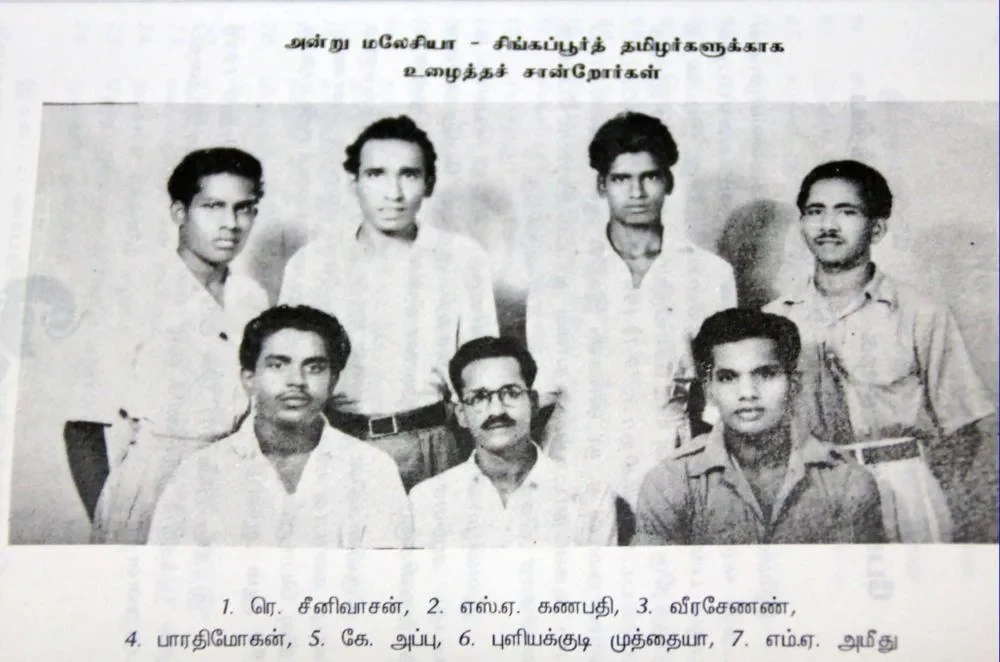
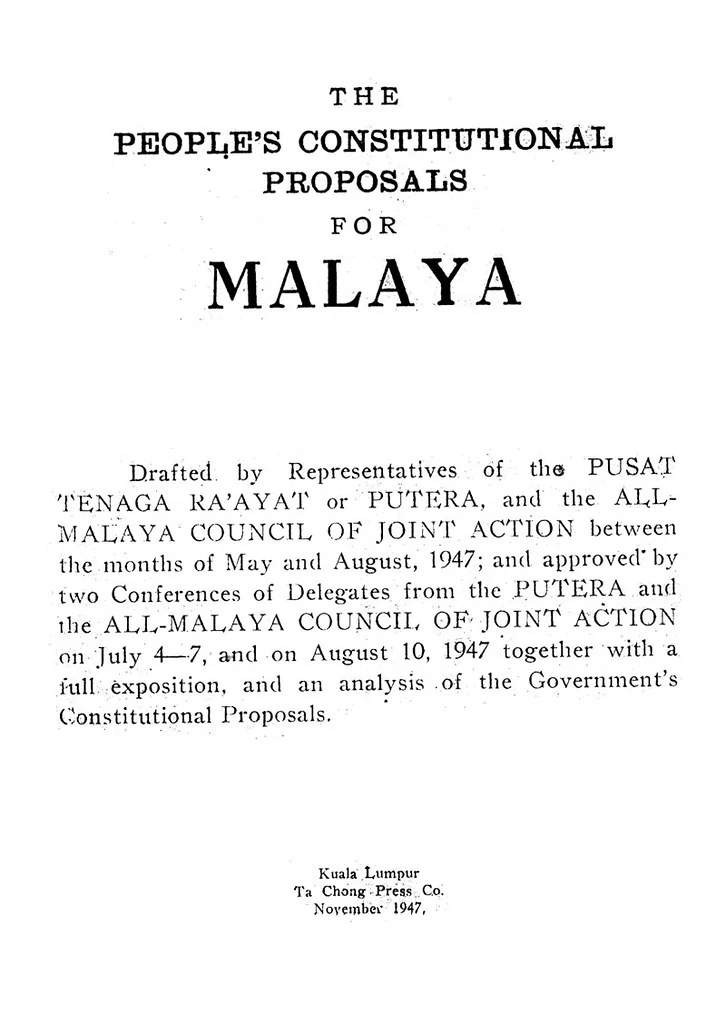
The People’s Constitutional Proposals gave written form to a challenge over who should decide Malaya’s future.
PUTERA brings together the Malay Left
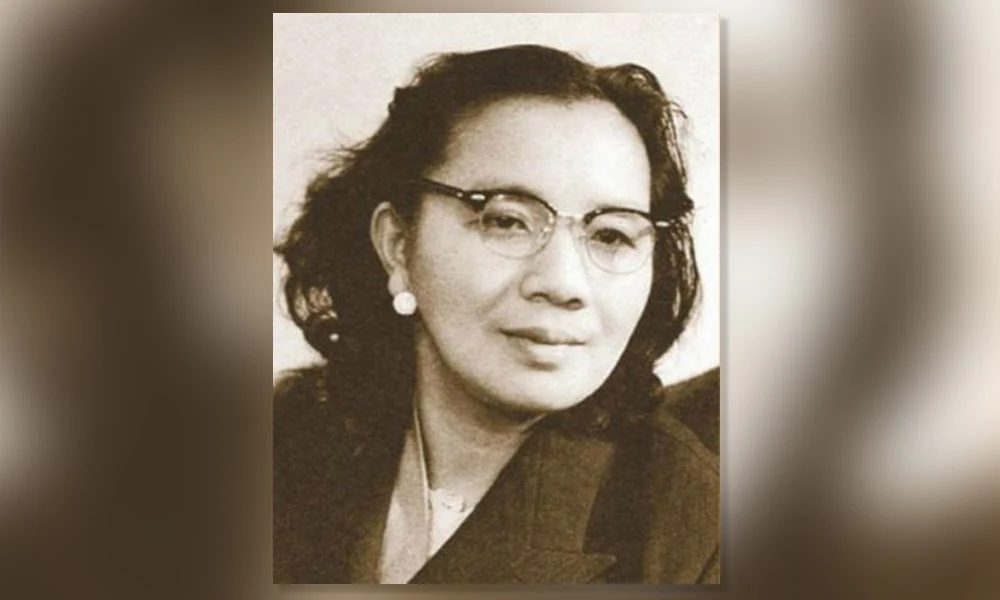
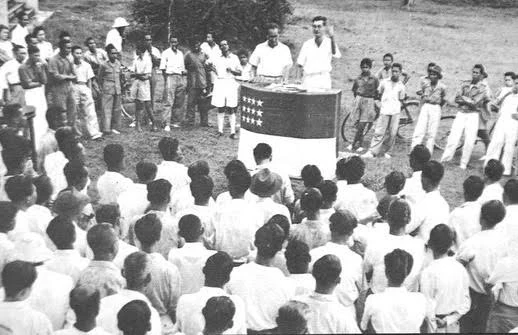
A conference in Kuala Lumpur formed Pusat Tenaga Rakyat, bringing together Malay left organisations including PKMM, API and AWAS.
Read the account & sources
Women’s and youth organisations belonged to the coalition. Subsequent cooperation with AMCJA widened the challenge to the official constitutional settlement.
Estate conflict in Kedah
Contemporary reporting described a clash between police and striking workers at Bukit Sembilan Estate. Estate struggles were a major part of the postwar labour upsurge.
Read the account & sources
Reports of the confrontation need to be read as attributed accounts. The wider pattern is independently visible in official 1947 figures identifying major estate and colliery disputes.
A People’s Constitution offers an alternative
PUTERA–AMCJA finalised the People’s Constitutional Proposals as an alternative to the official Federation scheme. The constitutional struggle raised the question of who should shape Malaya’s future.
Read the account & sources
Finalisation in August should be distinguished from later publication and campaigning. Pusat Sejarah Rakyat reproduces a November conference resolution commemorating the August date.
Local hartals and a wider mobilisation
September newspaper reports described hartal planning and government warnings to employees. Preparations for a pan-Malayan stoppage developed before the action on 20 October.
Read the account & sources
Local protests and planning meetings should not be collapsed into the October action. The sequence reveals the organising needed to coordinate a political shutdown.
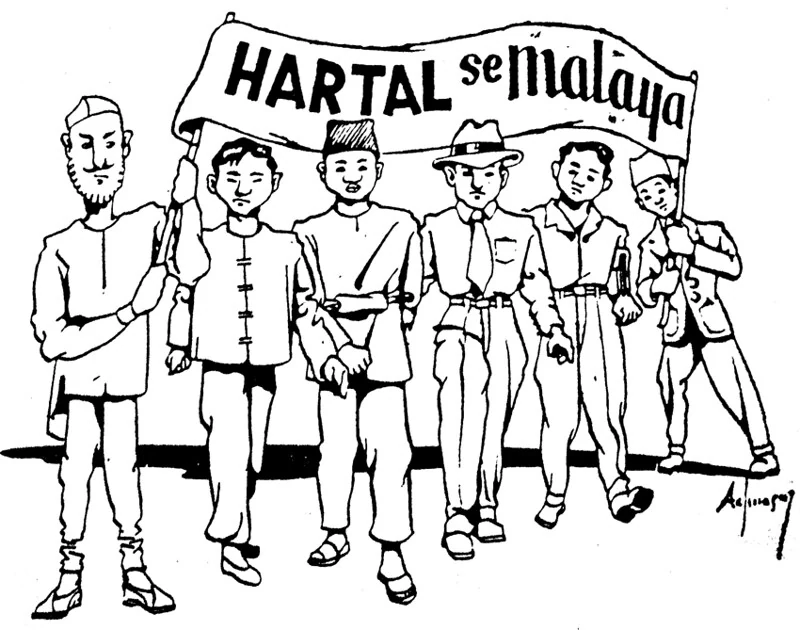
HARTAL: workers and allies halt everyday business
Workers, traders and political organisations took part in a coordinated stoppage against the official constitutional proposals. Singapore reporting described closed shops, disrupted transport and idle docks.
Read the account & sources
Reports from different towns show the action’s geographical reach. Participation and its meaning were contested: organisers, newspapers and colonial officials presented different assessments. No single participation percentage describes every locality.

1948 · The struggle continues
Repression and unfinished questions
A new settlement and the closing of political space.
The months after the Hartal brought continuing organisation, industrial disputes and an escalating colonial crackdown.
The Federation takes effect
The Federation of Malaya replaced the Malayan Union. The mass opposition of 1947 had not secured adoption of the People’s Constitutional Proposals.
Read the account & sources
The outcome raises a strategic question: how can the power demonstrated in a political stoppage become lasting political representation and workers’ control over their future?
Industrial struggle continues
The Singapore Free Press reported that stevedores returned to work after a 22-day strike. Labour conflict continued beyond the Hartal and into 1948.
Read the account & sources
The end of a strike is an event, not by itself proof of victory or defeat. The settlement and workers’ assessment must be established before drawing that conclusion.
Registration restrictions strike at labour federations
The PMFTU and several state federations were refused registration and treated as unlawful associations. A parliamentary exchange on 23 June recorded the dispute.
Read the account & sources
Critics described suppression of unions; the colonial secretary defended the decisions as enforcement of trade-union law. Non-registration was a specific mechanism, distinct from the later outlawing of the Communist Party.
Emergency declarations transform political life
Emergency measures began in parts of Malaya on 16 June, extended across the Federation on 18 June, and reached Singapore on 24 June.
Read the account & sources
Arrests and restrictions narrowed the space for open political and labour organisation. The emergency declarations and later party bans were separate measures with different dates.
Party and associated organisations outlawed
The Federation and Singapore governments outlawed the Communist Party of Malaya and associated organisations. The Straits Times reported the decisions the following day.
Read the account & sources
The ban followed the June Emergency declarations. Open anti-colonial politics and labour organising now faced a changed landscape of repression and armed conflict.
Reading the record
Whose account of the Hartal?
Newspapers described closed shops, disrupted transport and idle docks. Colonial officials later acknowledged the action while minimising its enthusiasm and Malay participation. Read these accounts together, with attention to their different interests and viewpoints.
About this visual history
Workers at the centre
Based on the Hartal 2026 research and image collection, alongside publicly accessible historical records. This account foregrounds workers’ collective agency, anti-colonialism and the struggle for political power.
Photographs and documents carry their own dates and contexts. Earlier landscapes, later portraits and illustrations are identified in the captions. Images can be enlarged to inspect the full frame.
Visual edition · 17 October 2026. Research continues, particularly on women, estate communities and local organising.