

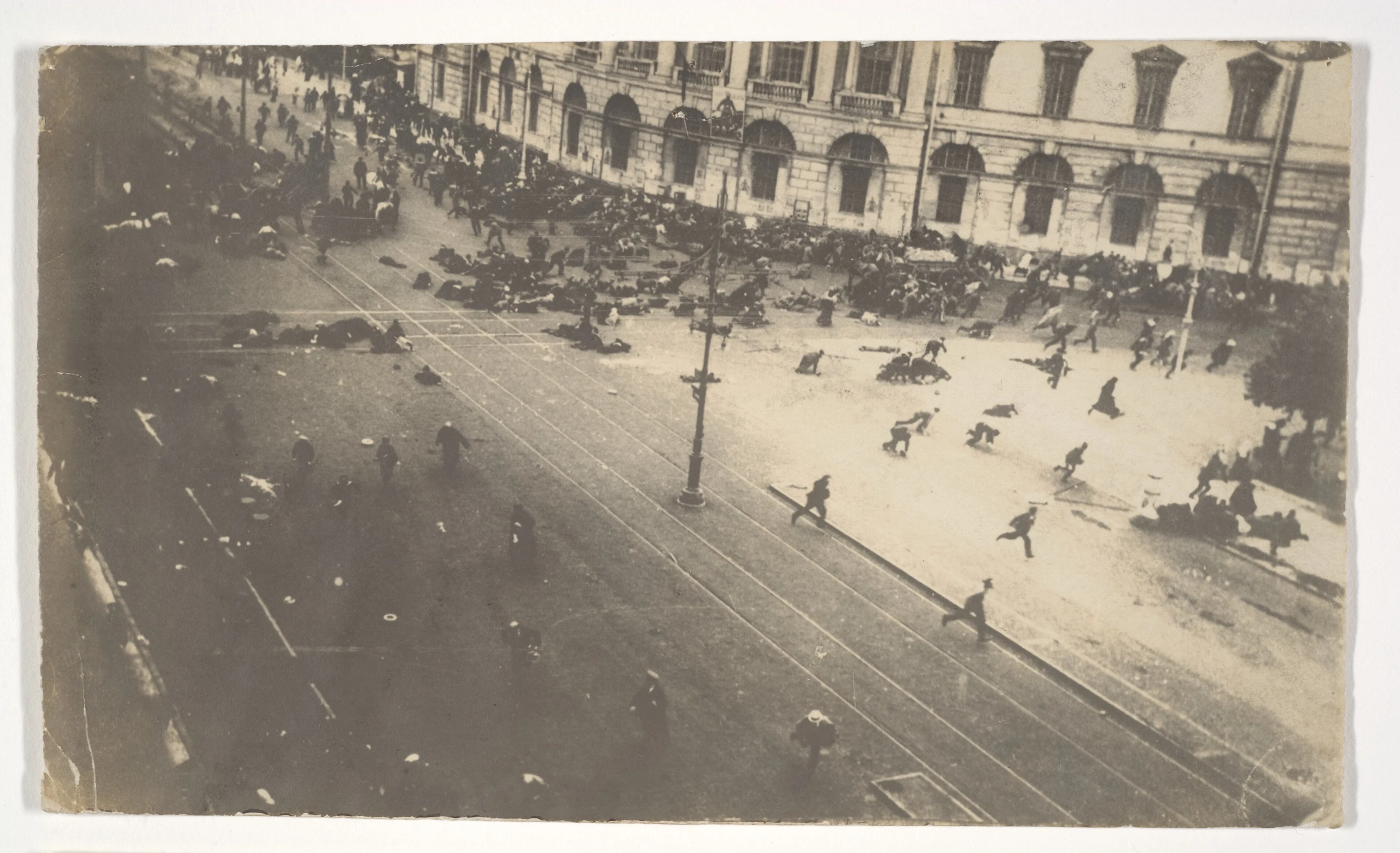
1861 — 1940 · A visual history
The Russian Revolution
Workers, revolution and the struggle for socialism.
Begin the journeyHow did workers and peasants overthrow an empire? How did their revolution become isolated—and how did an opposition fight to preserve its socialist future? Follow the people, organisations and turning points.
A Marxist perspective
This original guide draws on socialistworld.net’s centenary writing and the documents of the movement. It distinguishes the revolution’s aims from Stalinist degeneration.
Open an image for the full frame and credits. Open an entry’s sources to read further. A glossary explains the key terms.
1861–1898
An empire in transformation
Land hunger, rapid industrial growth and an unaccountable monarchy create the conditions for a new revolutionary movement.
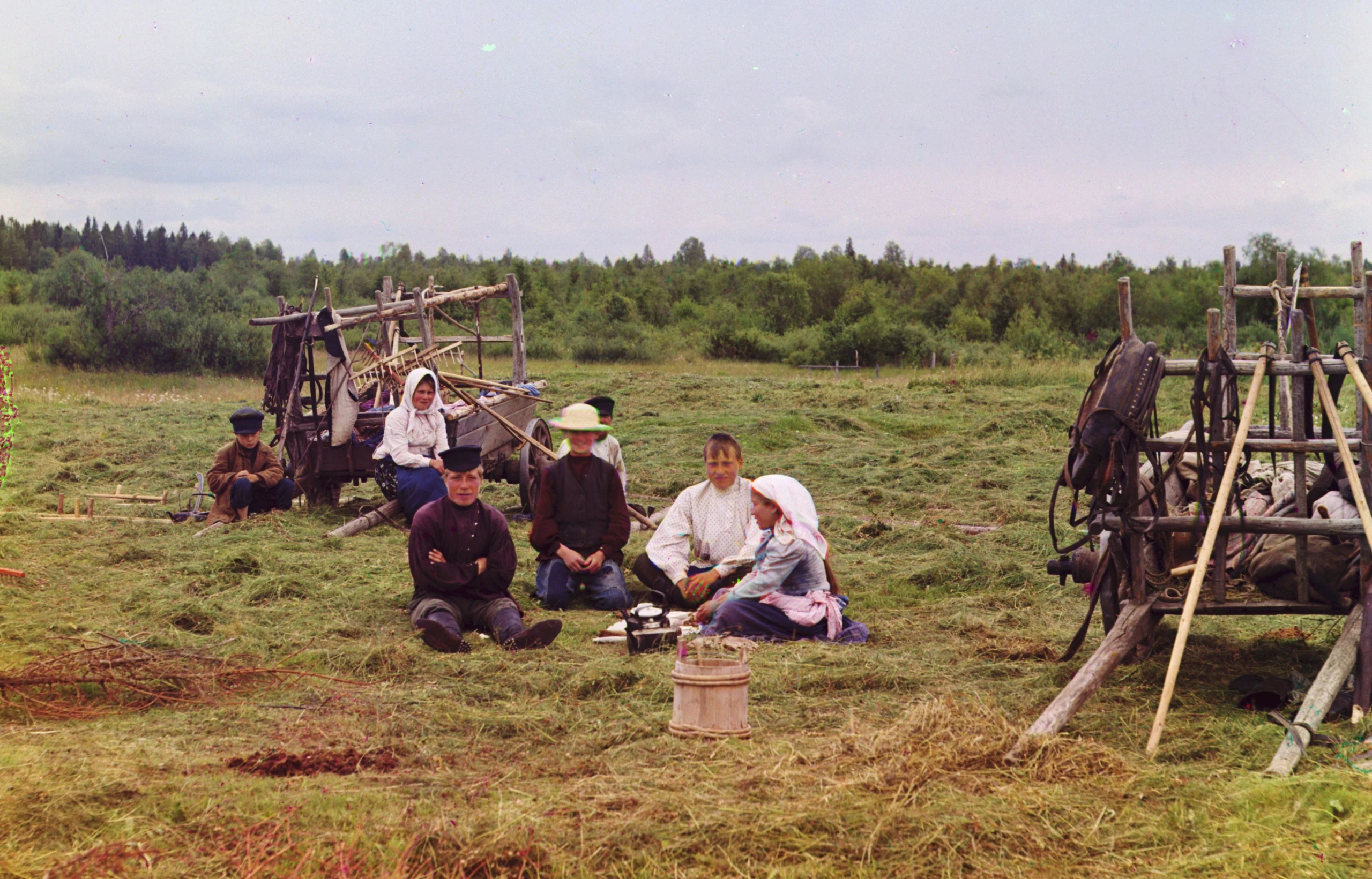
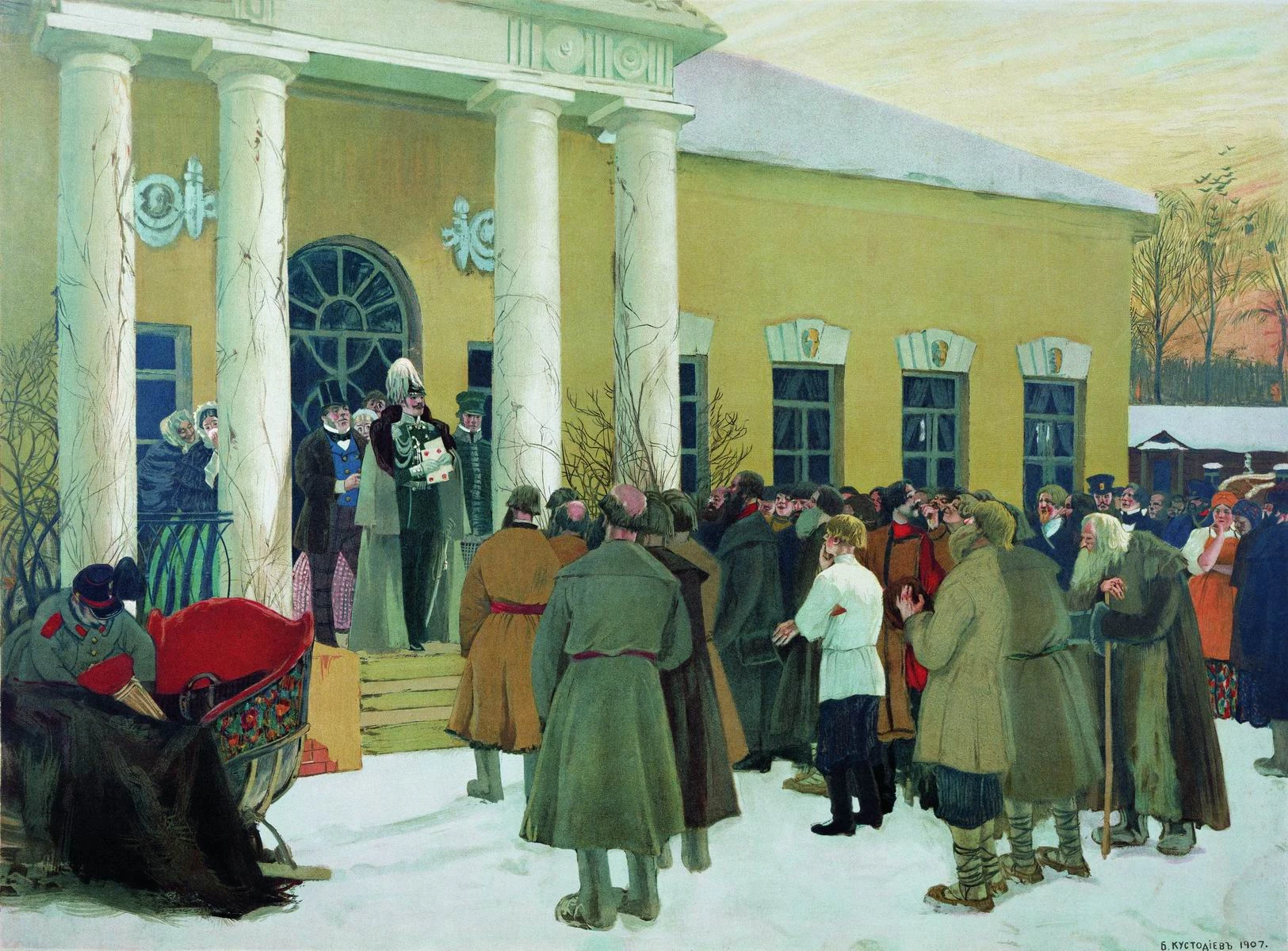
Serfdom abolished; the land question remains
Alexander II ends the legal bondage of privately owned serfs. Freedom comes with restricted land allotments and redemption payments, while landlords retain substantial property. The reform changes rural society without ending peasant poverty or autocracy: the unresolved struggle over land will return at the centre of 1917.
Sources & further reading
Russian Marxists organise in exile
Georgi Plekhanov, Vera Zasulich, Pavel Axelrod and their comrades establish the Emancipation of Labour group in Geneva. Translating and discussing Marxist works, they argue that the growing industrial working class can become an independent political force. Their small group helps prepare the intellectual ground for Russian social democracy.
Sources & further reading
Lenin, Martov and workers’ organisation
Vladimir Ulyanov, later known as Lenin, and Julius Martov help unite Petersburg Marxist circles in the League of Struggle for the Emancipation of the Working Class. Its factory leaflets connect wages and hours to political freedom. Arrests strike its leadership, while the great textile strikes of 1896 widen the movement.
Sources & further reading
The RSDLP is founded
Nine delegates meet secretly in Minsk to establish the Russian Social Democratic Labour Party, or RSDLP. Police arrests soon disrupt the new organisation. The name “social democratic” then embraces revolutionary Marxists; it does not yet carry only its later association with reformist parliamentary parties. A unified party still has to be built.
Sources & further reading
1900–1906
A party, a revolution, a new idea
Socialists build an organisation. In 1905, workers begin to discover forms of power that go beyond the old state.
Iskra: a newspaper to unite the movement
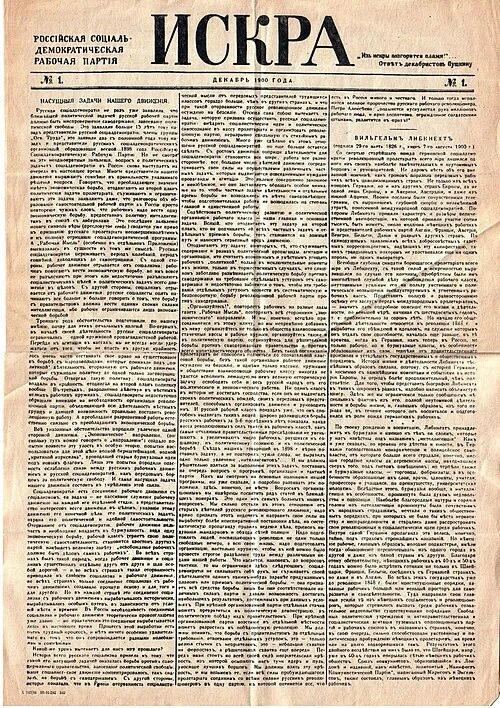
The first issue of Iskra—“The Spark”—appears abroad and is smuggled into Russia. Lenin, Plekhanov, Martov and other editors seek to connect scattered circles through common political debate and organisation. Nadezhda Krupskaya’s correspondence work helps sustain this underground network. A newspaper becomes an organising link across a vast empire.
Sources & further reading
What Is to Be Done?
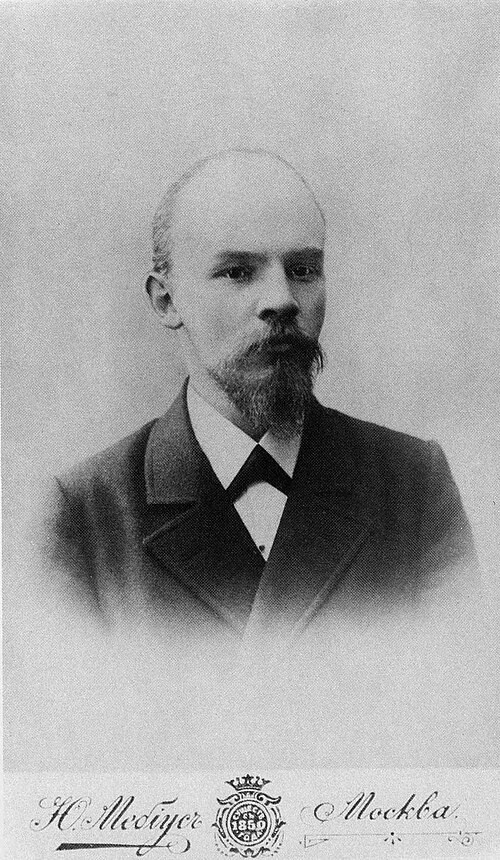
Lenin argues for an organisation capable of linking everyday workplace struggles with a struggle against the whole autocratic order. His pamphlet challenges “economism”, which limits workers to immediate economic demands. It contributes to a wider debate about political consciousness, revolutionary organisation and how activists can reach beyond isolated local circles.
Sources & further reading
The Second Congress: Bolsheviks and Mensheviks
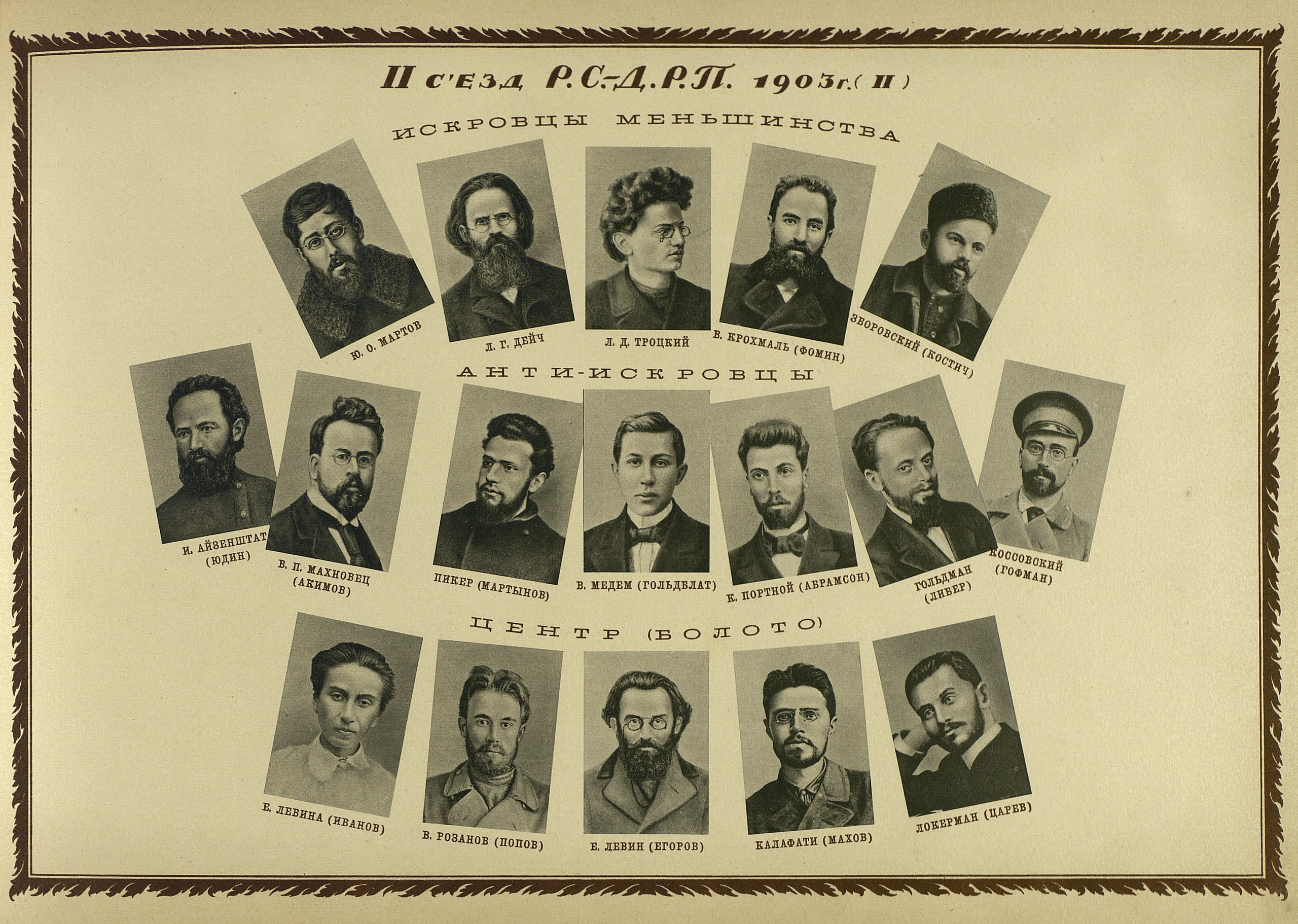
Meeting first in Brussels and then London, the RSDLP debates its programme, membership and leadership. Lenin and Martov clash over membership rules; later votes produce the labels Bolshevik, “majority”, and Menshevik, “minority”. These are initially factions within one party, with shifting alliances and attempted reunifications—not two fully separate parties overnight.
Bloody Sunday opens the 1905 Revolution
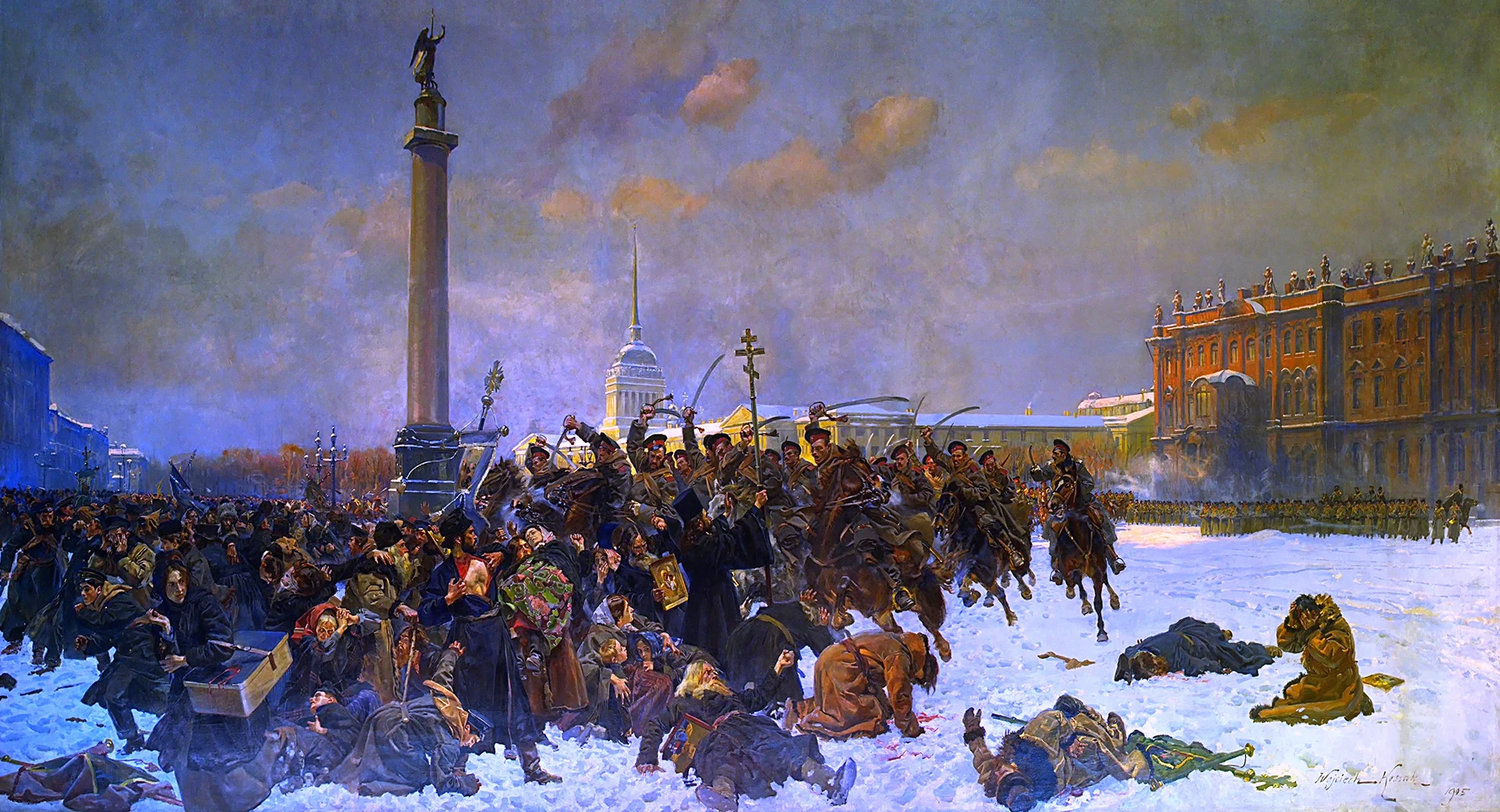
Troops fire on workers and families approaching the Winter Palace with a petition. The massacre shatters faith in the Tsar as protector. Strikes spread through the empire, alongside peasant unrest, national struggles and military mutinies. Russia’s defeat in war with Japan further exposes the weakness of the old regime.
Sources & further reading
The soviet: workers create a council
A general strike brings elected workplace delegates together in the Petersburg Soviet of Workers’ Deputies. The council coordinates action across factories and trades. Leon Trotsky becomes one of its leading figures and then its chair before its arrest. The soviet offers an organisational form that will reappear on a much larger scale in 1917.
Sources & further reading
Promises of reform; the uprising is crushed
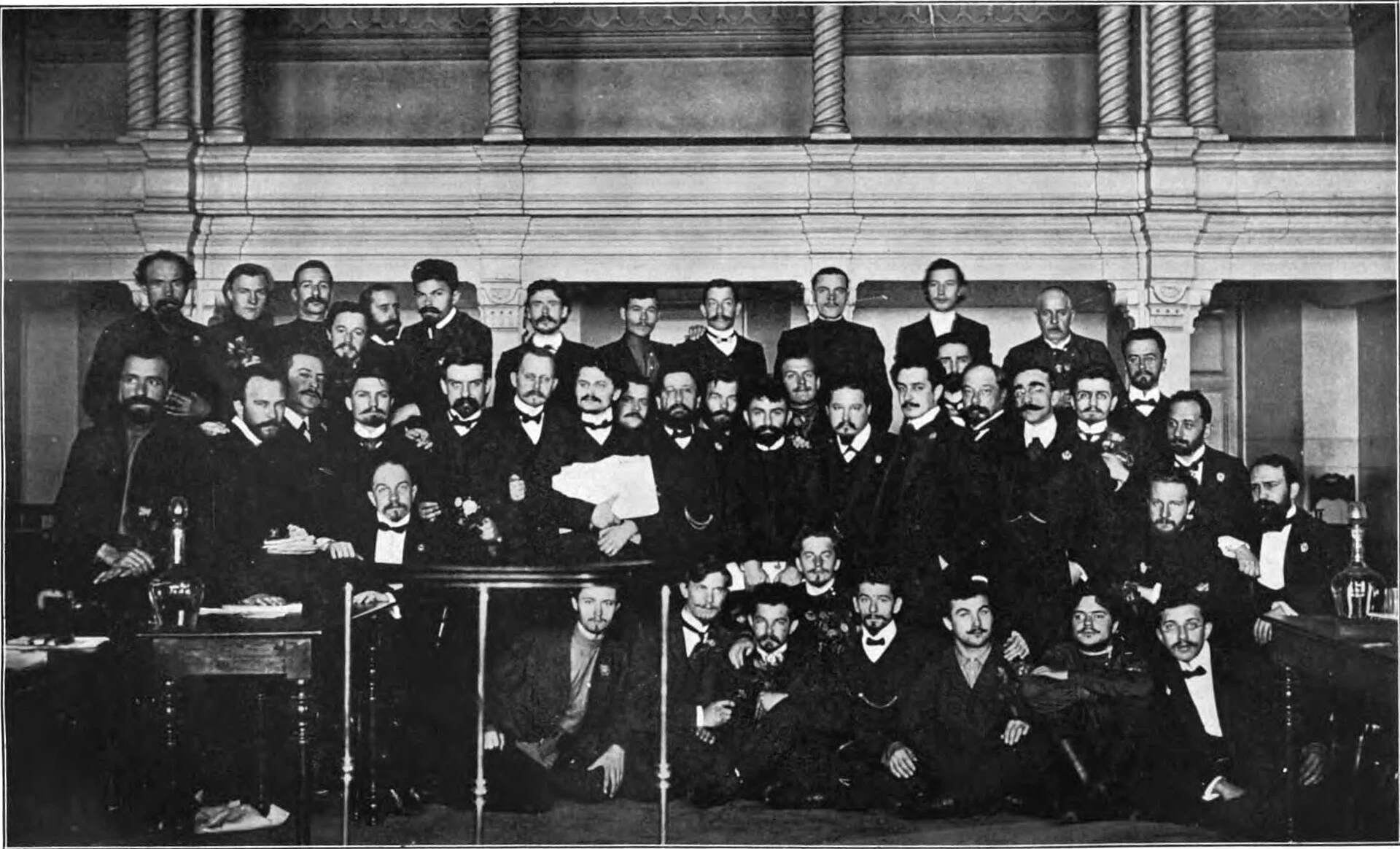
The October Manifesto promises civil liberties and a legislative Duma. Liberal supporters retreat from revolution, while workers continue fighting. The Moscow uprising is defeated in December Old Style. Tsarism survives, restricts its concessions and represses activists. For revolutionaries, 1905 becomes a school of mass strikes, councils and competing political strategies.
Sources & further reading
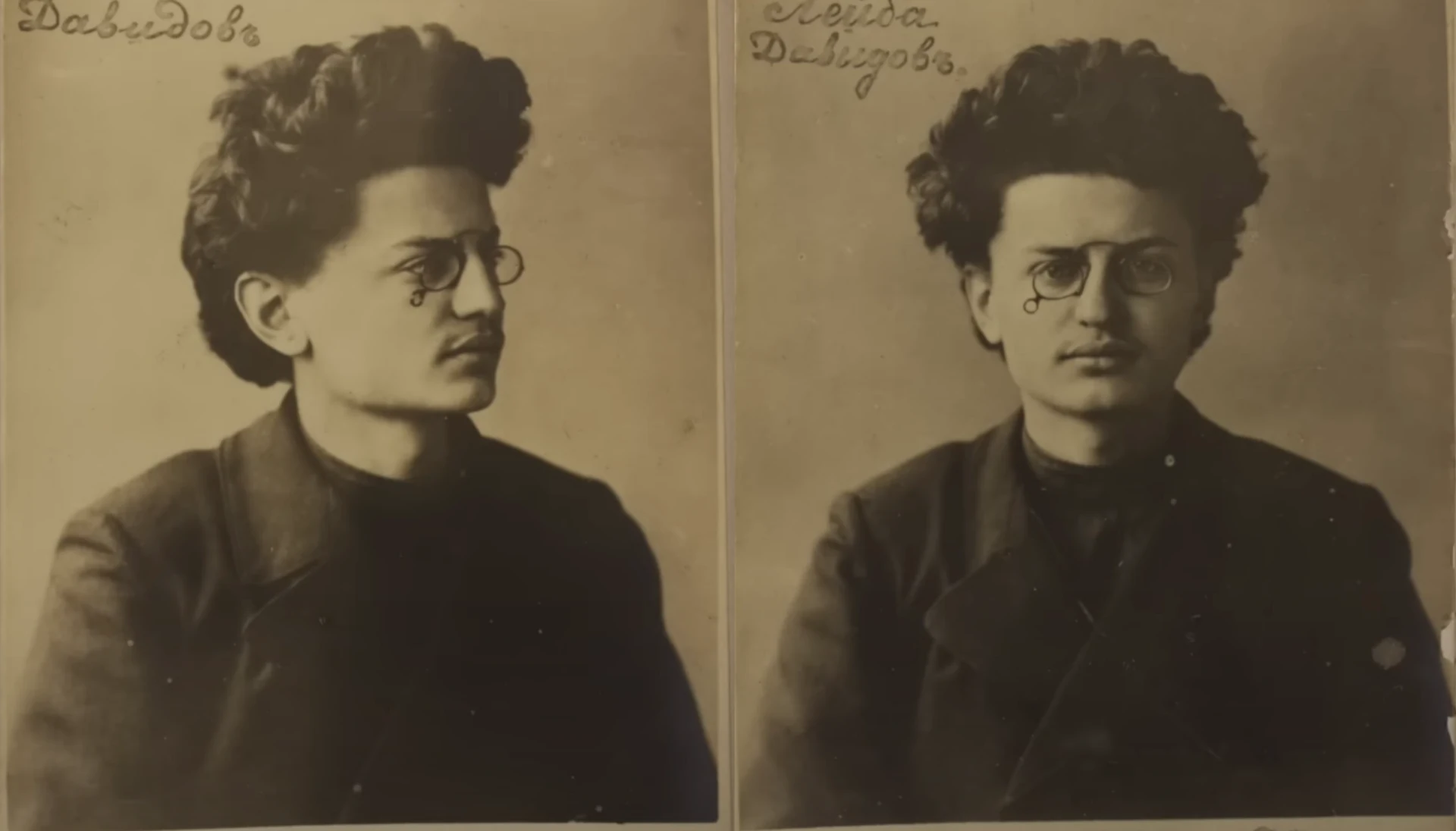
Trotsky develops permanent revolution
In Results and Prospects, Trotsky argues that Russia’s capitalist class cannot consistently complete democratic tasks such as land reform. Workers, allied with the peasantry, could take power and move towards socialist measures. Their survival would depend on international revolution. This is a political theory, later central to the Trotskyist reading of 1917.
Sources & further reading
This entry includes the Marxist interpretation developed in the sources below.
1907–1916
Reaction and world war
Defeat brings repression. Then an imperialist war turns the crisis of the empire into a catastrophe for workers, peasants and soldiers.
Reaction tests the revolutionary movement
The Tsarist state narrows the electoral system, executes and imprisons opponents, and forces many revolutionaries underground or into exile. Membership and strike activity decline. Bolsheviks debate how to preserve an illegal organisation while using limited legal openings, including the Duma. Learning to organise through retreat becomes part of preparing for renewed struggle.
Sources & further reading
Lena massacre and a new workers’ upsurge
The shooting of striking gold miners at Lena provokes solidarity strikes across Russia. Bolshevik organisation strengthens, and the workers’ newspaper Pravda begins publication. The Prague Conference earlier that year marks a decisive organisational separation from the Mensheviks, although local relationships remain complicated. Industrial militancy grows again before the First World War interrupts it.
Sources & further reading
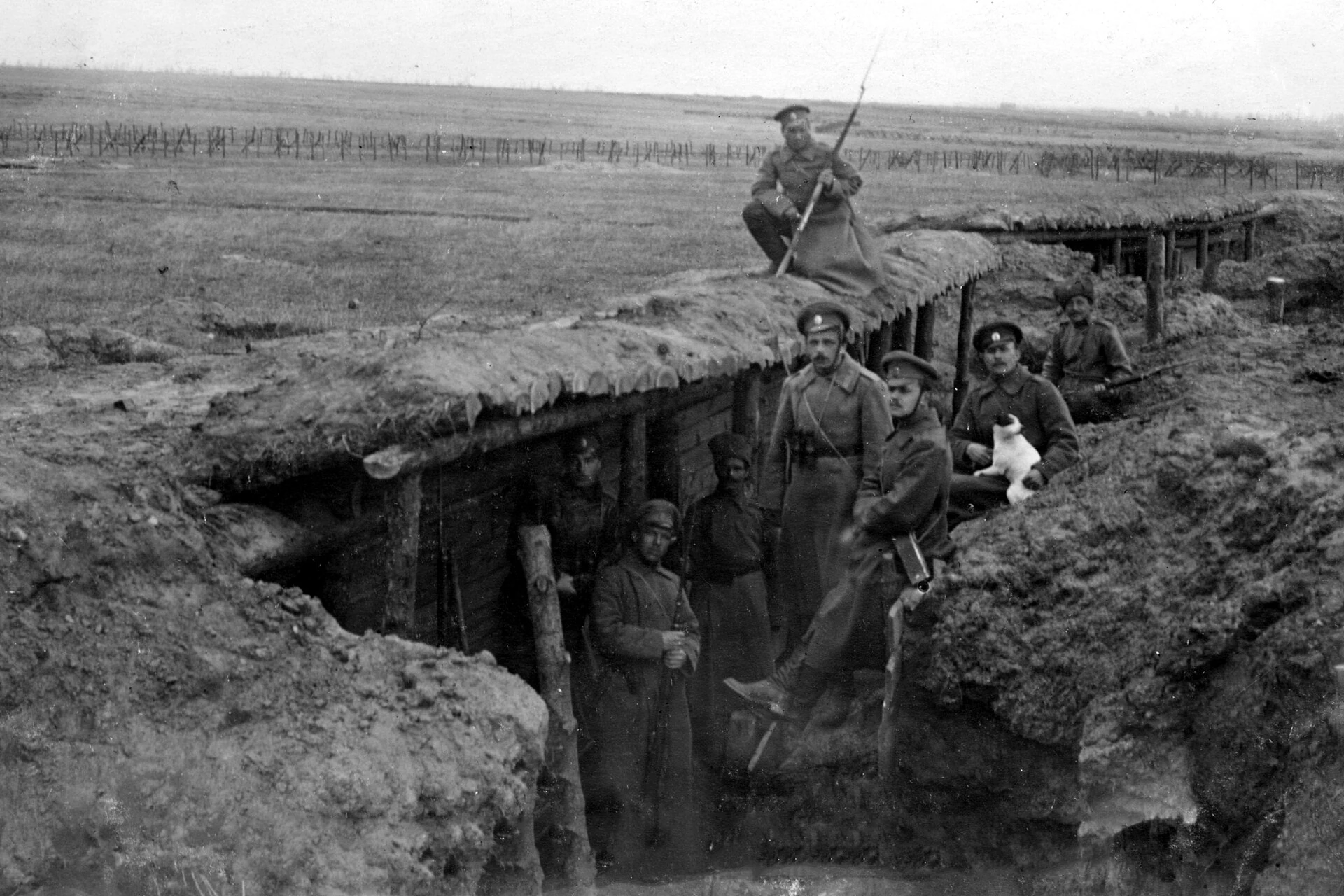
World war divides the socialist movement
Russia enters the First World War. Most major European social-democratic leaderships support their own governments’ war efforts, breaking earlier internationalist commitments. Lenin and the Bolsheviks oppose the imperialist conflict; Trotsky also campaigns against it. At home, military disaster, inflation, food shortages and repression steadily undermine the Tsarist state.
Sources & further reading
Zimmerwald keeps internationalism alive
Anti-war socialists meet in Switzerland and adopt a manifesto drafted by Trotsky. Lenin participates while pressing for a sharper revolutionary break with the pro-war socialist leaderships. Their disagreements remain, but the meeting helps reconnect internationalist opponents of the war. They are still a small minority when set against Europe’s mass socialist parties.
Sources & further reading
March–July 1917
The fall of the Tsar
Women workers, mass strikes and soldiers’ revolt bring down the monarchy. The struggle over who will govern has only begun.
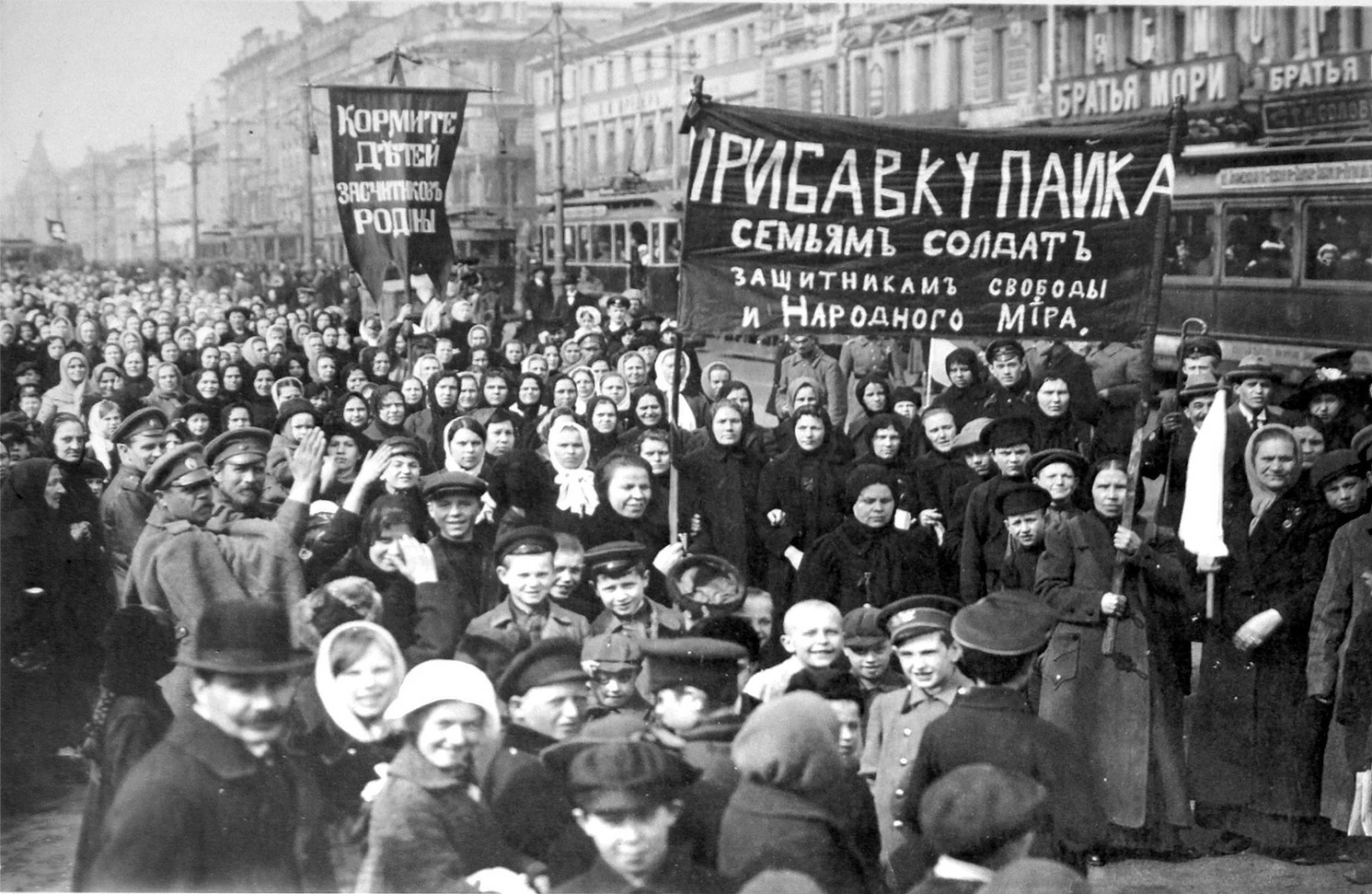
Women workers begin the February Revolution
On International Women’s Day, women textile workers in Petrograd strike and appeal to other factories. Demands for bread widen into opposition to the war and autocracy. Over the following days the movement becomes a general strike. Women’s initiative helps turn accumulated hunger and anger into an uprising that the established leaders had not scheduled.
Sources & further reading
Soldiers mutiny; the Petrograd Soviet forms
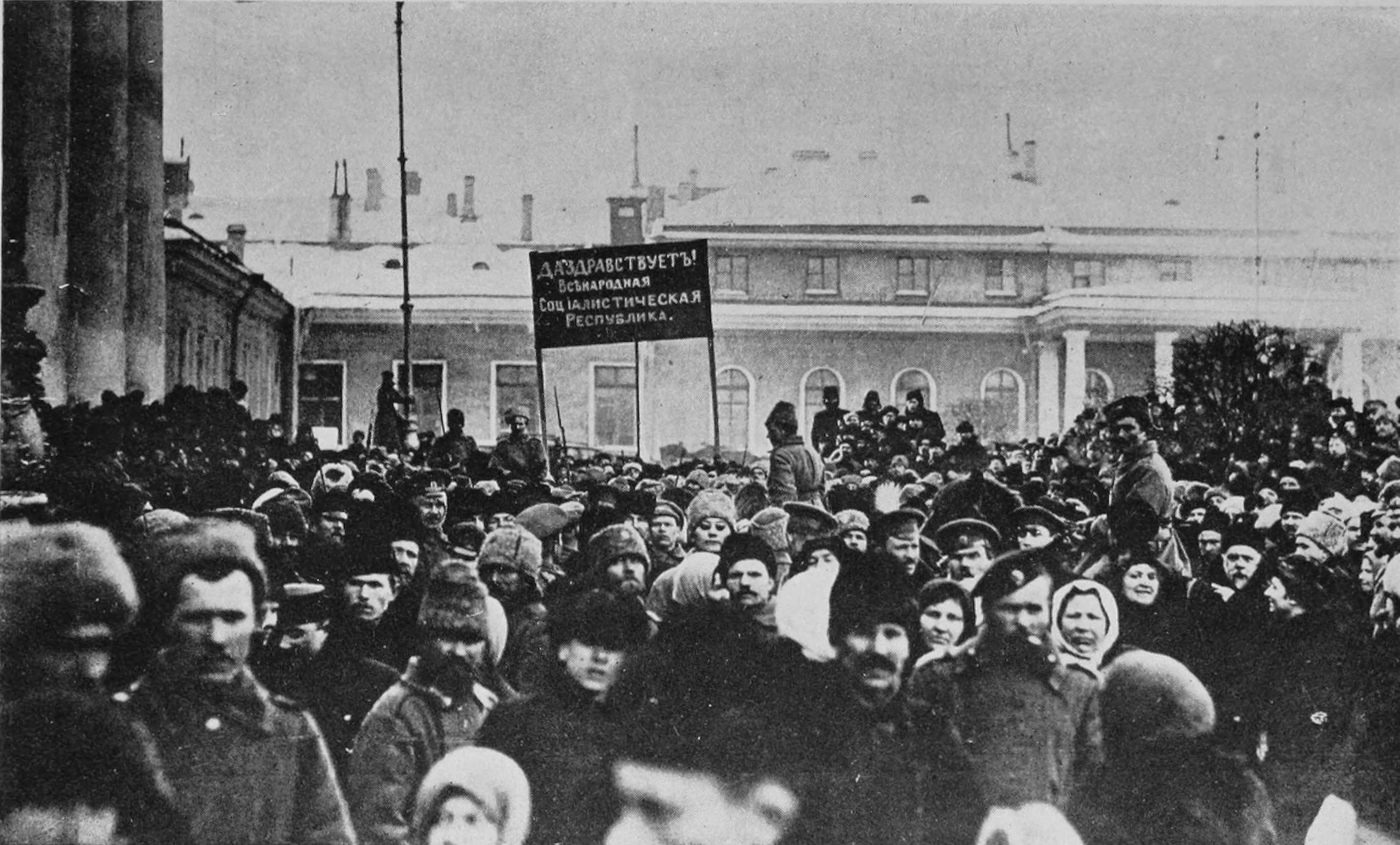
Garrison soldiers join striking workers instead of restoring order through gunfire. The Petrograd Soviet is re-established, bringing elected workers’ and soldiers’ delegates into a common council. Meanwhile, Duma politicians assemble a rival centre of authority. The collapse of Tsarist control produces a new question: who should govern after the old regime falls?
Sources & further reading
The Tsar falls; dual power begins
Nicholas II abdicates. A Provisional Government takes office while the soviets possess the allegiance of organised workers and many soldiers. Menshevik and Socialist Revolutionary leaders initially support the government rather than transfer power to the councils. The CWI describes this unstable coexistence of rival authorities as “dual power”.
Lenin returns with the April Theses
Returning from exile, Lenin rejects support for the Provisional Government and calls for power to pass to the soviets. He urges patient explanation while Bolsheviks remain a minority. His April Theses challenge assumptions within his own party and orient it towards socialist revolution, land redistribution and an end to the imperialist war.
Sources & further reading
Coalition fails to deliver peace or land
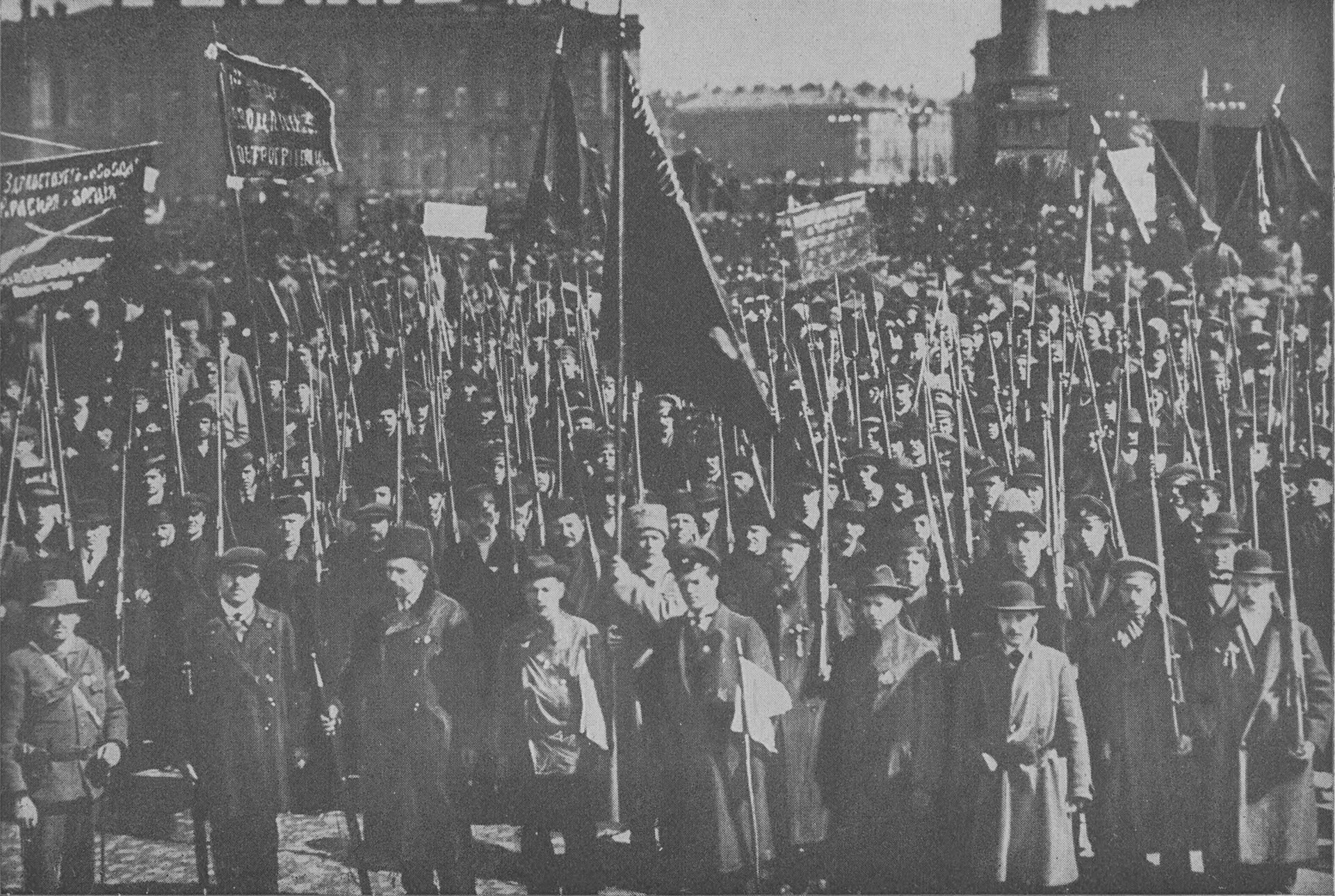
Socialist ministers enter a coalition with liberals; Trotsky returns in May. Workers build factory committees and peasants demand land, while the first national soviet congress still backs the government. A new military offensive begins on 1 July (18 June O.S.). Its failure deepens anger at a government that cannot deliver peace or land.
July–November 1917
All power to the soviets
Between repression, a threatened military coup and changing soviet majorities, the question of power moves to the centre.
The July Days: advance, retreat and repression
Armed workers and soldiers demonstrate for soviet power. Bolshevik leaders judge an immediate seizure premature, then try to guide the movement and limit isolation. The government suppresses the protests, closes Bolshevik papers and arrests activists. Lenin goes into hiding; Trotsky is jailed. The party survives a severe setback rather than advancing in a straight line.
Sources & further reading
Trotsky and the Interdistrict group join the Bolsheviks
The Bolshevik Sixth Congress brings Trotsky’s Interdistrict organisation into the party. Trotsky had broken with the Mensheviks long before, but spent years outside both main factions. Agreement on opposition to the war and on workers taking power now creates a common course. He is elected to the Central Committee while imprisoned.
Workers defeat Kornilov’s advance
General Kornilov’s move towards Petrograd threatens the revolution. Railway workers obstruct troop movements; agitators persuade soldiers not to fight the city. Bolsheviks participate in common defence while maintaining political opposition to Kerensky’s government. The defeat of the right-wing threat restores confidence among workers and strengthens Bolshevik influence.
Sources & further reading
Bolsheviks win majorities in key soviets
The Petrograd and Moscow soviets turn towards Bolshevik proposals for a soviet government. Released from prison, Trotsky becomes chair of the Petrograd Soviet. Support does not mean unanimity across Russia: the peasantry, army and different regions have varied loyalties. The crucial change is a majority for a break with coalition politics in major urban councils.
Sources & further reading
October: the Provisional Government is overthrown
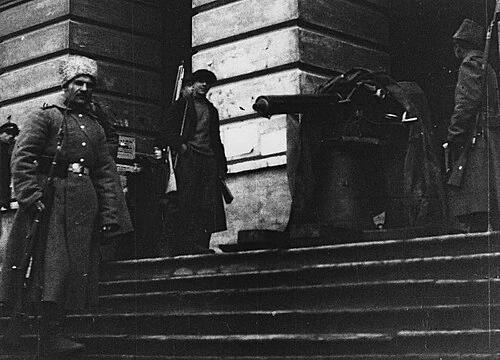
The Petrograd Soviet’s Military Revolutionary Committee coordinates soldiers, sailors and Red Guards taking strategic points. The Winter Palace falls and ministers are arrested. The Second Congress of Soviets endorses the transfer of power, after many Menshevik and right Socialist Revolutionary delegates walk out. Lenin heads the new Council of People’s Commissars.
Sources & further reading
Peace, land and a new social direction
The congress adopts decrees proposing peace without annexations and abolishing landed proprietorship. Subsequent measures establish workers’ control, an eight-hour working day and national equality, including the right of self-determination. The Left Socialist Revolutionaries later enter the government. These beginnings face immediate economic breakdown, political conflict and military threats.
1918 → 1922
Winning power was a beginning.
Civil war and foreign intervention threatened the new government. Defence of the revolution, the search for peace and the survival of everyday life became inseparable. The next chapter follows both the social advances and the terrible costs.
1918–1922
Revolution under siege
A new government faces war, hunger and isolation. Social advances coexist with devastating pressures on workers’ democracy.
The Constituent Assembly is dissolved
The elected Constituent Assembly meets once before being dispersed. The Socialist Revolutionary lists have won the largest vote; Bolsheviks argue that soviet power expresses the revolution’s changed class alignment more directly. The episode raises a lasting question about representation and democracy. Support for workers’ councils does not remove the need to examine this conflict critically.
Sources & further reading
Brest-Litovsk: a harsh peace
After bitter internal debate, Soviet Russia signs peace with Germany and its allies, surrendering vast territories. Lenin argues that an exhausted army cannot continue fighting; Trotsky’s earlier “neither war nor peace” tactic has failed to stop the German advance. The treaty buys time, while exposing the revolution’s military weakness and international isolation.
Sources & further reading
Civil war and foreign intervention
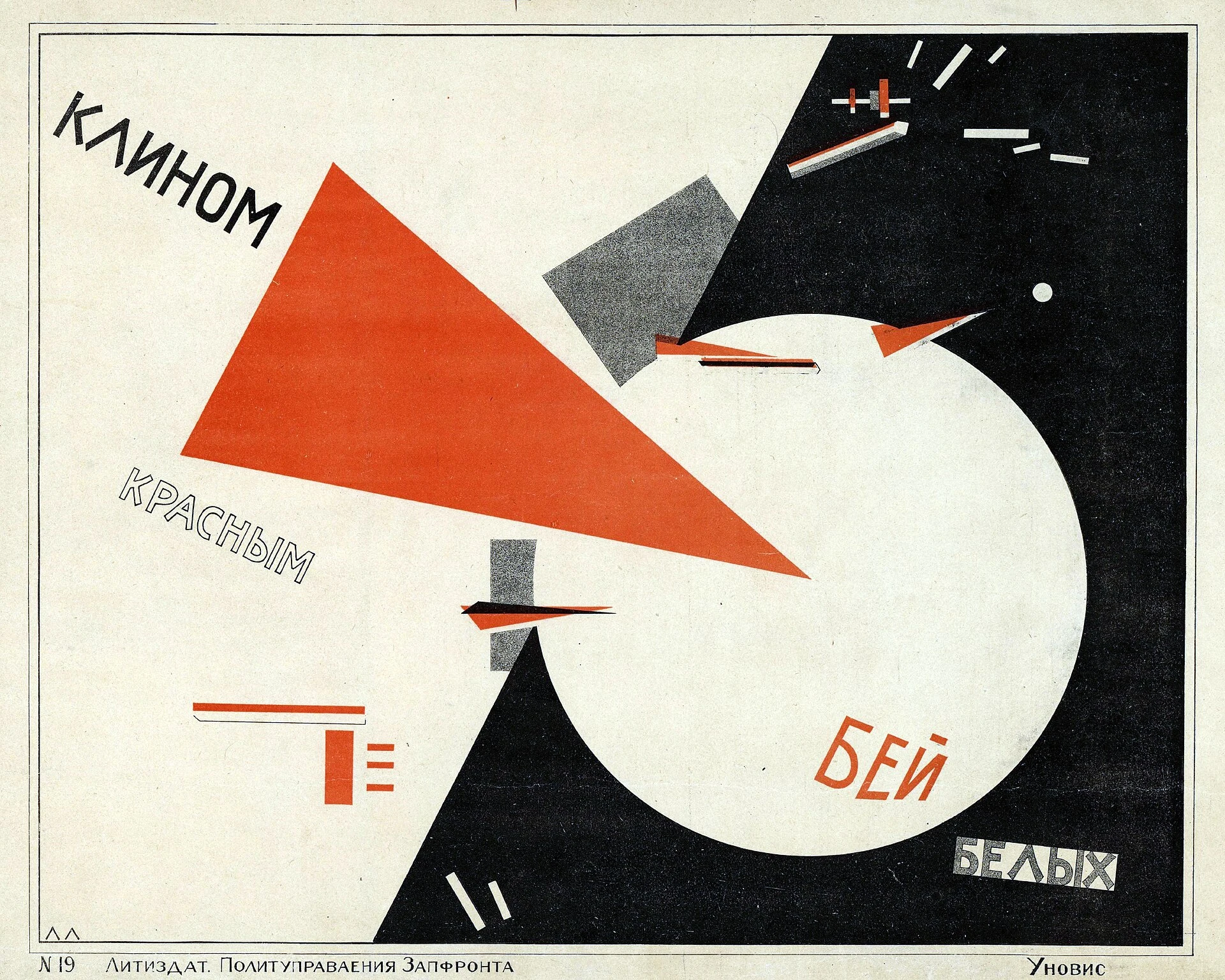
White armies, rival national forces and foreign interventions confront Soviet rule. Trotsky becomes a central organiser of the Red Army, which uses conscription and former Tsarist officers under political supervision. The main White armies are defeated by 1920, but fighting continues in some regions until 1922. War, disease and hunger devastate society.
Sources & further reading
Red Terror, White Terror and the erosion of democracy
Civil war includes White atrocities and antisemitic pogroms, alongside Cheka executions and the Bolshevik government’s Red Terror. Rival socialist parties and independent working-class activity face increasing repression. Emergency rule and coercive grain requisitioning narrow the democratic life of the soviets. These measures and their victims must be examined alongside the military siege.
Women’s emancipation and social transformation
Early Soviet reforms establish civil marriage, easier divorce and legal equality, with abortion legalised in Soviet Russia in 1920. Literacy campaigns and experiments in communal services seek to widen participation. War and poverty sharply limit delivery. These advances are distinct from later Stalinist reversals, and they grow from women’s own organising as well as government legislation.
The Communist International and the hope of world revolution
The Communist International, or Third International, is founded in Moscow. Revolution has already erupted in Germany, and other European upheavals follow. Yet workers’ revolutions fail to secure lasting victories outside Russia. In the CWI’s interpretation, this isolation is decisive: an impoverished workers’ state cannot build a fully socialist society by national effort alone.
Sources & further reading
This entry includes the Marxist interpretation developed in the sources below.
Kronstadt and the ban on party factions
Sailors, soldiers and civilians at Kronstadt demand renewed soviet elections and political freedoms; the Bolshevik government suppresses their rebellion militarily. In the same month, the Tenth Party Congress bans internal factions amid acute crisis. Intended as an emergency measure, the ban later becomes an instrument used against organised opposition and further weakens party democracy.
Sources & further reading
NEP: an economic retreat to rebuild
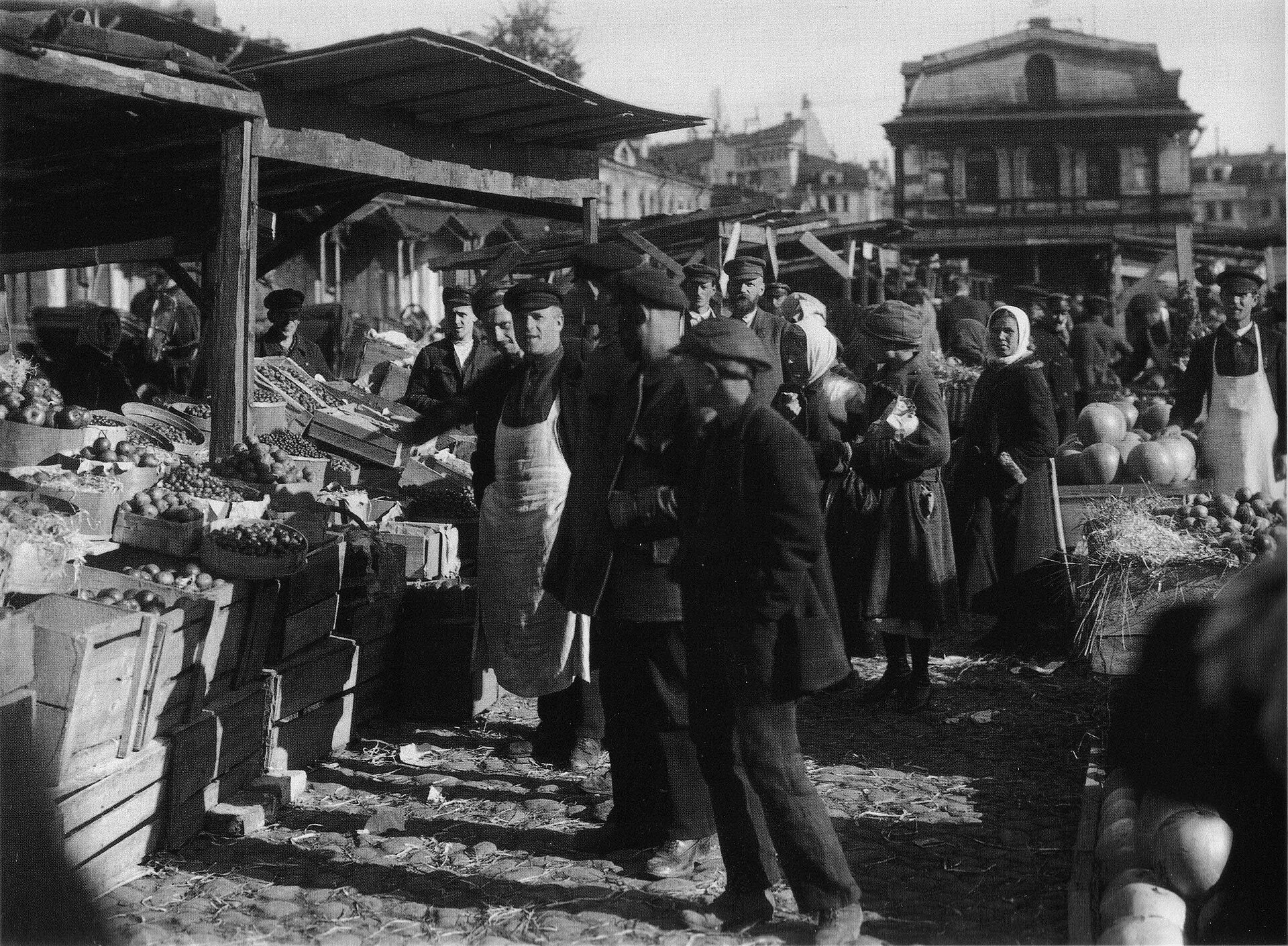
The New Economic Policy replaces forced grain requisitions with a tax and permits private trade and small enterprise. Major industry, banking and foreign trade remain under state control. Lenin presents it as a necessary retreat in a devastated, mainly peasant country. Recovery follows, but inequality, market pressures and disputes over industrial development intensify.
Sources & further reading
The USSR is formed; Lenin warns against bureaucracy
The Union of Soviet Socialist Republics is established. Seriously ill, Lenin challenges bureaucratic abuses and Great Russian chauvinism, especially over Georgia. His Letter to the Congress assesses leading comrades; its January addendum proposes removing Stalin as general secretary. These interventions show a struggle within the leadership before Lenin’s death, rather than a smooth succession.
1923–1933
The struggle against bureaucracy
The Left Opposition fights bureaucratic privilege and the abandonment of international revolution. Expulsion and exile follow.
The Left Opposition emerges
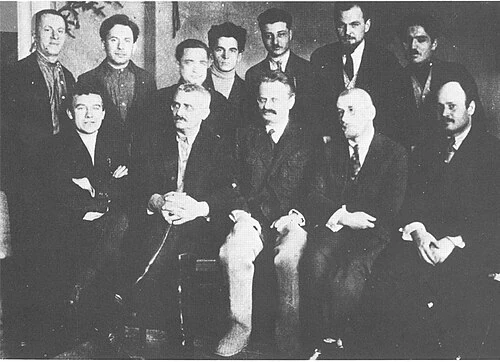
Trotsky criticises bureaucratisation; the Declaration of the 46 separately demands economic planning and freer party discussion. His New Course develops the call for workers’ democracy and renewed participation by younger members. This is the beginning of the Left Opposition, not simply a dispute after Lenin dies. The failed German revolutionary opportunity deepens Soviet isolation.
Lenin dies; “socialism in one country” rises
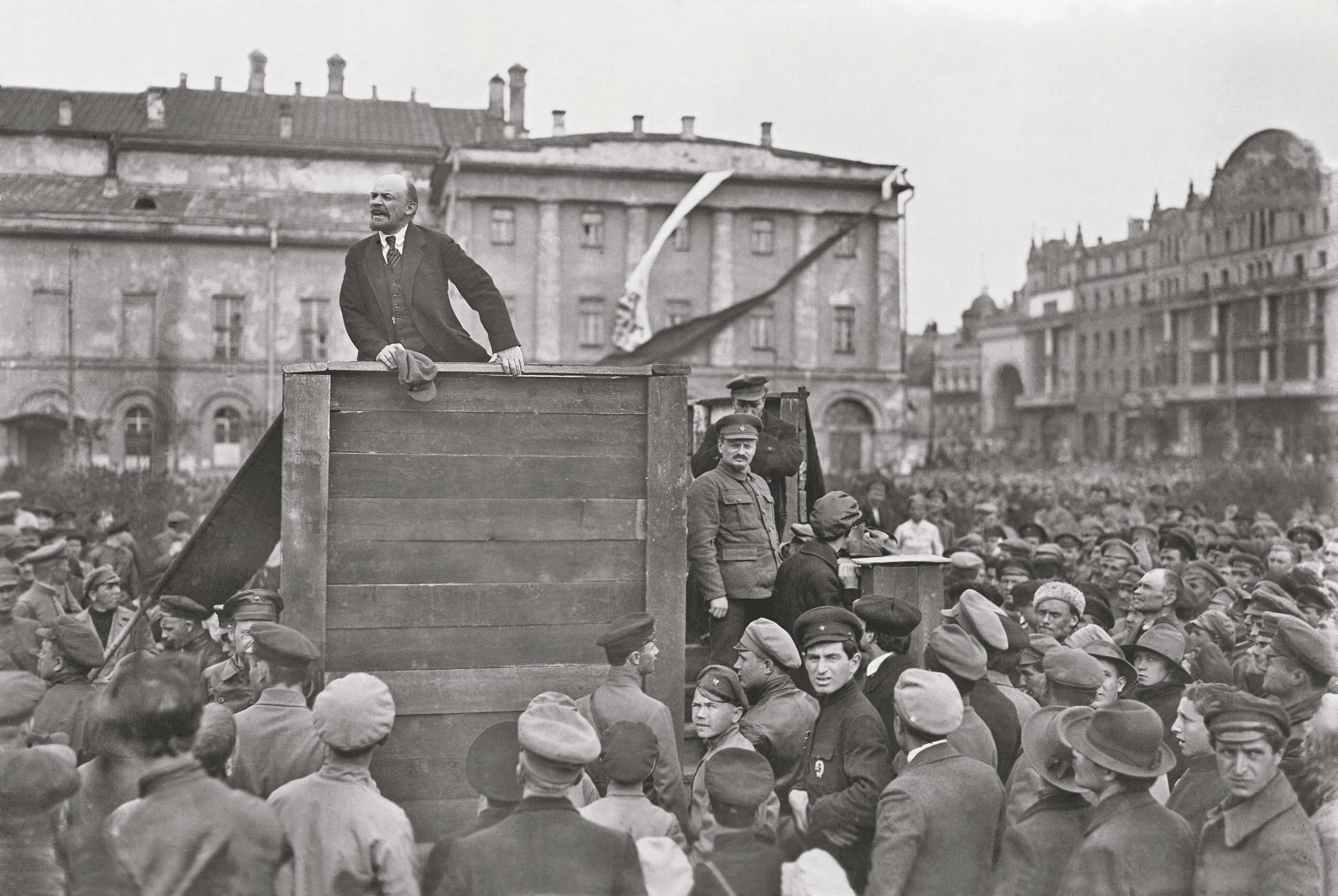
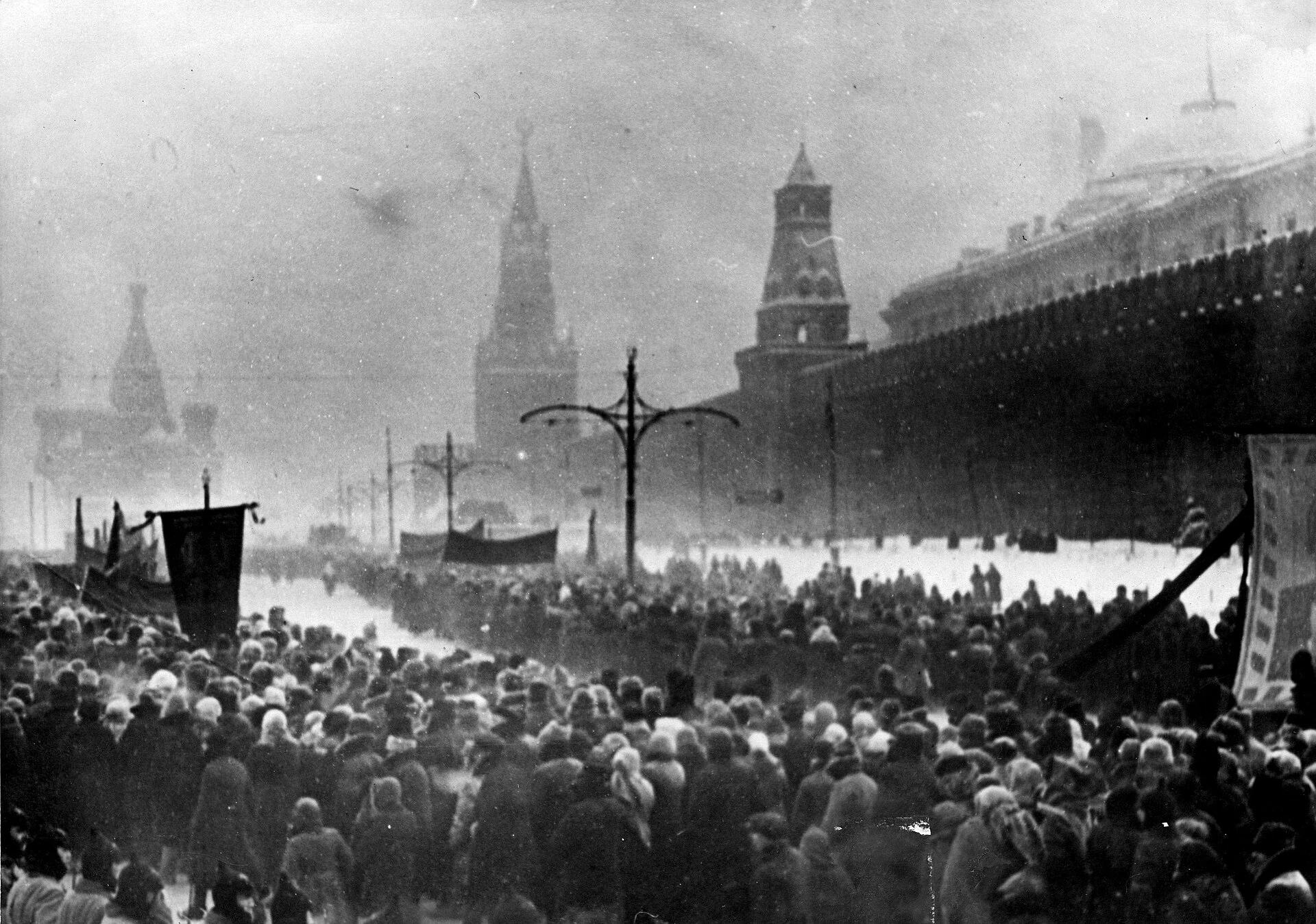
Lenin dies after repeated strokes. Stalin’s power grows through the party apparatus and shifting alliances. From late 1924, Stalin and Bukharin promote the possibility of building socialism in one country. Trotsky opposes this national perspective, defending the connection between Soviet development and international revolution. Political and social conflicts lie beneath the leadership struggle.
United Opposition and international defeats
Trotsky joins former opponents Zinoviev and Kamenev in the United Opposition. They criticise bureaucracy, inequality and Comintern policy. Britain’s General Strike ends in defeat in 1926; communist workers in China suffer catastrophic repression in 1927. The Opposition argues that dependence on non-working-class allies has weakened revolutionary opportunities and reinforced isolation.
Expulsion and internal exile
Trotsky and Zinoviev are expelled from the Communist Party in November 1927; the party congress extends the purge of Opposition supporters. In January 1928 Trotsky is deported internally to Alma-Ata, far from Moscow. Oppositionists face dismissal, prison and exile. Political argument is increasingly displaced by administrative punishment and police repression.
Trotsky is expelled from the Soviet Union
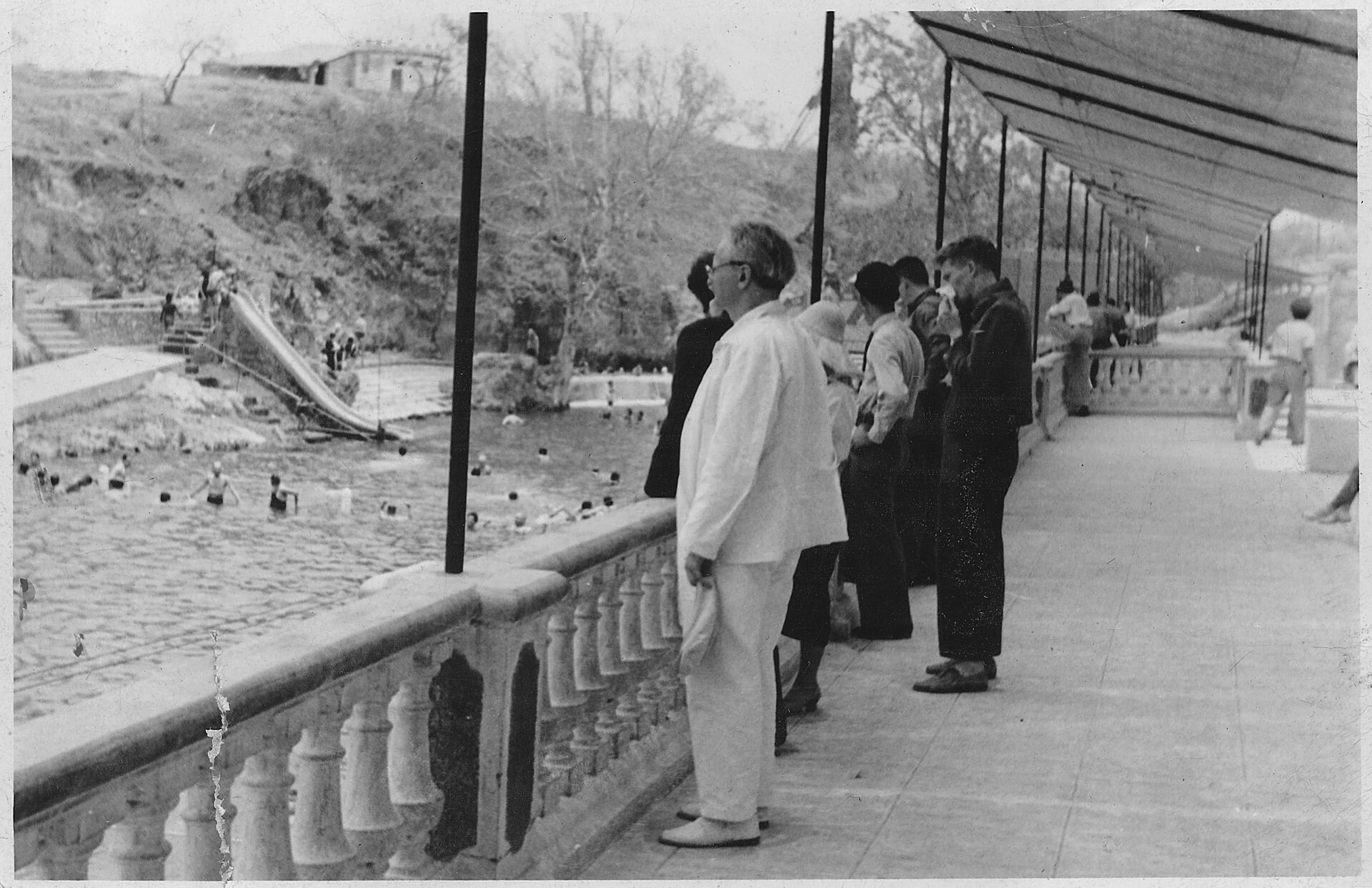
Deported to Turkey in February 1929, Trotsky writes and organises from Prinkipo. In April 1930, supporters meet in Paris to establish the International Left Opposition. Further expulsions take him through France and Norway to Mexico in 1937. Exile is not retirement: he connects scattered revolutionaries while Stalin’s regime represses their comrades within the USSR.
Forced collectivisation and famine
Stalin abandons NEP for forced collectivisation and rapid industrialisation. Peasants face dispossession and deportation; disastrous coercion and state policy contribute to famine, especially in Ukraine, Kazakhstan and other agricultural regions. Industrial output expands at enormous human cost. The Opposition’s earlier advocacy of planning should not be confused with endorsement of this forced, bureaucratic course.
Sources & further reading
Hitler’s victory prompts a new international course
Hitler becomes German chancellor and the Nazis crush workers’ organisations. Trotsky had urged a united front of Communist and Social Democratic workers against fascism. After the defeat and the Comintern leadership’s refusal to change course, he concludes that reforming the Third International is no longer viable and calls for a new revolutionary international.
1936–1940
A programme for the future
Trotsky analyses the degeneration, develops a transitional programme and helps build a new international under the shadow of Stalinism and war.
Trotsky writes The Revolution Betrayed
Trotsky analyses the USSR as a “degenerated workers’ state”: nationalised property and planning remain, but a privileged bureaucracy has usurped workers’ political power. He advocates a political revolution to restore workers’ democracy while defending the socialised economy. This is Trotsky’s interpretation of Stalinism, adopted by the CWI, rather than a description accepted by every historian.
Sources & further reading
This entry includes the Marxist interpretation developed in the sources below.
Moscow Trials and the Great Terror
Show trials accuse old Bolsheviks of invented conspiracies; executions, imprisonment and mass police operations destroy much of the revolutionary generation. Oppositionists, ordinary workers, national minorities and many others become victims. Trotsky, accused in absentia, challenges the frame-ups. The terror consolidates Stalin’s dictatorship and physically eliminates alternatives within the revolutionary movement.
The Transitional Programme: a bridge to socialism
Trotsky proposes demands linking immediate needs to workers’ power: jobs, wages tied to living costs, workers’ control and democratic public ownership. He rejects a rigid separation between everyday reforms and an ultimate socialist goal. The programme is a method for connecting present consciousness with socialist change, not a timeless checklist detached from circumstances.
Sources & further reading
The Fourth International is founded
Delegates meet near Paris to found the Fourth International and adopt the Transitional Programme. Trotsky remains in Mexico and cannot attend. They seek to preserve revolutionary internationalism against capitalism, fascism and Stalinism. The organisation begins as a small persecuted minority; its founding comes two years before Trotsky’s death, not after it.
The Nazi–Soviet pact and another world war
Stalin’s government signs a non-aggression pact with Nazi Germany, including secret arrangements dividing spheres of influence in Eastern Europe. Germany invades Poland; the Soviet Union invades from the east. A second world war begins. Trotsky condemns Stalin’s policies while maintaining his distinction between the bureaucracy and the USSR’s nationalised economic foundations.
Trotsky is assassinated; the struggle continues
On 20 August, Stalinist agent Ramón Mercader strikes Trotsky with an ice axe in his Mexico City home. Trotsky dies the next day, 21 August. His death follows years of persecution of his family and supporters. The Fourth International survives him, carrying forward debates about workers’ democracy, internationalism and the lessons of the Russian Revolution.
Sources & further reading
Read the original arguments
Six texts. A longer conversation.
Follow the ideas through the writings of participants. These links open the texts for further reading.
What Is to Be Done?
Organisation, political consciousness and the building of a revolutionary party.
Read the text ↗1906 · Leon TrotskyResults and Prospects
The first systematic outline of the perspective of permanent revolution.
Read the text ↗1917 · V. I. LeninThe April Theses
The struggle to win support for a soviet government and an international socialist course.
Read the text ↗1923 · Leon TrotskyThe New Course
Party democracy, the role of the youth and the danger of bureaucracy.
Read the text ↗1936 · Leon TrotskyThe Revolution Betrayed
An analysis of the Soviet bureaucracy and the struggle to restore workers’ democracy.
Read the text ↗1938 · Leon TrotskyThe Transitional Programme
A bridge between immediate struggles and the socialist transformation of society.
Read the text ↗A guide to the language
Key ideas, clearly explained.
Select a term to open its explanation. The definitions follow the political perspective of this timeline.
Serfdom
A system that bound peasants to landlords and imposed labour or payments. Emancipation ended legal bondage, while the struggle over land, debt and political power continued.
RSDLP
The Russian Social Democratic Labour Party, founded in 1898. At this time “social democracy” included revolutionary Marxists. Bolsheviks and Mensheviks emerged as factions with evolving organisational and political differences.
Soviet
A council of elected delegates from workers, soldiers or peasants. Soviets could coordinate collective action and become an alternative centre of political authority. Their democratic vitality depended on real participation and accountability.
Dual power
The unstable coexistence of the Provisional Government and the soviets in 1917. The government held formal state authority, while the councils rested on organised workers and soldiers. The two centres could not indefinitely settle the same fundamental questions.
Permanent revolution
Trotsky’s argument that workers, supported by the peasantry, could lead democratic tasks into socialist measures, and that their survival required international extension of the revolution. The term describes a political strategy, rather than unending street confrontation.
NEP
The New Economic Policy introduced in 1921. It restored a sphere of markets and small private trade while major industry and other commanding sectors remained state controlled. It was intended as a retreat to rebuild an exhausted economy.
Bureaucratic degeneration
In the Trotskyist analysis used here, workers’ political control was progressively displaced by a privileged bureaucracy under conditions of scarcity, war and international isolation. This is a social process, extending beyond the character of any one leader.
Political revolution
Trotsky called for workers to overthrow the bureaucracy and restore democratic control while preserving nationalised property and planning. He distinguished this from a social revolution that changes the underlying class and property relations.
Transitional demands
Demands that begin with immediate needs—wages, work, housing or control of production—and help reveal the need for workers’ power and socialist change. Their purpose is to connect daily struggles with a wider programme.
An International
An organisation linking revolutionary parties and workers across borders around a shared programme. The Communist International was founded in 1919; the Fourth International followed in 1938 as an opposition to Stalinism and capitalism.
The visual record
Faces of a revolutionary era.
Twenty archive images, historical illustrations and documents. Open each for its full frame, source record and reuse licence.
About this history
Events, evidence and perspective.
Sosialis Alternatif presents this timeline as political education. The narrative follows a Marxist and Trotskyist perspective, especially the CWI’s account of mass action, workers’ democracy, internationalism and bureaucratic degeneration. Sources accompany every milestone.
The narrative is written for this page, drawing on the centenary articles and primary documents. Photographs, paintings and later compilations are identified in their captions. The selected images are public domain or CC0; creator, source and licence links are retained throughout.
The calendar labels preserve the names “February” and “October” while using modern Gregorian dates. The scope ends with Trotsky’s death in 1940; it is a guide to the revolution and its early legacy.
Start with these readings
socialistworld.net
- CWI: Russian Revolution Centenary (2017) ↗
- Peter Taaffe: February Revolution 1917—What lessons for today? ↗
- Peter Taaffe: The 1917 July Days—rich in lessons for today ↗
- Clare Doyle: Russia’s 1917 socialist revolution ↗
- CWI Marxist Theory: The New Economic Policy ↗
- CWI: How the Bureaucracy Seized Power ↗
- CWI Socialism Today: 1938 anniversary—founding the Fourth International ↗
- Lynn Walsh: The Assassination of Trotsky—exile and Opposition ↗
History for discussion
What can a revolution teach us today?
Continue the conversation through workers’ history and collective political education.