

9 October 1967 — 2026 · 59 years remembered
“Shoot, coward! You are only going to kill a man.”
Final words attributed to Che Guevara in some accounts; the precise wording varies between sources. Source
Fifty-nine years after Che Guevara was executed in Bolivia on 9 October 1967, at just 39 years of age, his image and struggle continue to inspire new generations.
Flags, banners, portraits and slogans bearing Che’s image are still widely displayed, including at demonstrations and protests. While for some his image is merely a fashion statement, many others use it as a means of expressing protest or making a political declaration. For them, Che Guevara is a symbol of struggle and internationalism, representing the aspiration to build a better world and society based on socialist ideas.
Today, in many countries, politicians and state institutions are seen as corrupt, unrepresentative of the people’s interests, untrustworthy and concerned only with themselves. In contrast, Che is regarded by many young people as a principled fighter and revolutionary.
Alongside examining Che’s experiences and his struggle against oppression, we must also draw lessons from his political weaknesses. This is important for a new generation of young people and workers confronting injustice, war and the crisis of capitalism.
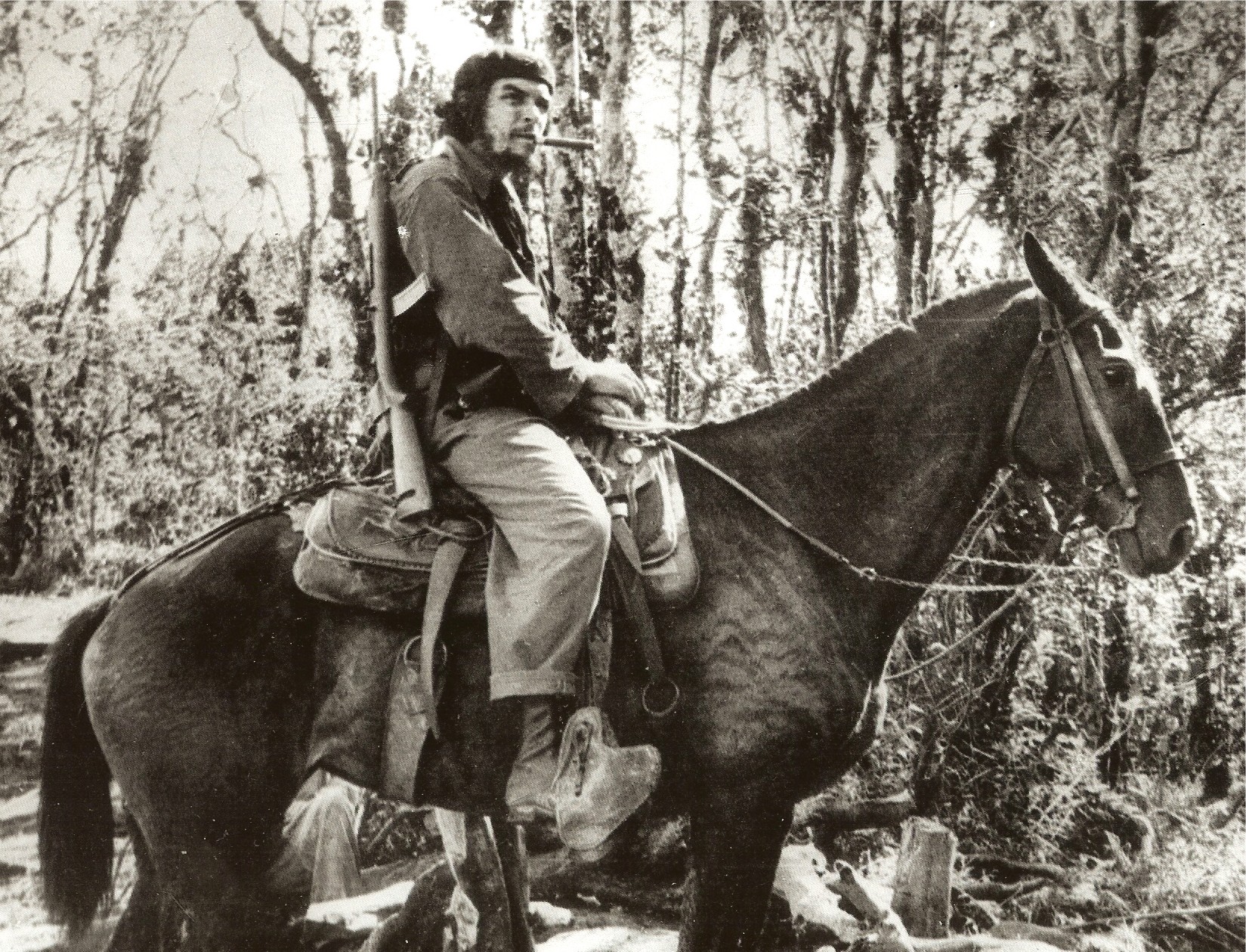
1952 — 1959
From a journey to a revolution
- 1952Travels with Alberto Granado; the journey recorded in The Motorcycle Diaries.
- 1954The coup in Guatemala deepens his opposition to imperialism.
- 1956Lands in Cuba with the Granma expedition on 2 December.
- 1959Batista falls; the revolution opens a new chapter in Cuba.
Che joins the struggle
As a medical student in Argentina, Che could undoubtedly have pursued a comfortable life. Instead, he became a committed revolutionary, prepared to break from his middle-class background and join the oppressed and the poor in their struggle against imperialism and capitalism.
His travels across Latin America in the early 1950s brought him face to face with poverty and appalling social conditions. His 1952 journey with Alberto Granado was recorded in The Motorcycle Diaries. Further travels in 1953–1954, including his experiences in Guatemala, continued to shape his political outlook. What he witnessed strengthened his determination to fight injustice and the capitalist class.
During his travels, Che encountered socialist activists in Peru and impoverished mineworkers in Chile. His experiences in Guatemala had a particularly profound influence on his political development. There, he witnessed the reforming government of Jacobo Árbenz being overthrown in the CIA-backed coup of 1954. It was also in Guatemala that Che encountered Cuban political exiles fighting against the dictatorship of Fulgencio Batista.
Joining the 26 July Movement in Cuba
Drawing on his experiences in Guatemala and discussions about the situation in Cuba, Che began developing his early ideas about how to build a revolutionary struggle.
From the beginning, Che rejected the approach of certain left-wing parties that sought alliances and compromises with capitalist forces in Latin America. However, he was unable to formulate a clear alternative to the opportunist policies pursued by these parties.
Eventually, while living in Mexico, he joined the 26 July Movement, led by Fidel Castro, which was fighting to overthrow the Batista dictatorship in Cuba. For Che, it offered the potential to develop a radical struggle and represented the most militant arena of resistance.
At that stage, however, the 26 July Movement was a broad coalition whose principal objective was to overthrow Batista and establish a Western-style democracy. It did not yet possess a clear programme to overthrow capitalism. Within the movement, Che represented a more radical socialist tendency and became a leader who commanded considerable support among its members.
On 2 December 1956, a group of 82 guerrilla fighters, including Che and Castro, landed in Cuba aboard the Granma. This marked the beginning of a guerrilla war that would continue for two years.
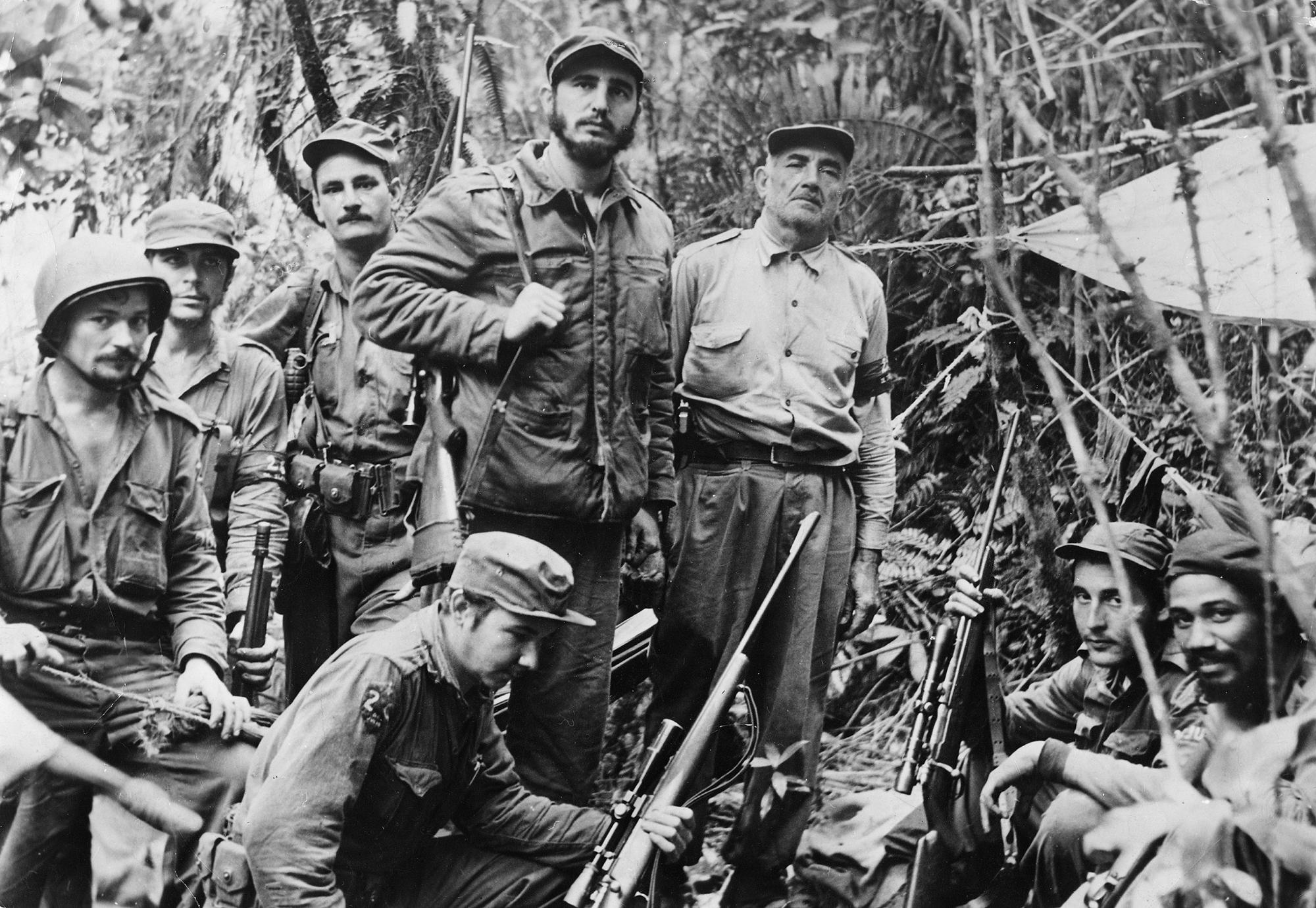
Initially, the guerrillas gained sympathy and support among poor peasants in the rural areas. As the movement expanded, people in the cities, who were equally dissatisfied with Batista’s US-backed regime, also extended their support to Castro.
Batista fled on 1 January 1959. The advance of the revolutionary fighters into the cities was greeted by masses of people filled with hope. Until then, Cuba had served as a playground for imperialist interests, with gambling and luxury prostitution catering to wealthy visitors, particularly from the United States.
The Cuban Revolution
The revolution was driven to advance further by the continuing confrontation with and opposition from the United States. In its first few years, the new government ended the domination of landlords and nationalised major capitalist interests, including US-owned companies.
This process resulted from several factors: the sustained pressure of workers and peasants demanding fundamental change, the economic embargo imposed by the United States, and assistance from the Soviet Union and Eastern European countries.
The Soviet Union operated a planned economy, offering a model distinct from the capitalist market, although under bureaucratic rule. The introduction of a planned economy in Cuba represented a significant step forward and had a profound impact on popular movements throughout Latin America and across the world.
Che played an important role in this process. From the beginning, he supported the revolution taking a socialist direction. He also emphasised that the revolution could not remain confined within Cuba’s national borders. For Che, the struggle for liberation had to be international.
1959 — 1967 · An illustrated timeline
Beyond Cuba: the journey of an internationalist
Open the illustrated timeline · 15 milestonesClose the timeline
For Che, the Cuban Revolution was a beginning. First as a representative of its revolutionary government, then as a guerrilla abroad, he continued searching for ways to extend the struggle against imperialism.
- 1959–1965Diplomacy & solidarity
- 1965Leaving office · Congo
- 1966–1967Bolivia · the final campaign
01 · 1959–1965 Taking the revolution onto the world stage
June–July 1959
INDIA
A new revolution meets the world
Che leads a Cuban goodwill delegation to India. It arrives in New Delhi on 30 June and meets Prime Minister Jawaharlal Nehru on 1 July. The visit opens an early chapter in Cuba’s relations with newly independent countries.
Sources: The Nehru Archive
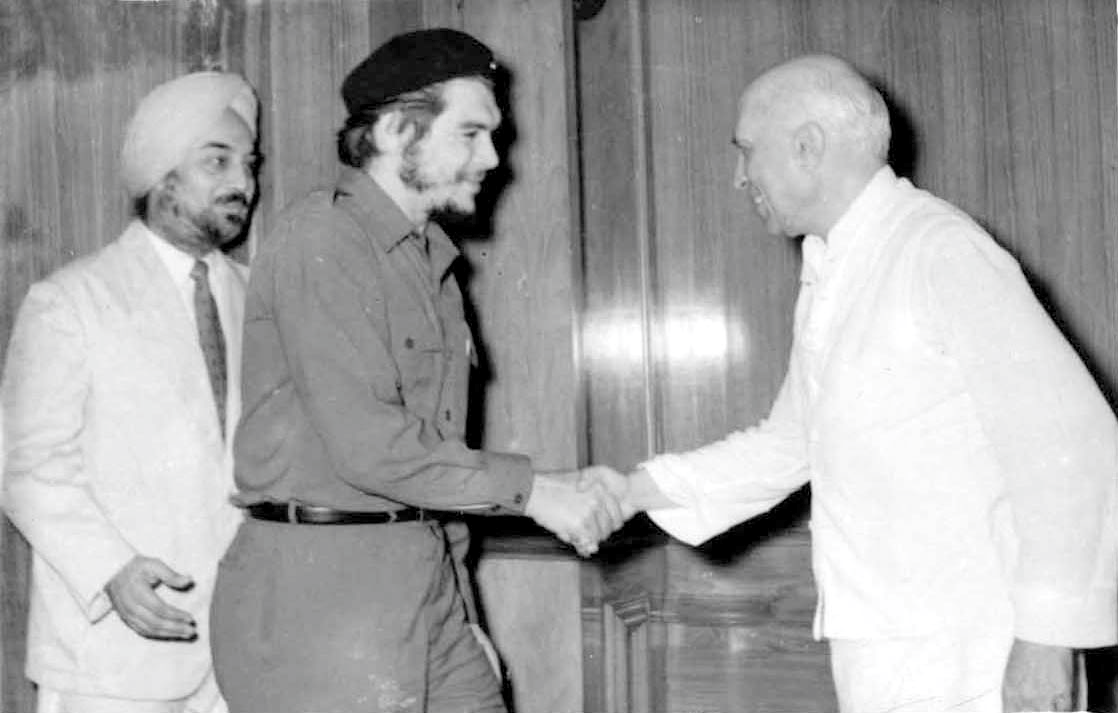
Che Guevara meets Indian prime minister Jawaharlal Nehru during his goodwill visit to India, July 1959. Photo source. The Nehru Archive · Selected Works of Jawaharlal Nehru, Vol. 50. Noncommercial educational use. 10 August 1959
BRIONI · YUGOSLAVIA
Across different political worlds
Che and Cuba’s goodwill mission meet Yugoslav president Josip Broz Tito at Brioni. These diplomatic encounters show the revolution seeking relationships beyond its own borders; they do not mean that every host shared Che’s political programme.
Sources: Historical Archives of Belgrade
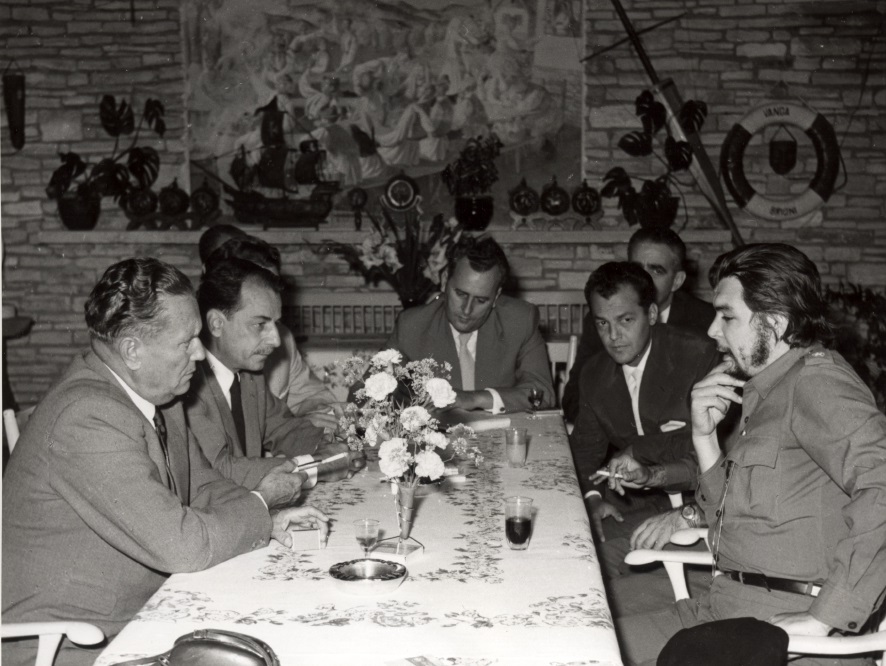
Che Guevara and Cuba’s goodwill mission meet Yugoslav president Josip Broz Tito at Brioni, 10 August 1959. Photo source. Historical Archives of Belgrade / Wikimedia Commons · CC BY-SA 3.0. October–December 1960
SOVIET UNION · EASTERN EUROPE · ASIA
Economic missions abroad
Che visits the Soviet Union, Eastern Europe, China and North Korea as a representative of revolutionary Cuba. He meets Mao Zedong in Beijing on 19 November, during a tour aimed at building economic and diplomatic links.
Sources: Published chronology · PDF · Wilson Center · archival record
July 1963
ALGERIA
Meeting a country emerging from colonial war
Che visits Algeria under President Ahmed Ben Bella. The encounter brings together representatives of two countries whose recent revolutions had challenged imperialist domination.
Sources: Published chronology · PDF · Contemporary diplomatic record
11 December 1964
NEW YORK · UNITED NATIONS
Cuba’s voice at the United Nations
Addressing the UN General Assembly for Cuba, Che condemns colonialism, apartheid and foreign intervention. He presents national liberation as part of an international struggle, giving his internationalism a prominent world platform.
UN11 · 12 · 1964Against colonialism and apartheid.
For the struggles for liberation.Sources: UN · 11 December 1964 · Read Che’s UN speech
December 1964–March 1965
AFRICA · CHINA
Governments, liberation movements and a return to China
After New York, Che travels through Africa, meeting governments and liberation movements. His itinerary includes Algeria, Ghana, Guinea, Mali, Tanzania and Egypt. During this period he also returns to China, where he meets Premier Zhou Enlai in February 1965.
Sources: SADC · liberation-history archive
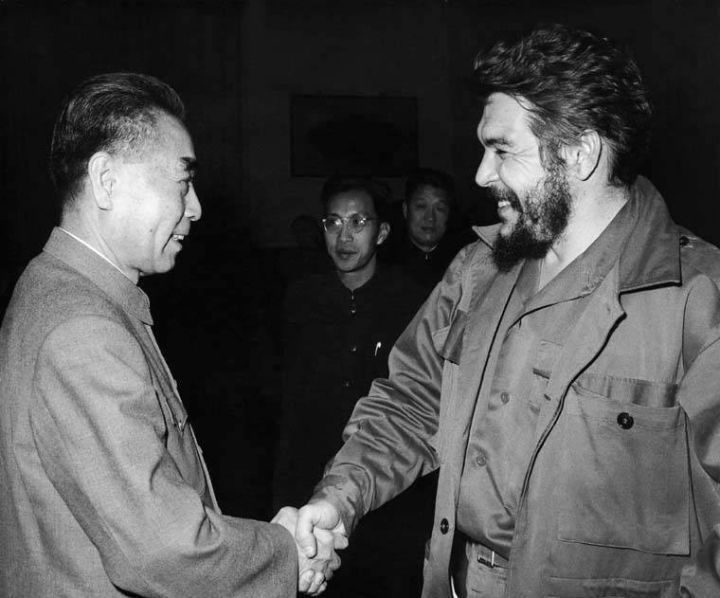
Chinese premier Zhou Enlai greets Che Guevara during his second visit to China, February 1965. Photo source. Unknown photographer / Wikimedia Commons · PD-China as listed on Commons. 24 February 1965
ALGIERS · ALGERIA
Internationalism must mean material solidarity
At the Afro-Asian solidarity seminar, Che argues that socialist countries must give stronger support to liberation movements and poorer countries. He challenges unequal economic relations rather than treating trade alone as adequate solidarity.
Sources: Che’s Algiers speech
02 · 1965–1967 Leaving Cuba: from Congo to Bolivia
April 1965
LEAVING CUBA
From government office to another struggle
Che leaves Cuba clandestinely for the Congo after leaving Castro a farewell letter renouncing his official positions. The letter becomes public when Castro reads it on 3 October 1965. The earlier diplomatic journeys and this departure are distinct stages of his life.
Sources: Che’s farewell letter · Congo Diary · publisher
April–November 1965
CONGO-LÉOPOLDVILLE · TODAY’S DR CONGO
The Congo campaign
Che and Cuban volunteers assist Congolese rebels. The mission fails and they withdraw in November. In his Congo diary, he critically examines the campaign’s weaknesses. This armed mission took place in today’s Democratic Republic of the Congo, distinct from his earlier diplomatic visit to Congo-Brazzaville.
Sources: Congo Diary · publisher
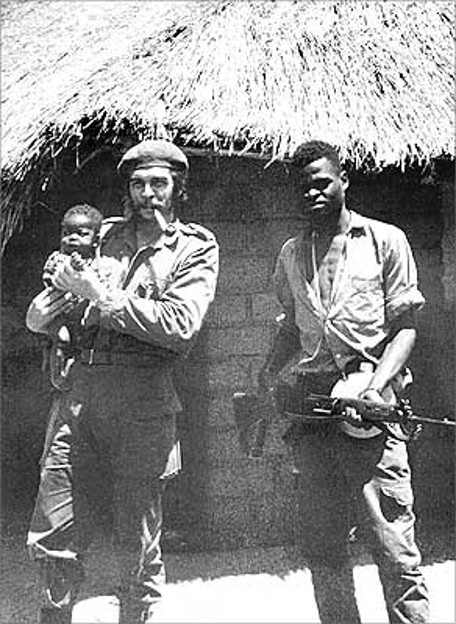
Che Guevara in the Congo during the 1965 campaign. The photograph is preserved by the Centro de Estudios Che Guevara in Havana. Photo source. Centro de Estudios Che Guevara / Wikimedia Commons · unknown photographer; public domain as listed on Commons. 1966
CUBA · IN SECRET
Preparing for Bolivia
Che returns secretly to Cuba and prepares with volunteers for a new guerrilla campaign in South America. Bolivia becomes the next focus of his effort to extend the revolution beyond Cuba.
Sources: Published chronology · PDF
November 1966
BOLIVIA · ÑANCAHUAZÚ
A new identity, a new guerrilla base
Travelling under an assumed identity, Che reaches Bolivia. His campaign diary begins on 7 November at the guerrilla base near the Ñancahuazú River. The preparations now become a campaign on Bolivian soil.
Sources: The Bolivian Diary
23 March 1967
BOLIVIA
The struggle enters open combat
A clash with a Bolivian army patrol brings the guerrilla struggle into the open. The campaign develops in conditions very different from those of Cuba: military encounters alone cannot establish the mass political roots needed for a successful revolution.
Sources: Guerrilla communiqué · 27 March · Socialistworld · A legacy of struggle
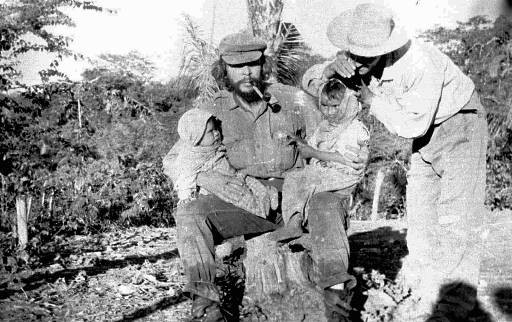
Che Guevara in Bolivia, 1967, in a photograph preserved by the Centro de Estudios Che Guevara in Havana. Photo source. Centro de Estudios Che Guevara / Wikimedia Commons · unknown photographer; public domain as listed on Commons. 16 April 1967
A MESSAGE TO THE WORLD
Solidarity with Vietnam and beyond
Che’s Message to the Tricontinental is published while he is in Bolivia. It calls for international solidarity with Vietnam and a wider struggle against imperialism.
Sources: Message to the Tricontinental
8 October 1967
QUEBRADA DEL YURO · BOLIVIA
Wounded and captured
Wounded during combat, Che is captured by Bolivian troops trained with US assistance. He is taken to the village of La Higuera and held in its schoolhouse.
Sources: National Security Archive · capture report · Declassified US record · National Security Archive · Bolivia
9 October 1967
LA HIGUERA · BOLIVIA
Executed as a prisoner, aged 39
Che is executed on orders from the Bolivian high command. CIA operative Félix Rodríguez is present. His death ends the journey, but his courage, integrity and commitment to international revolution continue to inspire—and to demand serious political reflection.
Sources: Declassified US record · National Security Archive · Bolivia
Internationalism and the question of strategy
This journey expressed Che’s conviction that struggle could not stop at national borders. Congo and Bolivia also revealed the limits of attempting to repeat Cuba’s guerrilla experience in different conditions. Socialistworld.net’s assessment honours his courage and internationalism while arguing for mass organisation and working-class leadership in socialist revolution.
Socialistworld · A legacy of struggle · Che Guevara — symbol of struggle
About the sources and dates
Dates are checked against Che’s letters and diaries, UN records, published chronologies and archival documents. A month or year is used where accounts differ on a precise day or month. Photographs are dated separately: the 1959 Nehru and Tito meetings occurred before Che left Cuba in 1965.
The working class and socialism
Although Che was determined to build an international socialist revolution, his greatest political weakness was his insufficient understanding of how such a revolution could be achieved. He was drawn towards guerrilla warfare as the principal method of winning a socialist revolution, rather than basing the struggle on the leadership of the mass working class.
Even in countries where the working class constitutes a minority of the population, its collective character and the consciousness developed through the social conditions of factories and workplaces prepare workers to confront the challenges of leading a socialist revolution. This was an essential lesson of the Russian Revolution of 1917.
The capitalist classes in neocolonial countries are tied to both the landlords and imperialism. They are unable to develop the economy in a comprehensive and balanced way or establish stable democracy. Where the tasks of the democratic revolution remain unfinished, they fall to the working class, supported by poor peasants and other oppressed layers. These tasks must be linked to socialist revolution and its international extension.
In Cuba, the brutality of the Batista regime and the political vacuum made guerrilla struggle appear to offer a way forward. Yet the general strike and the participation of workers in the cities at the end of the struggle also helped secure the revolution’s victory. Workers’ pressure helped push Cuba beyond the limits of the free-market system and towards a planned economy.
Drawing on the Cuban experience, Che attempted to repeat the method of guerrilla warfare, first in Africa and later in Latin America. Conditions in those countries were very different. In some, the working class occupied a much stronger position and possessed its own traditions of struggle and revolutionary experience. The lack of a rounded understanding of the working class’s role remained Che’s greatest political weakness.
The benefits of a planned economy
The Cuban Revolution demonstrated the potential of a planned economy to transform people’s lives. The expansion of education, the literacy campaign of 1961 and the provision of free healthcare were among its major social achievements.
The literacy campaign mobilised people on a mass scale and left an international legacy. It showed what could be achieved when society’s resources and collective effort were directed towards human needs.
These achievements must be defended. But they cannot be taken for granted. The collapse of the Soviet Union, the US embargo, bureaucratic mismanagement and the expansion of market measures have placed enormous pressures on Cuba’s economy and its people’s living conditions.
The Committee for a Workers’ International (CWI) defends the gains of the revolution while criticising bureaucratic rule. A planned economy needs democratic workers’ control and management, alongside international socialist cooperation, to develop and meet society’s needs.
What kind of regime emerged?
The government led by Castro and Che after the revolution was initially enormously popular and enjoyed widespread mass support. However, the revolutionary process did not establish a system of democratic workers’ and peasants’ power. The elements of workers’ control that emerged in some factories did not develop into democratic management by the working class itself.
Instead, a bureaucratic ruling apparatus developed, increasingly restricting the independent voice of the working class. In Cuba, Che began to encounter the obstacles that bureaucracy imposed on the further development of the revolution. He opposed the special privileges and material benefits enjoyed by government representatives and officials.
When Che visited the Soviet Union and Eastern Europe, he was repulsed by the luxurious lifestyles of the ruling bureaucracies and their attitudes towards the mass of the working class. He also became increasingly disillusioned with the growth of similar tendencies in Cuba. Yet his condemnation of bureaucracy did not develop into a clear political alternative capable of overcoming it.
His revolutionary experience led him to examine increasingly far-reaching questions. One of Che’s most admirable political qualities was his willingness to discuss and explore different ideas and perspectives. He had begun reading some of Trotsky’s writings and those of other Marxists, but his premature death cut short the development of his thinking.
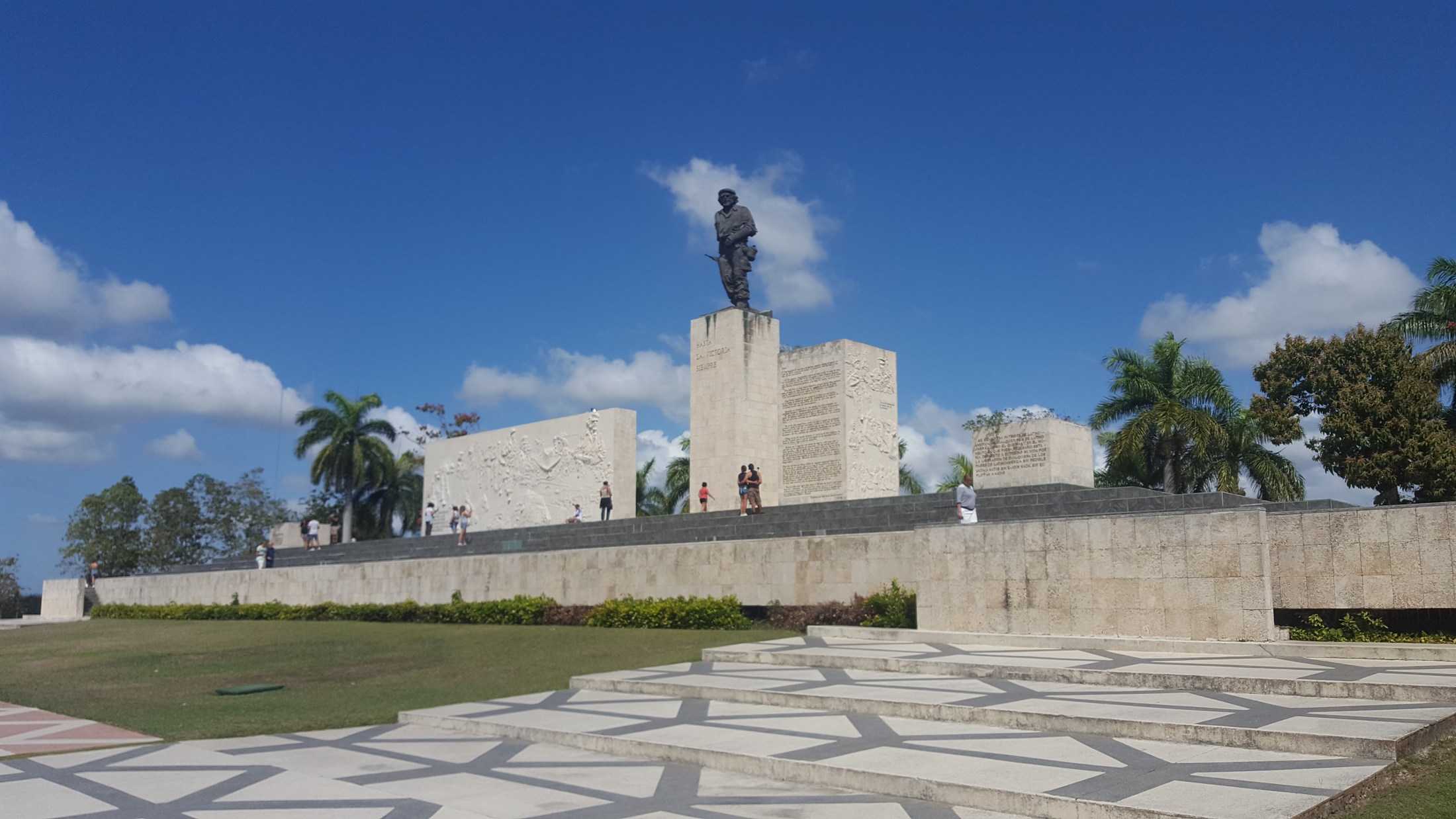
A legacy that lives on
Che’s political weaknesses had tragic consequences for his struggle. Their lessons remain important for new generations of workers and young people entering the fight against oppression, war and capitalism.
Nevertheless, his enduring legacy—his uncompromising opposition to oppression, his willingness to make enormous personal sacrifices and his revolutionary integrity—continues to inspire. The best tribute is to learn from his strengths and mistakes while building the organisations and mass strength of the working class.
By carrying his determination and internationalism into today’s struggles, new generations can continue the fight for the goal to which he devoted his life: an international socialist revolution.
Courage. Integrity. Internationalism.
Socialistworld.net
Continue reading
Related analysis from the Committee for a Workers’ International.
- Che Guevara 50 years on – revolutionary socialist and fighterTony Saunois · 9 October 2017
Che’s struggle, internationalism and political lessons.
- Che Guevara: A legacy of struggleDaniel Waldron · 18 November 2004
From The Motorcycle Diaries to revolutionary strategy.
- 60th anniversary of the Cuban Revolution2 January 2019
The revolution’s achievements and the question of workers’ democracy.
- Cuban protests – what do they represent?22 July 2021
Cuba’s crisis, the embargo and the need for democratic control.
Sources & image credits
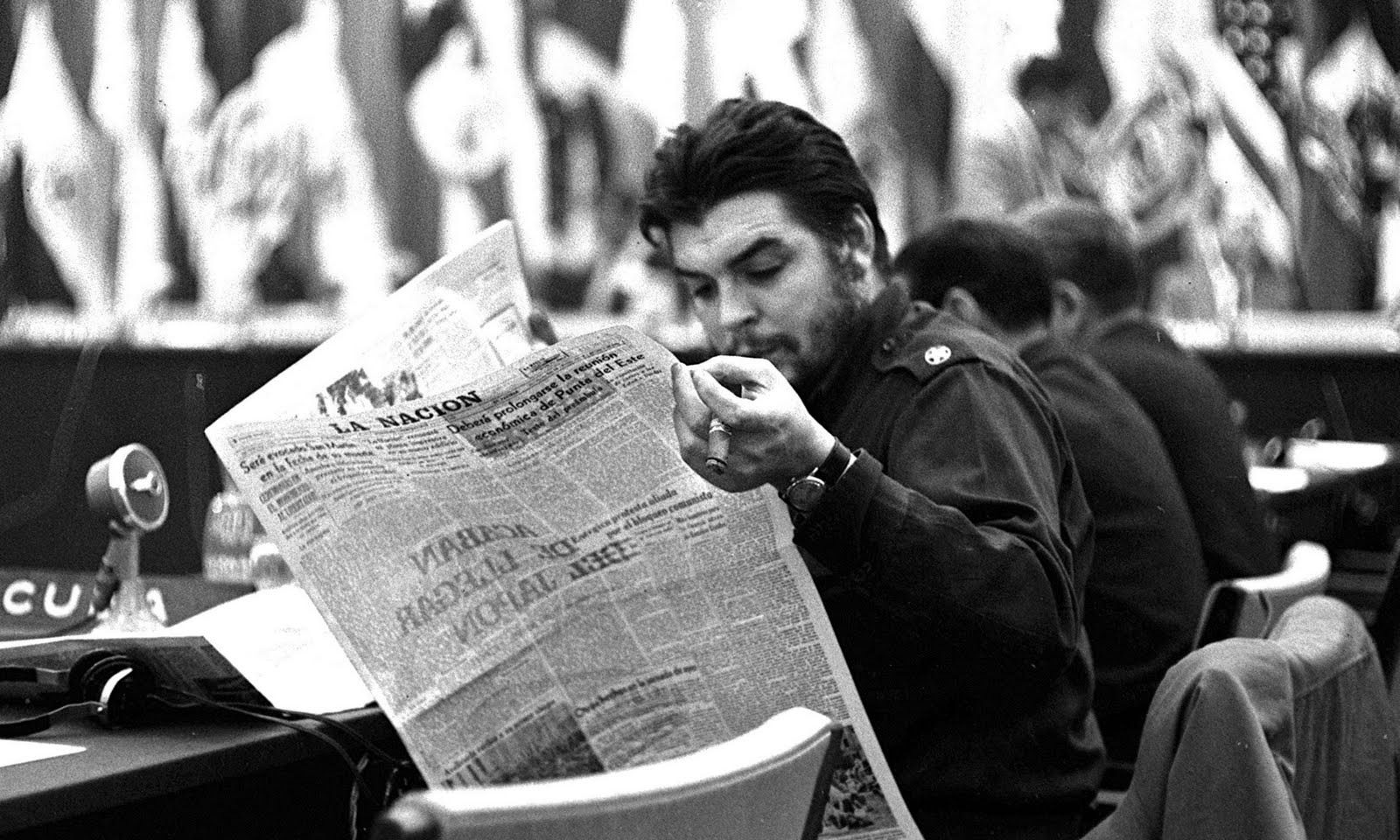
Header photograph: Che Guevara reading La Nación, Punta del Este, Uruguay, 1961. Photographer unidentified. Archive photograph reproduction; historical reference.
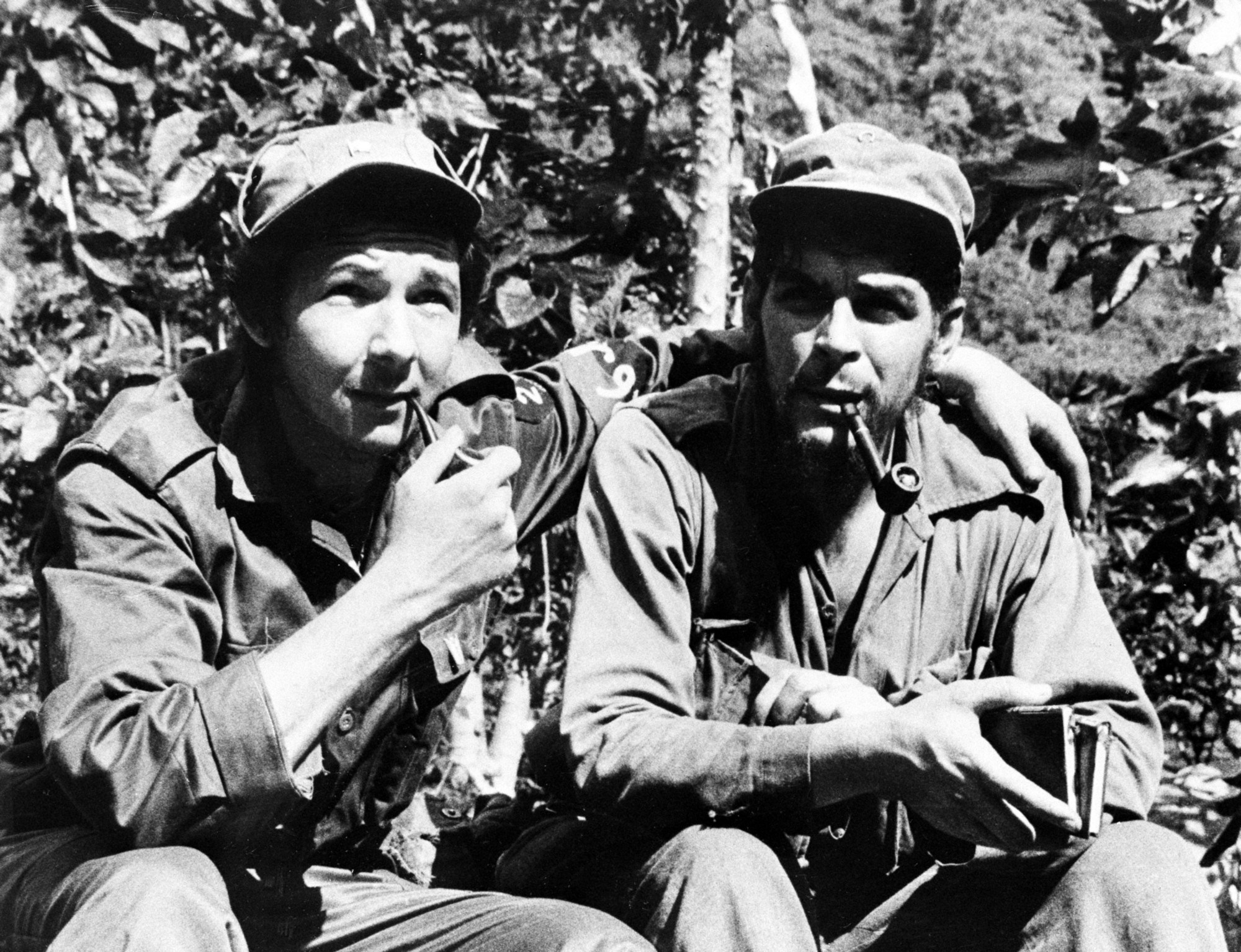
Raúl Castro and Che archive photograph (1958): unknown photographer; public domain as listed on Commons. 2019 memorial photograph: Jan Pešula, CC0 1.0. Source links appear in the captions.
Historical references: The Motorcycle Diaries (publisher); UNESCO: Cuba’s 1961 literacy campaign. Chronology: Che Guevara: On Socialism and Internationalism.