

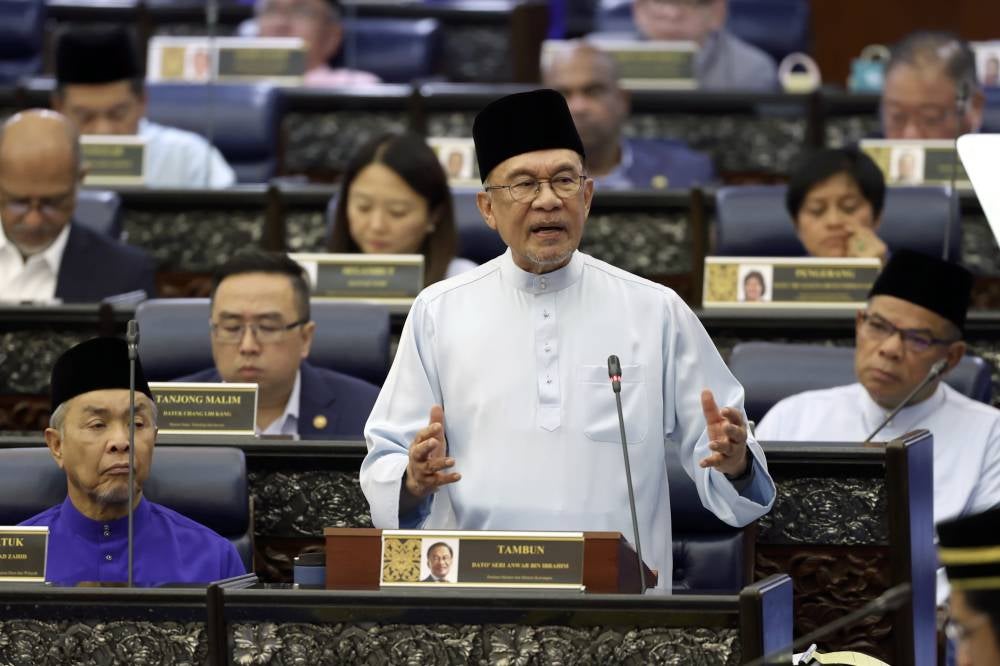
Prime Minister Anwar Ibrahim’s Budget 2027 has unveiled several measures, including an increase in the minimum wage, tax relief, financial assistance, and investments aimed at stimulating economic growth. With total federal expenditure of RM459.8 billion and projected economic growth of between 4.2% and 5.2% for the coming year, the MADANI government is once again attempting to convince the public that Malaysia’s economy is heading towards greater prosperity and stability.
However, behind the seemingly impressive economic figures and positive announcements, a fundamental question remains: is the country’s growing wealth translating into meaningful improvements in the living standards of the working class and ordinary people? The reality is that millions of workers continue to struggle with low wages, rising living costs, unaffordable housing, insecure employment, and various forms of exploitation at the hands of employers.
Although the government has announced increases in social assistance and wages, these measures remain inadequate in addressing the economic difficulties facing the majority of the population. Worse still, concessions granted to employers will exclude a substantial section of low-paid workers from receiving any wage increase at all.
The RM2,000 Minimum Wage Does Not Apply to Everyone!
One of the major announcements in Budget 2027 is the increase in the minimum wage from RM1,700 to RM2,000 per month, taking effect in June next year. The government claims that more than four million workers will benefit from the new minimum wage. However, at the same time, it has granted exemptions to micro, small, and medium enterprises (MSMEs) with annual sales revenue below RM50 million.
According to the government’s own figures, MSMEs employ nearly eight million workers, accounting for approximately half of the country’s total workforce. This raises serious questions about the fate of low-paid workers currently employed in these enterprises.
Based on a rough estimate using formal-sector wage distribution data from the Department of Statistics Malaysia (DOSM), approximately one million formal workers earning below RM2,000 are currently employed in MSMEs. This means that these workers, alongside millions of informal workers, including those in the gig economy, could be excluded from the announced wage increase. We must also consider that informal workers, who often lack job security and protection under the Employment Act 1955, now account for nearly 20% of Malaysia’s workforce.
The government justifies these exemptions by arguing that smaller businesses need time to adjust to the new minimum wage. But why should the lowest-paid workers be forced to shoulder the burden of this economic adjustment? Why should this burden not instead fall upon employers who are enjoying substantial profits? An annual sales revenue of RM50 million is hardly insignificant, and the exemption does not even take into consideration the actual profits these businesses are making.
Furthermore, problems with minimum-wage enforcement existed long before this Budget was announced. The Ministry of Finance’s Economic Outlook 2026 revealed that approximately 23.4% of business establishments examined were not complying with the national minimum wage. Yet, to date, no sufficiently concrete measures have been announced to tackle this problem.
Is RM2,000 Enough for a Dignified Standard of Living?
Even if every worker were to receive the new RM2,000 minimum wage, it would still fall far short of what is required to maintain a decent standard of living, particularly for those living in urban areas.
According to the Belanjawanku 2024/2025 expenditure guide prepared by the Employees Provident Fund (EPF), a single person who owns a car in the Klang Valley requires approximately RM2,800 per month to maintain a reasonable standard of living, including a modest amount for savings. For a married couple with one child, the estimated monthly expenditure rises to RM6,420.
How is a worker earning RM2,000 expected to comfortably afford rent, food, transportation, electricity, healthcare, and the needs of their family? After the mandatory 11% EPF contribution alone, their take-home pay falls to approximately RM1,780, even before other deductions.
Ironically, the government itself has acknowledged the need for a higher living wage, with government-linked investment companies (GLICs) and government-linked companies (GLCs) raising their living-wage benchmark from RM3,100 to RM3,400 per month. The government has also introduced a starting wage of RM2,500 for semi-skilled workers and graduates.
If the government recognises that workers in GLCs require RM3,400 to achieve a decent living standard, why should workers elsewhere be expected to survive on just RM2,000? Can a graduate earning RM2,500 realistically afford to rent a home, repay their education loans, own a vehicle, and eventually raise a family without falling into debt?
As far back as 2020, Sosialis Alternatif had already demanded a minimum wage of RM2,208, based on the Poverty Line Income announced at the time. Six years later, the government is still proposing a lower amount, despite the continued rise in prices and everyday living expenses. Meanwhile, escalating property prices and rental costs are placing enormous pressure on young workers who are trying to build an independent future.
Sosialis Alternatif is currently building a campaign for a minimum wage of RM20 per hour for all workers, which we consider a reasonable starting point towards achieving a fairer living wage under present conditions.
The question of minimum wages cannot be separated from the rising cost of living. An increase in nominal wages does not necessarily translate into greater purchasing power when the prices of essential goods and services continue to rise. Without measures to control housing costs, provide sufficient public housing, ensure affordable public transportation, and expand quality healthcare and education, any modest wage increase will quickly be swallowed up by workers’ daily expenses.
Inadequate Public Services Are Further Burdening the Working Class
The struggle for higher minimum wages must also be linked to the government’s responsibility to provide adequate, high-quality public services. For low-paid workers, access to public hospitals, education, transportation, and affordable housing plays a crucial role in determining their standard of living. When these facilities fail to expand in line with society’s needs, ordinary people are increasingly forced to spend a significant portion of their wages on services provided by the private sector.
Although Budget 2027 increases the Ministry of Health’s allocation from RM46.5 billion to RM47.7 billion, this represents an increase of only around 2.6%. More alarmingly, the ministry’s development allocation has remained virtually unchanged from the previous year. The government has announced the construction of nine new healthcare facilities, but the four projects specifically identified consist of specialist outpatient and day-care complexes, a specialist dental centre, and integrated health complexes. These are not full-fledged general hospitals equipped with additional inpatient wards and hospital beds.
This is particularly concerning when existing public hospitals are already struggling with severe overcrowding. In April 2026, the Health Minister himself acknowledged that many government hospitals were operating at or near full capacity. With Malaysia’s population continuing to grow, alongside an even faster increase in the elderly population, demand for public healthcare services will only intensify.
At the same time, rising private healthcare costs and medical insurance premiums are placing additional financial pressure on working-class and middle-income households. More families that could previously afford private medical treatment are increasingly being pushed towards public hospitals. When public hospitals lack sufficient capacity, patients face not only longer waiting times but also delays in receiving potentially life-saving treatment.
A similar problem exists in higher education. Despite the Ministry of Higher Education’s allocation increasing from RM18.6 billion to RM19.1 billion, Budget 2027 makes no announcement regarding the construction of new public universities. In 2026, out of 107,875 eligible applicants seeking admission to undergraduate programmes at public universities, only 82,092 received offers. This means that nearly 26,000 qualified applicants did not receive an initial offer and were forced to pursue appeals or consider other alternatives. These figures alone raise important questions about the capacity of public higher education institutions to meet society’s demand and produce sufficient graduates for the country’s future development.
The shortage of university accommodation also forces many students to rent rooms or houses outside their campuses, often at increasingly unaffordable rates. In Budget 2027, the government announced a student residential project intended to accommodate 10,000 Universiti Malaya students, but its first phase is only expected to be completed in 2031. For working-class families with children pursuing higher education, accommodation, transportation, food, learning materials, and tuition fees at both public and private institutions will continue to impose a substantial financial burden.
Ultimately, an additional RM300 in monthly wages cannot be considered an adequate solution when workers are simultaneously being forced to spend more on healthcare, education, housing, and transportation. Adequate public services would not only improve living standards but also reduce working-class families’ dependence on debt and expensive private services.
Low Unemployment, Yet Millions of Workers Lack Job Security
The MADANI government also takes pride in the country’s supposedly low unemployment rate of around 3%. According to DOSM, unemployment fell to 2.9% in August 2026, representing approximately 511,600 unemployed individuals.
Although this indicates a statistical reduction in unemployment, it fails to present a complete picture of the actual employment situation in Malaysia. Under the labour force survey methodology, an individual who performs at least one hour of paid work during a reference week can be classified as employed, even without a permanent job or sufficient monthly income.
This includes workers in the gig economy, such as food-delivery riders, parcel couriers, and e-hailing drivers. The government itself estimates that Malaysia has approximately 1.64 million gig workers. Although the Gig Workers Act came into force in March 2026 and introduced several new protections, these workers still do not enjoy the same employment rights as regular employees, including a guaranteed RM2,000 monthly minimum wage, job security, and equivalent rights to collective bargaining with employers.
At the same time, DOSM reported that approximately 35.2% of tertiary-educated workers were employed in semi-skilled or low-skilled occupations during the second quarter of 2026. This reflects the mismatch between educational qualifications and available employment opportunities, as well as the difficulties facing a substantial proportion of highly qualified young people.
A graduate who is forced to work as a food-delivery rider because they cannot secure employment corresponding to their qualifications will not be classified as unemployed. But can this genuinely be celebrated as an achievement in providing quality employment opportunities for young Malaysians?
Furthermore, the exploitation of millions of migrant workers cannot be ignored. Although existing minimum-wage legislation also covers foreign workers, with certain exceptions such as domestic workers, many continue to face unpaid wages, passport confiscation, recruitment debts, and the abuse of contract employment arrangements. Malaysians are also well aware of the widespread exploitation of migrant workers by employers and recruitment agencies, including cases where workers are denied even the statutory minimum wage.
When employers can exploit migrant workers by paying below the legal minimum or imposing unlawful wage deductions, they can also create downward pressure on the wages and employment opportunities of local workers. The solution, therefore, is not to blame migrant workers but to ensure that all workers, regardless of nationality, receive equal wages and employment protections. Stronger enforcement against employers is necessary to end the exploitation of migrant labour, which ultimately undermines the interests of the working class as a whole.
The Nation’s Wealth Is Growing, But Who Is Benefiting?
33.9%
62.0%
4.1%
According to DOSM, Malaysia’s Gross Domestic Product exceeded RM2 trillion in 2025. Yet, of this enormous wealth generated through economic activity, compensation of employees accounted for only 33.9%, while Gross Operating Surplus represented approximately 62%.
A substantial portion of this operating surplus reflects income generated by business operations, including the returns enjoyed by employers and owners of capital. This highlights the unequal distribution of wealth within the Malaysian economy. Although capitalists and major investors constitute only a tiny minority of the population, they continue to command an enormously disproportionate share of the wealth generated through the collective labour of millions of workers.
Despite improvements in productivity and investment, the proportion of national income received by ordinary workers remains low. The working class, whose labour sustains the country’s manufacturing, services, and commercial activities every day, forms the backbone of the national economy. Yet, these same workers are continually forced to struggle under increasingly unbearable financial pressures.
Meanwhile, Budget 2027 offers a range of incentives and tax concessions to the business sector. Corporate income-tax rates for MSMEs have been reduced by one percentage point across two taxable-income brackets, providing additional savings of up to RM6,000 annually. The government has also introduced preferential tax rates as low as 5% for qualifying income earned by Global Services Hub companies, alongside various other investment incentives and tax exemptions.
Although small businesses also face genuine increases in operating costs, the government should not use these difficulties as a justification for maintaining poverty wages among the working class. The more important question that must be raised is whether the profits generated by businesses are being distributed fairly.
For middle-income earners, the government has announced an increase in individual income-tax relief from RM9,000 to RM12,000, together with a one-percentage-point reduction in tax rates for certain income brackets. The government claims that approximately five million taxpayers will benefit from savings of up to RM1,600 annually.
However, RM1,600 represents the maximum possible saving, not the amount every individual will actually receive. Furthermore, low-paid workers who do not pay income tax will receive no benefit whatsoever from these tax relief measures.
Among the announcements that attracted public attention were tax relief for pet vaccinations, AI software subscriptions, and other lifestyle expenses. Yet, when examined in practical terms, these concessions offer very little meaningful relief. For example, an eligible pet vaccination expense of approximately RM150 would produce a tax saving of just RM12 for someone whose marginal income-tax rate is 8%. Although such measures may offer minor benefits to certain individuals, they do nothing to address the escalating cost of rent, food, and transportation that households must confront every month.
At the same time, escalating conflict in the Middle East is creating new pressures on international markets. Attacks originating from Yemen against Saudi Arabian oil facilities and infrastructure in October have further intensified concerns over the stability of global oil supplies. If the government responds to international economic pressures by reducing petrol subsidies in the future, the resulting increase in household expenditure could far outweigh whatever income-tax savings have been offered.
Higher Wages and Better Living Standards Require Working-Class Struggle
The reality is that the low-wage crisis facing Malaysian workers is not simply a question of insufficient government funds or inadequate worker productivity. It is fundamentally connected to an economic system that prioritises private profits and allows employers to exert enormous influence over economic policies and the direction of national development in accordance with their business interests.
For decades, the working class has produced tremendous wealth for the Malaysian economy. Yet whenever demands for higher wages, stronger social welfare, or expanded employment protections are raised, arguments about business costs, competitiveness, and investor confidence are repeatedly used to restrict those demands.
The increase in the minimum wage to RM2,000 will undoubtedly provide some relief to workers who are eligible to receive it. The same applies to the additional cash assistance and social benefits announced under Budget 2027. However, these measures remain far from sufficient to guarantee a dignified standard of living for millions of workers and ordinary Malaysians.
The working class must demand a genuine living wage based on the actual cost of living, regularly adjusted to reflect rising prices and implemented without exemptions that exclude low-paid workers. At the same time, labour-law enforcement must be strengthened, gig and migrant workers must receive equal protection, and all workers must have the freedom to organise themselves into trade unions and engage in collective bargaining with their employers.
The struggle for higher wages must also be connected to demands for the large-scale construction of affordable public housing, quality free healthcare and education, affordable public transportation, and a progressive taxation system that places a greater burden on corporate profits and the accumulated wealth of the economic elite.
However, economic demands alone will never be sufficient if the working class continues to depend on political organisations that defend the capitalist free-market system. Trade unions, youth movements, grassroots organisations, and ordinary people must build an independent, democratic political force rooted in the interests of the working class. We need a mass workers’ political party capable of advancing the demands of ordinary people while putting forward a political programme to challenge the power of the capitalist class.
A socialist programme is necessary to connect the struggle for higher wages and better welfare with the demand to bring the major industries under the democratic control of working-class organisations. Only then can the wealth collectively produced by society be directed towards meeting the needs of the majority, rather than securing the profits of a small minority of wealthy capitalists.
Budget after Budget may be announced with ever-larger figures. But as long as the direction of the economy and the distribution of wealth remain determined by the interests of private profit, the working class will continue to struggle merely to reclaim a small portion of the wealth it has produced.
Genuine improvements in living standards will not come from Budget promises alone, but through an organised, united, and politically independent working class with the strength to challenge the capitalist system itself.