

HARTALSE-MALAYA
The forgotten history of working-class struggle.
Workers and their allies stopped business as usual. Their demand: a voice in Malaya’s future.
Read the story
Hartal 2026 collection
A shared day of protest across Malaya and Singapore.
A mass stoppage of work, trade and everyday business.
A broad alliance campaigning for an alternative constitution.
79 YEARS AFTER HARTAL SE-MALAYA
The forgotten history of the working class struggle
One of our organisation’s most important events, this annual commemoration of the All-Malayan general strike (Hartal) of 1947 serves to remind socialists in Malaysia today of not just the revolutionary power of the working class at its zenith more than seven decades ago, but more crucially also as a call to learn from and correct its errors, in order that world capitalism, in its death agony still, will finally be brought to its knees.
1945 → 1947
HARTAL 1947
A brief history on a class perspective
The bloody end of WWII in August 1945 was however for the people of Malaya and Singapore a most opportune moment. The economy practically tanked: poverty and prices were skyrocketing, working families were going hungry, and unemployment was rampant. Yet for the first time in centuries, the colony was effectively absent of colonial rule—at least, that is, until the flailing British Empire returned in full force.
From town to country could be felt a very real prospect for independence, and calls for the British to leave for good rose by the day. Sensing that its prized colony was growing untenable, the British Military Administration doubled down and, in desperation, proposed the Malayan Union (MU). To nobody’s surprise, no sooner had the proposal been put forward than it severely backfired, fueling already brewing opposition from Malay nationalists who saw it as a threat to Malay sovereignty.
Filling this political vacuum were two major contenders: the pro-British Malay aristocrats in UMNO; as opposed by organisations on the Left—namely Parti Komunis Malaya (PKM), the Malayan Democratic Union (MDU), Parti Kebangsaan Melayu Malaya (PKMM), and their various front organisations as well as women and youth wings. Still, defying opposition from both sides, so arrogant were the British that they went on with the Malayan Union anyway, officially forcing it into existence on 1 April 1946, making a fool out of everyone—itself included.
The rise of UMNO, Britain’s obvious choice, compelled the Left to join forces despite their differences. In December, PKM and the MDU cofounded, with PKMM, the Pan-Malayan Council of Joint Action (PMCJA—later the All-Malaya or AMCJA); though for “pragmatic” purposes, PKMM would soon spin off and form Pusat Tenaga Rakyat (PUTERA) with left-leaning Malay organisations.
Meanwhile, PKM, already highly influential within the fast-growing labour movement at the time, established the Pan-Malayan Federation of Trade Union (PMFTU), whose growing network of unions helped organise workers across Malaya and Singapore. In addition to cutting across ethnic, religious, and cultural differences, PMFTU had a wide base of support across various economic sectors: plantation workers, miners, transport workers, teachers, urban labourers, small business owners, and even housewives—empowering it to coordinate large-scale strikes and protests all across the colony, right up until Hartal Day.
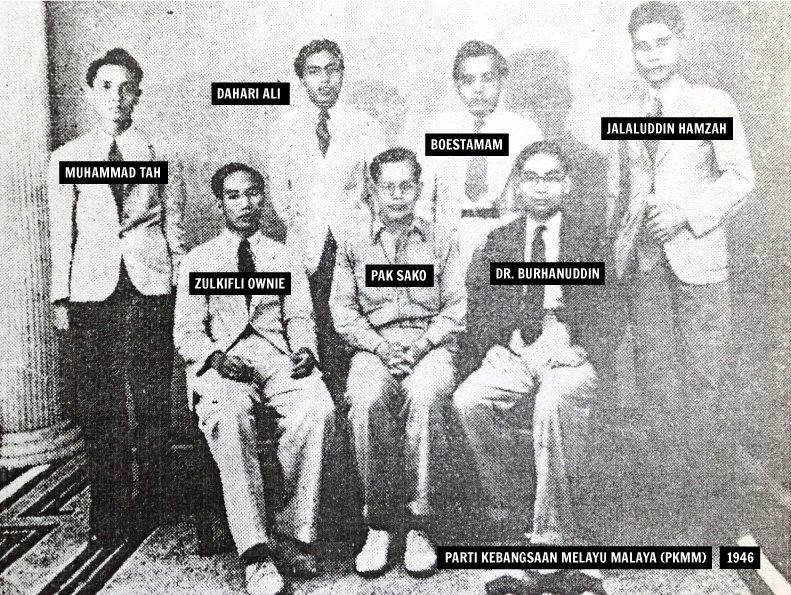
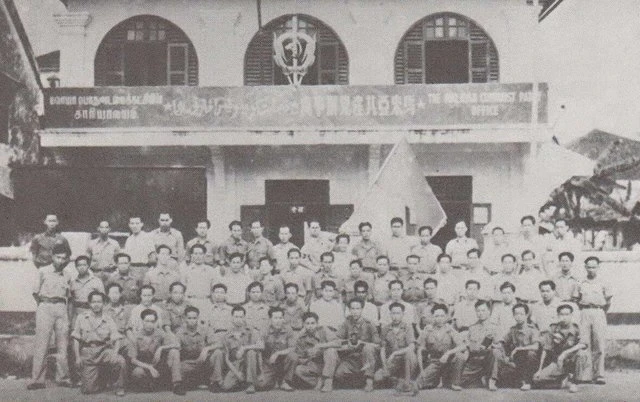
A progressive alternative to divide-and-rule?
The British Empire, fearing it would soon have no choice but to succumb to the fate of Dutch Indonesia who had been wrestled from power not too long ago, entered into secret negotiations with UMNO, resulting in the so-called “Anglo-Malay agreement” that would lead to the formation of the Federation of Malaya later. In opposition to this very elusive development, the PUTERA-PMCJA coalition was formed in March 1947. An alternative to impending neocolonial rule was urgently needed.
After a few months of broad consultation, the People’s Constitutional Proposals for Malaya were finalised on 10 August 1947 and publicly promoted in September. Granted, some articles were more progressive than UMNO’s, such as everyone being “Malay” regardless of race. Yet, although more “secular” and democratic, they remained reformist in nature. Rather than overthrow an inherently exploitative system, they sought to give our own capitalist class a go at the nation’s wealth.
Hence, the people’s movement ended up being hijacked by local capitalists and their cronies, through business organisations and political representatives, including figures who would later form the MCA in 1949. After all, these non-Malay bourgeois agents teamed up with the Left only to make up for their repeated failure to appeal to the British for a more favourable position of power. Where these opportunist elites stood, national independence meant only replacing the foreign bourgeoisie with a native one.
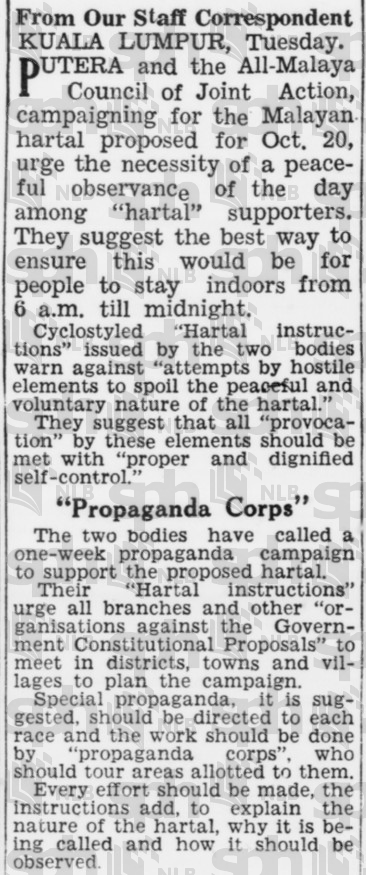
In the meantime, the success of the most recent general strikes in Melaka and Ipoh in September was particularly encouraging. Soon, PUTERA-AMCJA released the Hartal Manifesto, calling upon “all those who regard Malaya as their real home to cease work and remain indoors” on 20 October 1947.
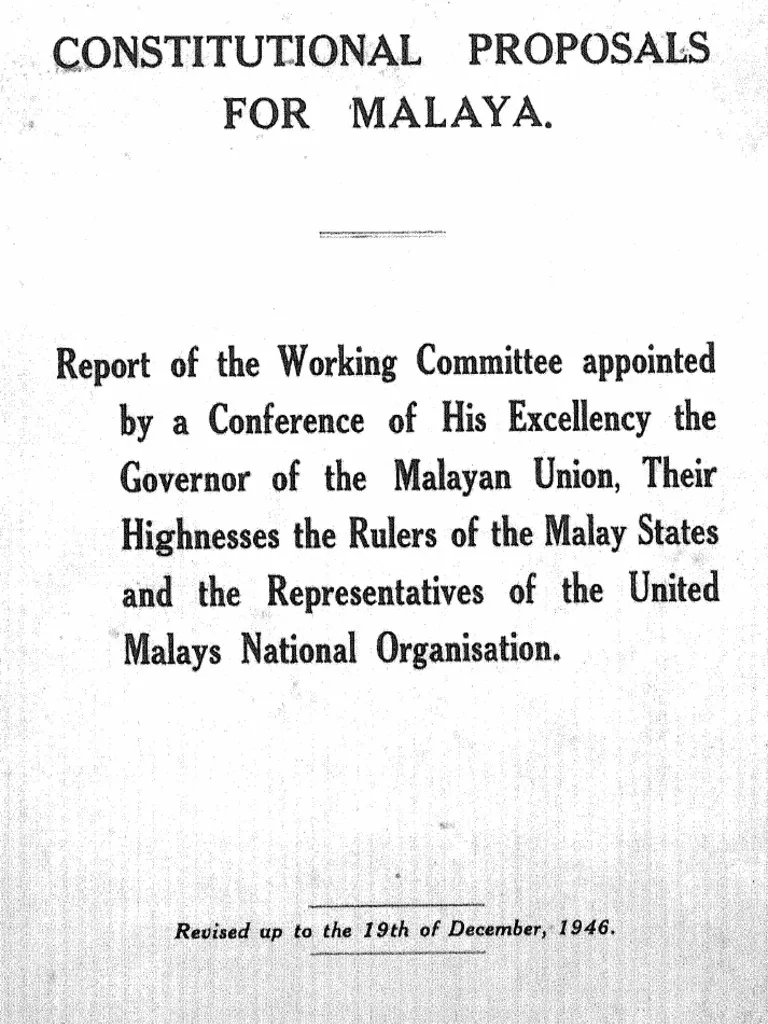
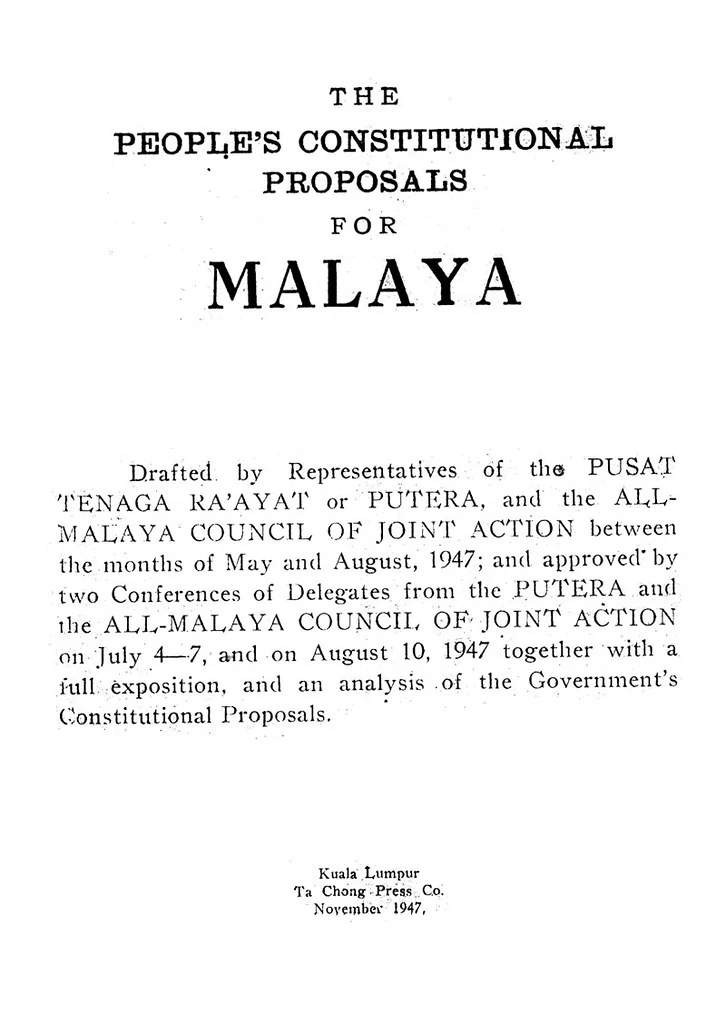
“All those who regard Malaya as their real home to cease work and remain indoors.”
The Hartal call, as quoted in the commemorative essay
15–16 October 1947
Preparing a shared day of protest
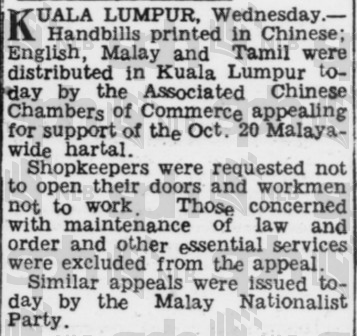
These reports describe the organisers’ call for peaceful participation and an appeal circulated in four languages. They record the preparations, rather than proving how every participant acted.
All hell broke loose
On Hartal Day, other than a few European businesses, the economy across the Union and Singapore went flatline, and capital stopped flowing. Workers from different industrial sectors and backgrounds, together with farm labourers, small business owners and other supporters, took part in this colony-wide general strike. Widespread participation brought trade and transport in many towns to a standstill.
Across the wider labour struggles of 1945–48 and the subsequent Emergency, ferocious, to say the least, was the Empire’s repression. Strikebreaking gangsters, Japanese POWs, and over-the-top police plus military forces were deployed to terrorise picketers. Surveillance was heightened, and the press was severely censored. PUTERA-AMCJA leaders, especially the more radical ones in PKM, were arrested and forcibly detained, some even tortured, if not outright murdered, while many more were exiled, or forced into hiding.
In June 1948, the British declared a state of Emergency, essentially an official declaration of war on the people, and a means of legitimising its dictatorship. A tragedy it was, indeed, that the Left had not been equipped with a revolutionary socialist program to defend the movement against this tyranny. Rather, everything fell apart. PKMM split, on the one hand, into moderates who would soon return to UMNO’s fold, and on the other, “progressive” reformists who were the genesis of the social democrats of today. The MDU, too, suffered a similar fate.
The more “revolutionary” leaders hopped over to the side of PKM, who had however abandoned the working class in the cities and retreated to the jungles. This return to peasant-based, Maoist guerrilla warfare would spell the end of the isolated “communists” over the next 12 years of unwinnable struggle against a spooked empire. In these were seen the rapid decay of labour politics and the mass’ further descent into social isolation and economic misery. Decades later, the Left’s failure remains a thorn in the flesh; its lessons, however, more relevant now than ever.

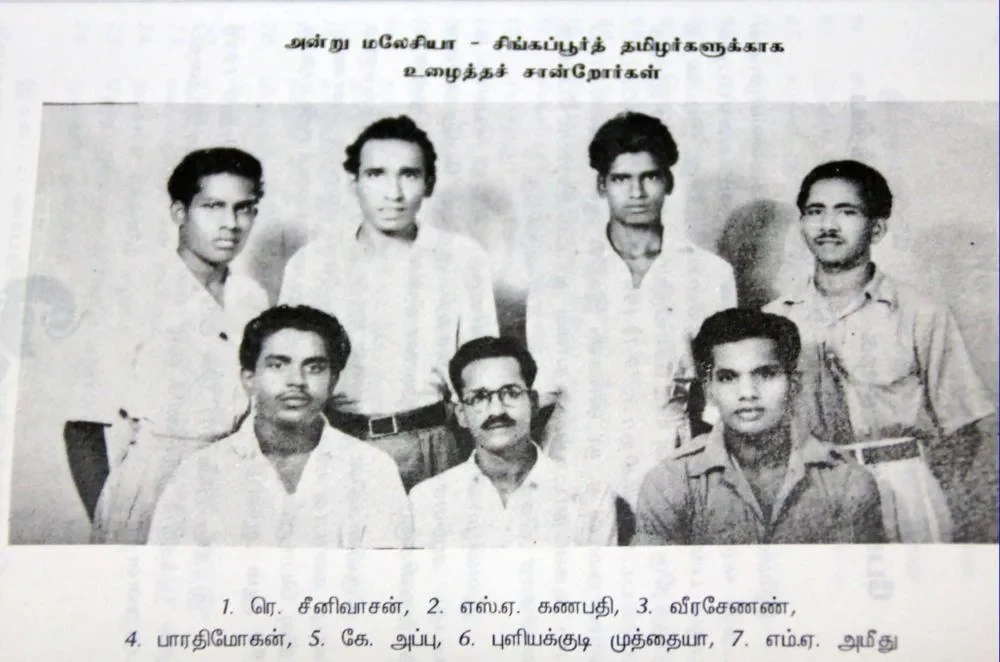
Organisation and industrial struggle continued into 1948. This photograph of S. A. Ganapathy speaking was taken in April, before the Emergency declarations in June.
Problems & Perspective
How is Hartal relevant for Malaysians today?
The decades after Hartal saw the consolidation of power among Malay bourgeois nationalists and the expansion of divide-and-rule policies, while the defeat of the Left during the Emergency and, later, the neoliberal era crippled the class struggle and emboldened racist politicians till this day. So, only by grappling with this failure can we truly develop a revolutionary perspective capable of rebuilding the Left.
Specifically, what went wrong with the Left?
Despite its enormous influence over the militant labour movement, the PKM failed to develop an independent revolutionary programme capable of leading the anti-colonial struggle. Following Stalin’s “two-stage” theory, its leadership subordinated the working class politically to a bourgeois-democratic alliance, relying on local capitalists whose interests ultimately diverged from those of the masses. Rather than linking democratic demands to the struggle for workers’ power, the PKM confined the movement to constitutional reform. When British repression intensified in 1948, the party increasingly turned towards Maoist-inspired guerrilla warfare, abandoning its urban proletarian base. This strategic retreat, compounded by the Briggs Plan, further isolated the revolutionary movement and contributed to its eventual defeat.
Theory of permanent revolution, vindicated
Against Stalin’s “socialism in one country” theory, Trotsky correctly stated that capitalists in such backward economies as early-1900s Russia were unable to lead the democratic revolution, much less a socialist one. This much is clear from the experience of Hartal, from which must again be concluded that a socialist world can only be arrived at under the leadership of the international working class. Thus, it begets socialists in Malaysia to build this leadership through an independent labour party that works as part of a resolutely revolutionary socialist international.
About this web edition and factual edits
The organisation’s 2025 commemorative essay has been updated for the 79th anniversary in 2026. The original commemoration was held on 1 November 2025; that date is not an upcoming event announcement. Its socialist argument and class analysis are retained. Print line-breaks and minor typographical errors have been cleaned up.
The web edition distinguishes the finalisation of the People’s Constitutional Proposals on 10 August 1947 from the September campaign; identifies the MCA as a party formed later, in 1949; and places repression within the wider 1945–48 struggles and subsequent Emergency. Uncorroborated figures for 70% participation, a £4 million loss, and the precise PMFTU membership/workforce ratio have been replaced with qualitative descriptions. The sources below allow readers to compare contemporary accounts.
1946 — 1948
The road to Hartal
The Hartal grew out of workplace organisation and a contest over the constitution. Follow the key turning points before and after 20 October.
A general strike links Singapore and Johor
The General Labour Union called a general strike in Singapore and Johor against arrests of union members and former anti-Japanese fighters.
Read the source ↗The constitutional question enters a new phase
The Malayan Union came into being, while Singapore was administered separately. Debates over citizenship and political representation became central to the postwar struggle.
Read the source ↗PUTERA brings together the Malay Left
A conference in Kuala Lumpur formed Pusat Tenaga Rakyat, bringing together Malay left organisations including PKMM, API and AWAS.
Read the source ↗A People’s Constitution offers an alternative
PUTERA–AMCJA finalised the People’s Constitutional Proposals as an alternative to the official Federation scheme. The constitutional struggle raised the question of who should shape Malaya’s future.
Read the source ↗Local hartals and a wider mobilisation
September newspaper reports described hartal planning and government warnings to employees. Preparations for a pan-Malayan stoppage developed before the action on 20 October.
Read the source ↗HARTAL: workers and allies halt everyday business
Workers, traders and political organisations took part in a coordinated stoppage against the official constitutional proposals. Singapore reporting described closed shops, disrupted transport and idle docks.
Read the source ↗The Federation takes effect
The Federation of Malaya replaced the Malayan Union. The mass opposition of 1947 had not secured adoption of the People’s Constitutional Proposals.
Read the source ↗Emergency declarations transform political life
Emergency measures began in parts of Malaya on 16 June, extended across the Federation on 18 June, and reached Singapore on 24 June.
Read the source ↗People & organisations
A movement across boundaries
Unions, political organisations, young people and women came together in a campaign that linked daily life to the question of self-government. Open the names below to place them in the story.
PUTERA
Pusat Tenaga Rakyat
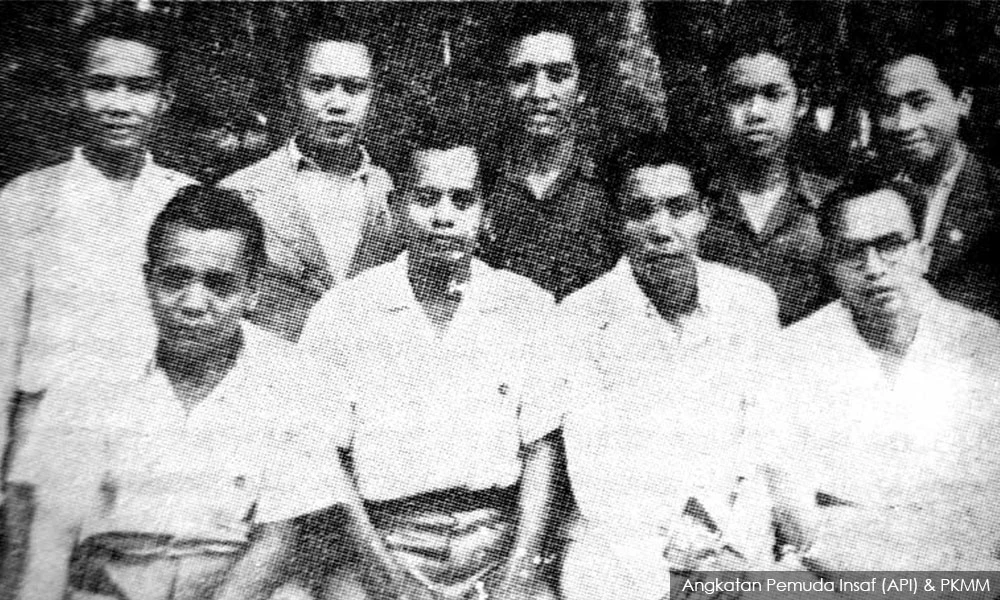
A coalition of Malay left organisations formed on 22 February 1947. PKMM, API and AWAS were part of the wider Malay left movement.
AMCJA
All-Malaya Council of Joint Action
A broad coalition of organisations opposing the official constitutional settlement. Together with PUTERA, it promoted the People’s Constitutional Proposals and the Hartal.
PMFTU
Pan-Malayan Federation of Trade Unions
A major federation connecting unions and industrial struggles across Malaya. Its organisation helped make labour a decisive political force.
PKMM
Parti Kebangsaan Melayu Malaya
A Malay nationalist organisation on the Left, central to the PUTERA coalition and the struggle for independence.
API / AWAS
Angkatan Pemuda Insaf / Angkatan Wanita Sedar
Youth and women’s organisations within the Malay left movement. Their participation challenges an account of anti-colonial politics centred only on elite negotiations.
The constitutional alternative
Who would shape Malaya?
The People’s Constitutional Proposals offered a different basis for self-government. Among their central ideas were:
- A united Malaya including Singapore.
- Government accountable through elected representatives.
- A common citizenship under the name “Melayu”, extending beyond ethnic categories.
- Malay as the official language.
A short thematic guide, not the full text of the proposals. Read it alongside the article’s criticism of the limits of constitutional reform. Publication record ↗
The visual record
Faces, meetings, documents.
Seventeen images from the Hartal 2026 collection. Select any image to see its full frame and caption. Photographs from other dates provide context; their dates are identified.
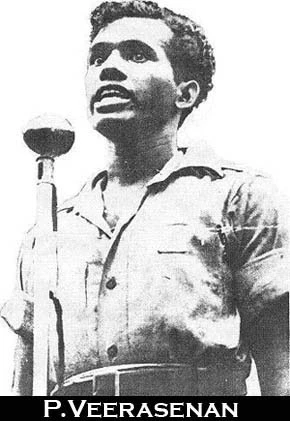
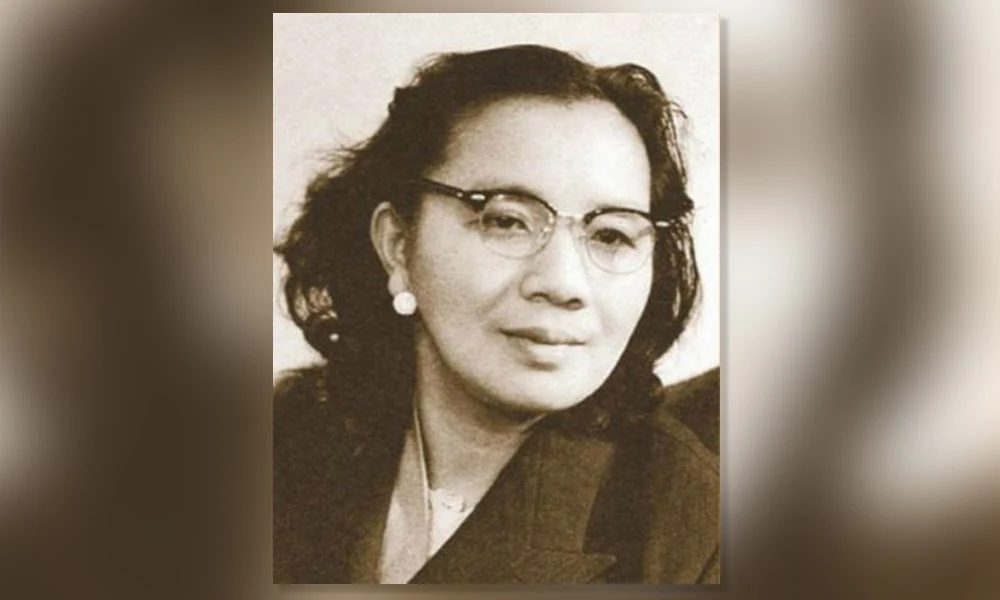
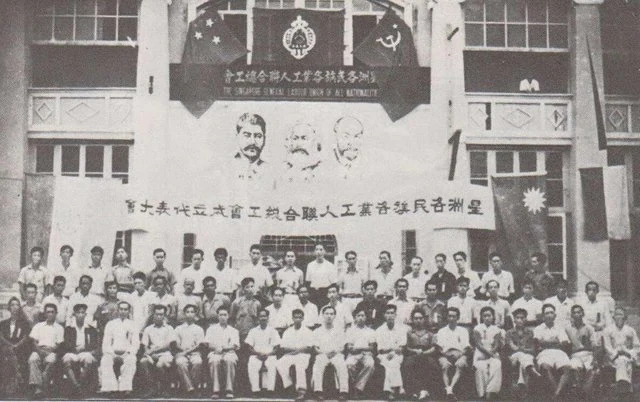
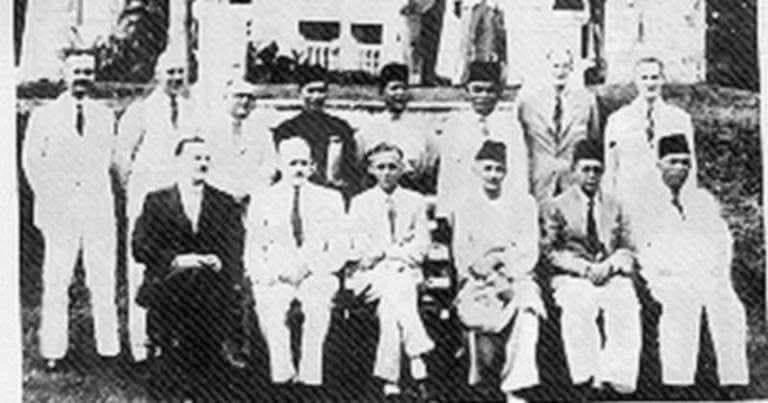
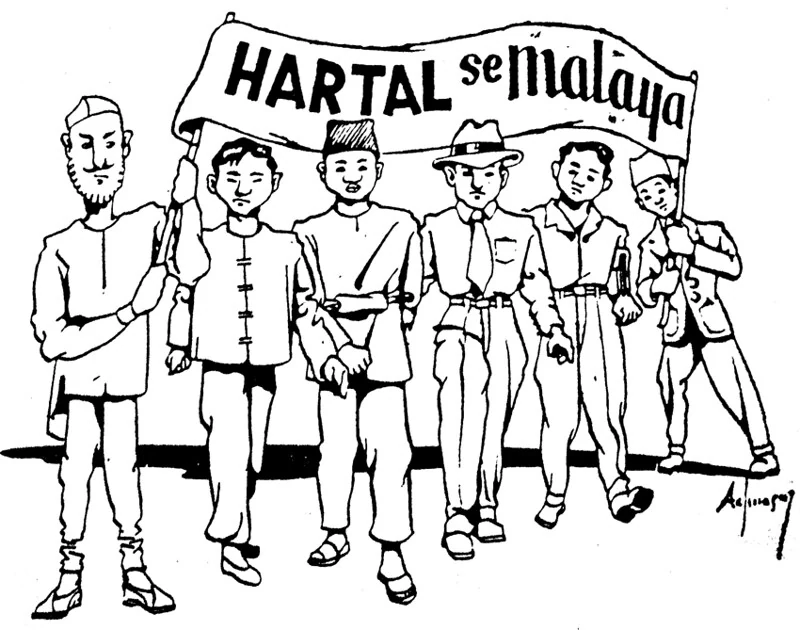

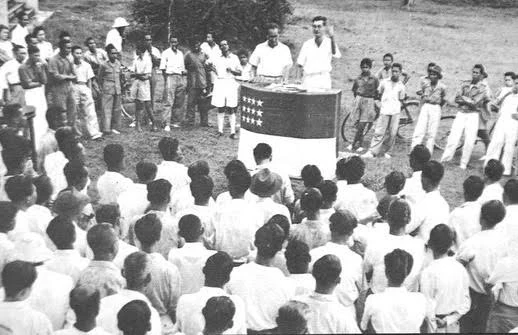
Read critically
A struggle. Different accounts.
Contemporary newspapers described closed shops, interrupted transport and idle docks. The colonial parliamentary response later downplayed the action’s enthusiasm and Malay participation. These accounts reflect different interests and should be compared, rather than reduced to a single unsupported percentage.
The main essay presents Sosialis Alternatif’s class analysis. The chronology and archive captions help distinguish dates, documents and political interpretation.
Archive images: Hartal 2026 collection. Existing embedded names and watermarks are retained. Some collection dates are approximate; the captions state the available identification.
Sources & further reading
Follow the evidence
- The Straits Times · 15 October 1947, p. 6 ↗
- The Straits Times · 16 October 1947, p. 7 ↗
- The Singapore Free Press · 20 October 1947 ↗
- Morning Tribune · 21 October 1947 ↗
- House of Commons · 19 November 1947 ↗
- PUTERA–AMCJA conference resolution · 3 November 1947 ↗
- The People’s Constitutional Proposals for Malaya · 1947 ↗
- MCA · official history (established 1949) ↗
The wider history
Hartal was part of a longer struggle.
Explore 25 events in Malayan labour history, from 1910 to 1948.
Keep this history in circulation. Share the page, read the sources, continue the discussion.