

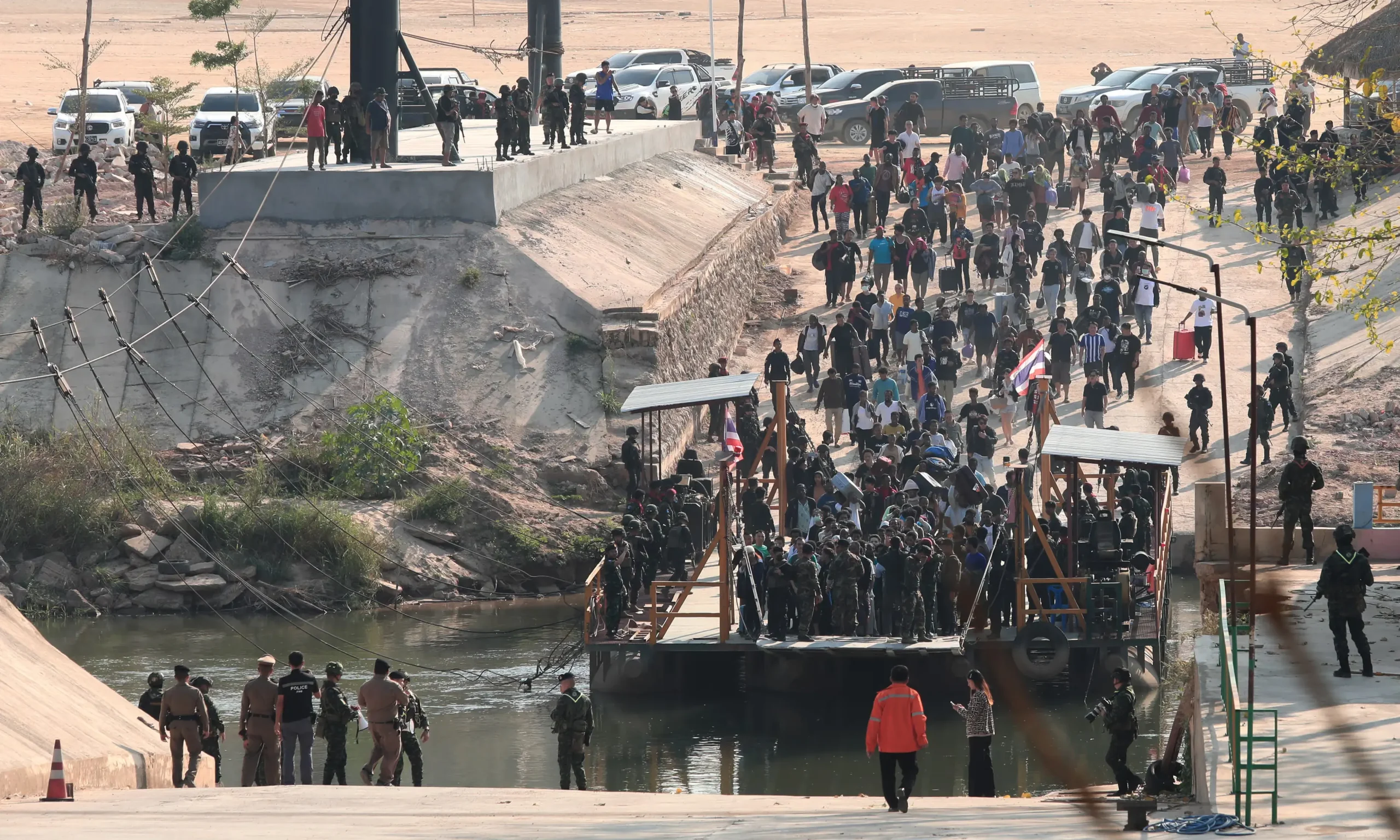
Driven by a promise to take his little brother on a coming-of-age trip to Saigon, 19-year-old Khoa, unemployed in rural Vietnam, was about to earn his first paycheck selling chemicals to a Cambodian buyer. It was to be a simple exchange at the border town of Tây Ninh.
There in broad daylight he was told to hop onto a car that would bring him across the border to the buyer, whom he had never met. It did not take long before things got fishy. “But just as I jumped out”, he recalls in an interview with vlogger Andrew Fraser, “there were two big guys in the bushes. They pushed me back into the car again, and hit me six times, until I vomited blood. They told me to sit still, and took away my phone and purse.”
It turned out he was not the only captive. Of the other two seated at the back, one was 16 years of age who, besides his own name, could neither read nor write. “He could not use a laptop, so he started getting beaten,” Khoa explains. “After that they lifted his shirt, and sprayed alcohol on his belly. That was preparation for organ removal.” Throughout the rest of the trip he could do no more than shut his mouth and all sense of reality.
Barbarism in “scam factories”
Before long Khoa found himself chauffeured into a massive walled “compound”, also known as “Chinatown”, nestled in the former backpackers’ seaside paradise Sihanoukville. There he was “interviewed” and “employed” on a one-year “contract”. So long he did exactly as told, or as he says, “improvise as I go”, they promised to let him go. It was unless his family happened to have thousands of dollars lying around to cash him out. Like others trafficked or otherwise lured to the compound on the promise of a well-paid job, that was simply not an option.
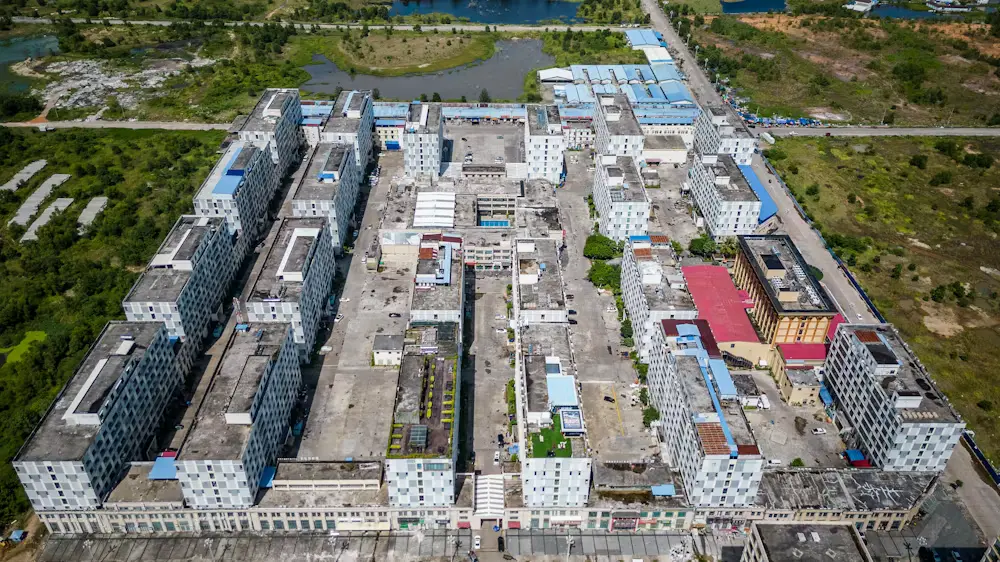
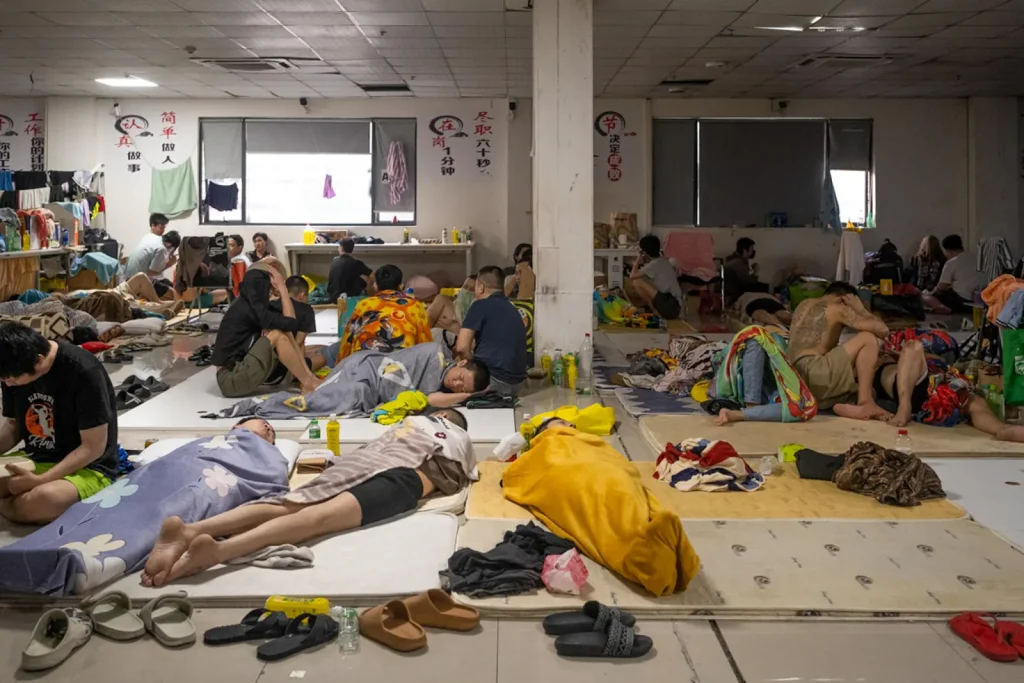
Khoa was quickly assigned to his cubicle, one among floors of them filling an entire office block, where he and his fellow prisoners were worked daily into scamming vulnerable, gullible social media users the world over in so-called “pig-butchering” romance frauds.
“Hiding in plain sight”, the compound is its own society, isolated from the outside world that is civil Cambodia. No other link is to be had than allowed by the lord between both sides of his barbed-wired walls — staples for the inmates, fresh interns. The lord’s police enforces his laws, surveilling the streets all day and night. Everywhere is everything as compact as can be; narrow, trash-infested roads and alleys are to each side lined with ground-level shops, salons, gyms, pubs, gambling dens, brothels, serviced by a subclass of marginally “freer” laborers.
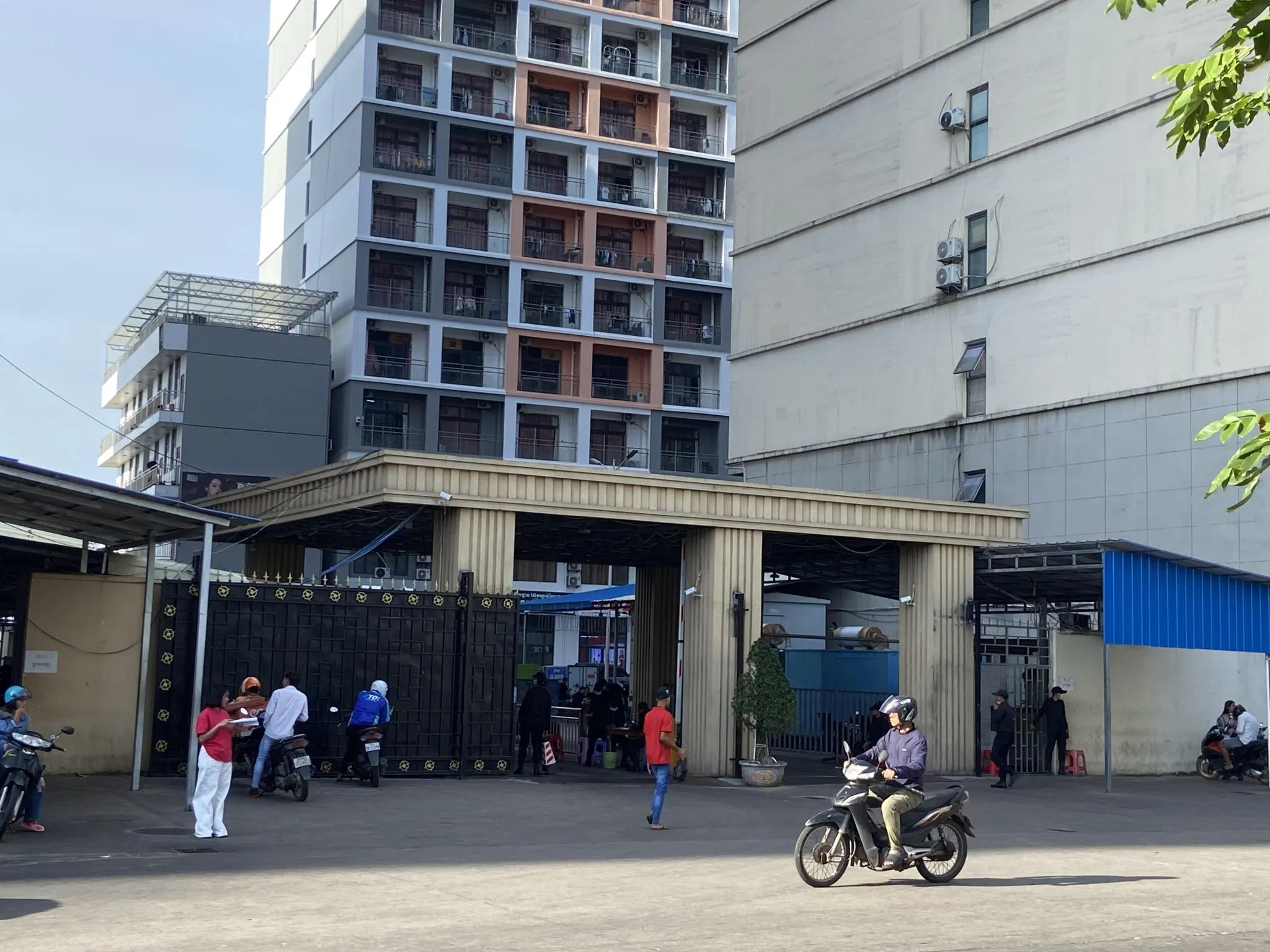
Dense blocks of flats, some up to twenty floors, loom over everything below. These squalid units are fit most economically with cramped bunk rooms at times housing over a dozen. Most balconies, if any, besides having barely enough space to dry one’s laundry, also come equipped with cages to mitigate suicide, which is by no means infrequent. The only uncaged balcony is that of a couple odd luxury towers “uptown” in and around the lord’s manor.
Each compound runs its own economy. What little “pay” the “scammers” get, minus all sorts of fines and tithes, cannot be termed “wages”, nor are forced laborers “wage laborers”. As chattels, their labor power is expropriated outside all formal wage relations. Even the “freer” ones, as Fraser notes, get fleeced by such arbitrary inflation “a cheap street meal that would cost $2 outside becomes $10 on the inside”. A can of Coca-Cola, $0.50 outside, costs some $3 inside. For those tight on money, they offer “wage advances” with sky-high interests. The widespread use of cryptocurrency has but cemented the master’s hold on his slaves.
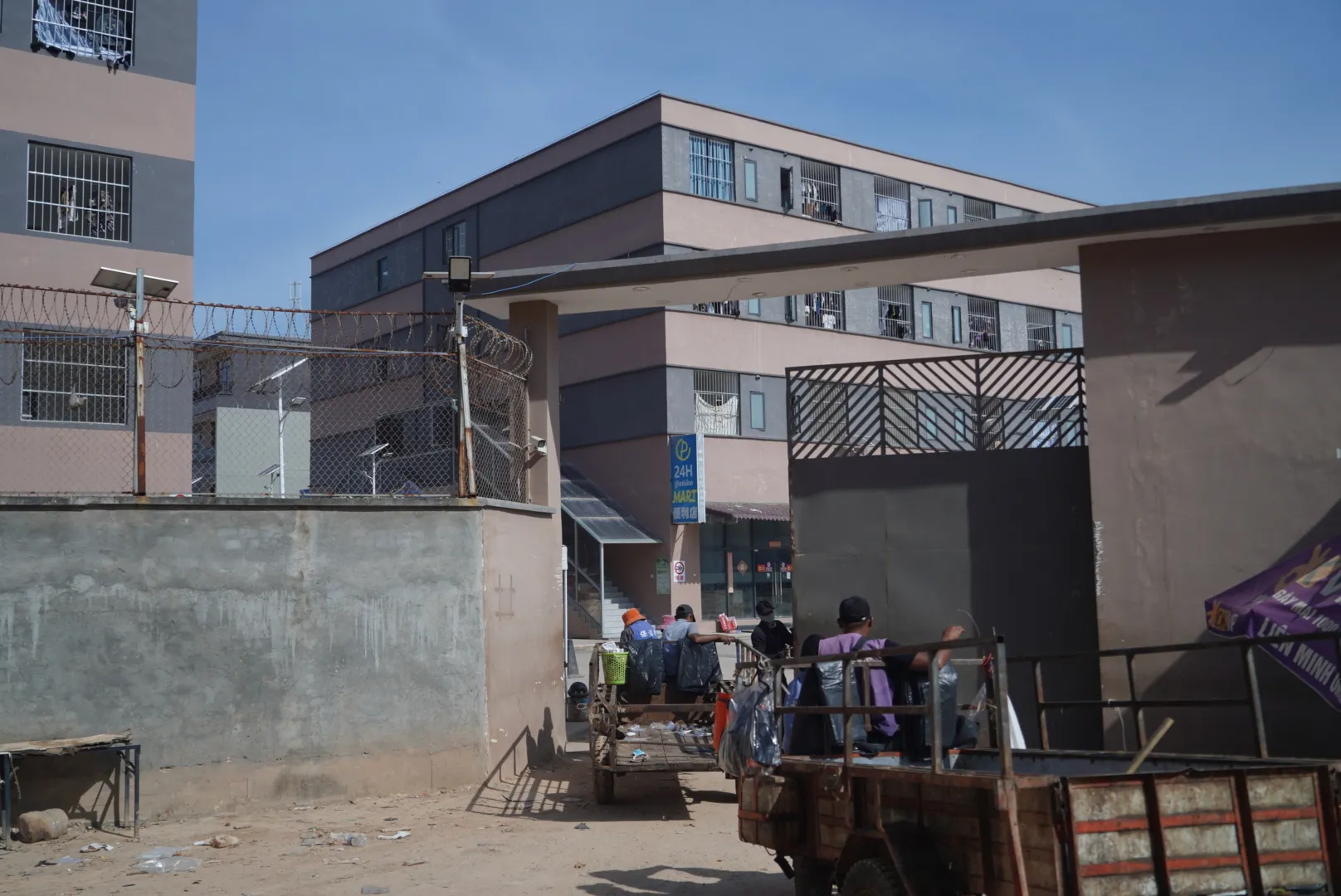
The job is brutal to say the least. Hours go as long as 18 a day. More often than not the sky is dark when the workers are marched in and out of their “office buildings” where they spend most of their days coerced into harvesting profits from the darkest corners of social media — profits of which they will come to own none. Every dollar coming out of these scams, once the “scammer’s” bare subsistence is met, goes immediately to the lord’s accountants and, as when laundered and legalized, sits tight in his coffers in some secluded tax haven thousands of miles away, as well as those of his directors and investors flying kite anywhere but in these scam factories where their superyachts and summer mansions are financed.
Disobedience is treated in the harshest manner, not least attempts to escape, as with the case of Khoa. “In a place like this, built like a fortress,” says Fraser, “escape is almost a death wish. You try to escape, you’re punished, tortured, starved, and then if you’re lucky, sold off to another compound. If you’re unlucky, they’ll just torture you to death.”
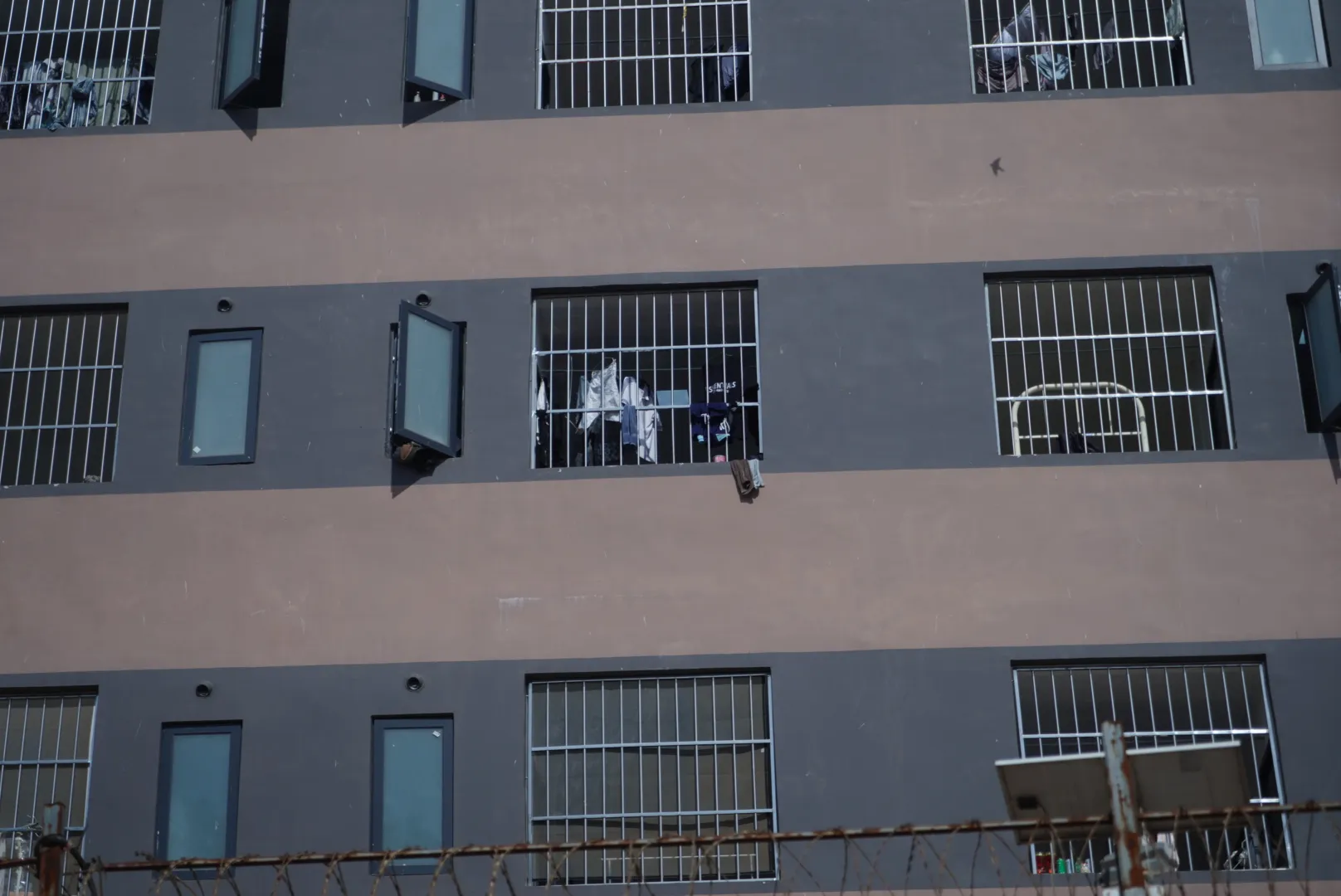
Khoa was among the luckier few. The first time he made a run for it, he got off with just physical injuries from being dragged down stairs and on rough ground, treated with footages of previous escapees being tortured plus a visceral reminder of how both his hands would be cut off if he ever tried running again, forced to kneel 17 hours straight with his hands cuffed behind and occasionally electrocuted, and finally left starving in a cell over the next three days. After all, he proved more competent than the average “scammer” that “they beat him just enough to scare him, but not to break him”. For the overwhelming majority of other inmates, the punishments were much more severe, if not deadly.
An example was Yui, another Vietnamese survivor, who had been kidnapped when looking for a bus assistant job. He was left soaked up to his chest in a barrel of water for seven days, one hand cuffed overhead where for three times a day the Chinese guards would tase him through the water such that, he tells Fraser, “it felt like someone was stabbing me with a knife”. Still he was lucky to have survived such horror at all. For many others, as he himself witnessed, “after shooting them they put them in a bag and then dump them out on the street”. He merely got sold off to another compound in a remote little town called O’Smach right on the Thai border, where he was to be enslaved for 11 more months. During these he would often ignore the draconian “KPIs” imposed on the “scammers” and get punished regularly, for instance forced to lie half-naked along dozens of other “underperformers” on the bare street baked under the hot sun for hours.
We only ever get to report these harrowing accounts because victims like Yui and Khoa survived death itself in the first place to shed light on this reign of terror. Painfully rare survivals like these did not come without the exclusive combination of constant pressures from families and communities, extraordinary help from activists with police and military connections, and hefty ransoms. For Yui “freedom” cost $3,000 and close to a year of his life.
As for Khoa, it cost a fortnight, but $10,000, and what Fraser calls “a single ridiculous stroke of luck”. While legit Vietnamese cops patiently stood by outside the security office to receive him, his Chinese overseer had him cuffed and kneel before three dozen other “scammers” somehow donning Vietnamese police uniforms. For one last time the thug was to wield the late imperial China’s adage of “killing the chicken to scare the monkey”, only that his taser ran out of battery. Khoa was let go save for all of his belongings: passport, phone, glasses. No sooner had he gotten out than the actual Vietnamese police left him to his own devices as he figured about smuggling himself across hills and jungles back into “socialist” Vietnam.

Were these not horror enough, the wantonly barbaric abuse of female victims is a pill harder still to swallow. Is it any wonder that suicide remains disproportionately prevalent among women? Many are underaged. Many are poached from war-torn areas as in Myanmar where vast pools of vulnerable labor are ripe for the thug’s picking. Many are sold off to brothels on charges of defiance and “underperformance”. And too many damning accounts of rape are there for such tragedies to be sidelined as mere glitches of a system to be blamed on a few bad apples, where in fact one bad apple is all it needs before the entire orchard runs foul.
Whack-a-mole
Scam slavery has fetched explosive revenues for Chinese mafias and their associates, no less since the pandemic. The filth in Cambodia alone reckons $20 billion every year, nearly half the nation’s GDP. “By late 2024,” reported The Guardian, “cyber scamming operations in Mekong countries were generating an estimated $44 billion a year, equivalent to about 40% of the combined formal economy. That figure is considered conservative, and on the rise.” The Interpol laments that cyber scam rings have festered into “a global multitrillion-dollar network”, “at a scale unimaginable a decade ago”. It has not on the other hand supplemented their customary dealings as in narcotics, arms, prostitution; that much is clear with Beijing’s unwinnable war against online casinos. If anything it has diversified profit streams for major criminal syndicates in the region bearing the unmistakable imprint of Chinese capital.
Traffickers overwhelmingly draw from the most precarious in the region, disproportionately young, unemployed or underemployed, not least rural and migrant populations intersecting in the lawless Golden Triangle. Many come from agrarian households hollowed out by land dispossession, debt, environmental shocks, and the failing gig economy. Most are 16–35, from Myanmar, Laos, Thailand, Vietnam, and increasingly China itself — plus smaller yet growing numbers from all over the neocolonial world: Indonesia, the Philippines, Malaysia, Bangladesh, India, Pakistan, all the way to Central Asia, Africa, even Latin America.
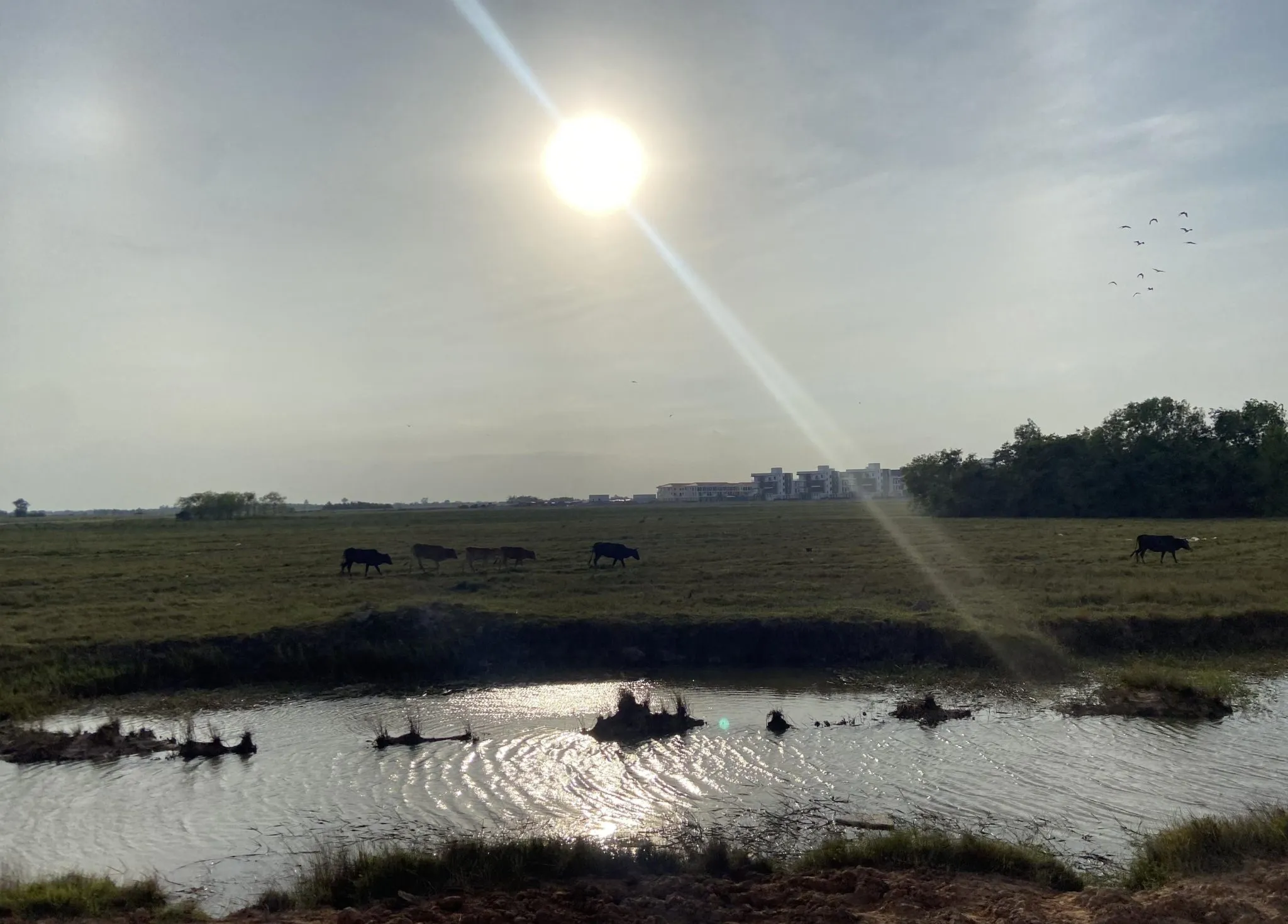
Educational levels among victims are generally low, though such sophisticated scams as the pig-butchering romance con could never be pulled off without a reasonable level of literacy and digital proficiency (what with the use of AI and deepfake technology). The UN observes many are “well-educated, sometimes coming from professional jobs or with graduate or even postgraduate degrees, computer-literate and multilingual”. Yet it remains that they occupy the bottom of regional labor hierarchies — cheap, politically invisible, always on the move — a reserve army of labor whose desperation attracts sham ads promising digital marketing, IT, translation, or crypto work. That said, the law has become so lax these days that job-baiting is quickly being overtaken by outright kidnapping.
ASEAN reacts as unevenly as one might expect. Thailand for instance has far less, though never zero, tolerance for the Triads’ disruptive rackets than the ruling junta of Myanmar. The ongoing Thai-Cambodia “border clash” has seen the former not only breaking multiple ceasefires, but also turning its gun to scam compounds; as of January 22, at least six of these have been attacked by Thai airstrikes. For over $17b, or 3.4% of its GDP, was lost to scams, all just in 2024. More crucially, that it serves as a primary waypoint for traffickers has put to danger one of its most vital economic sectors, tourism. Seconding this high-stake anti-crime stance has no doubt been the Malaysian government whose ASEAN 2025 chairmanship came under the shadow of Trump’s now-defunct Kuala Lumpur Peace Accord.
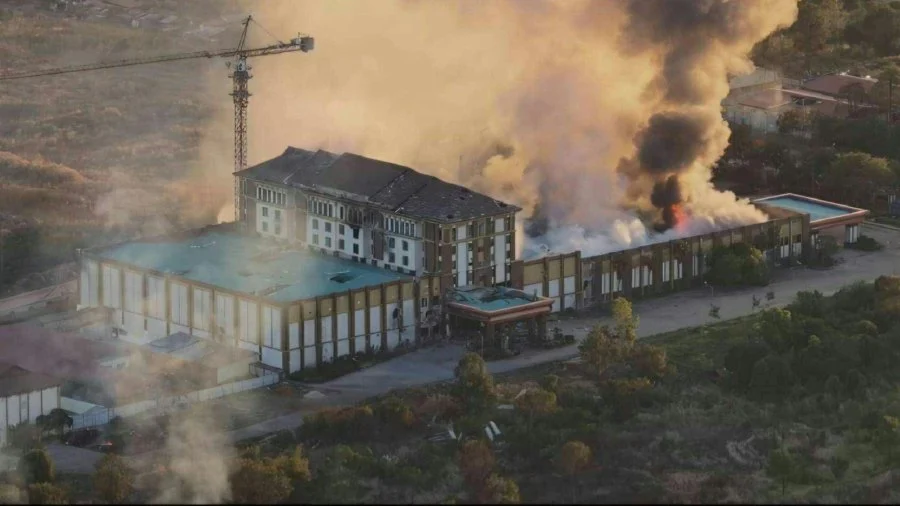
The relatively wealthier neocolonial states are simply vying for the top imperial vassal’s role of curbing transnational criminal “spillover” — with a mallet, whacking the gangster capitalists to preserve their own economic dominance as top compradors in the region, by clearing the road for legal capitalism: FDIs, logistics corridors, infrastructure loans, none of which can coexist with scam fiefdoms operated by Chinese mafias with private guns. Malaysian deputy PM spoke earlier last year of the dire need for the “non-interference” and “non-aligned” bloc (in principle anyway) to establish an “Interpol-style ASEAN Cybercrime Task Force”, though facts on the ground increasingly nullify such a prospect. The Interpol relies on police resources from China, Vietnam, South Korea, “cooperating” for instance with Cambodian law enforcement (and army at times) on nonetheless piecemeal, sporadic, if not selective raids that simply allow scam capital to quietly reconstitute elsewhere.
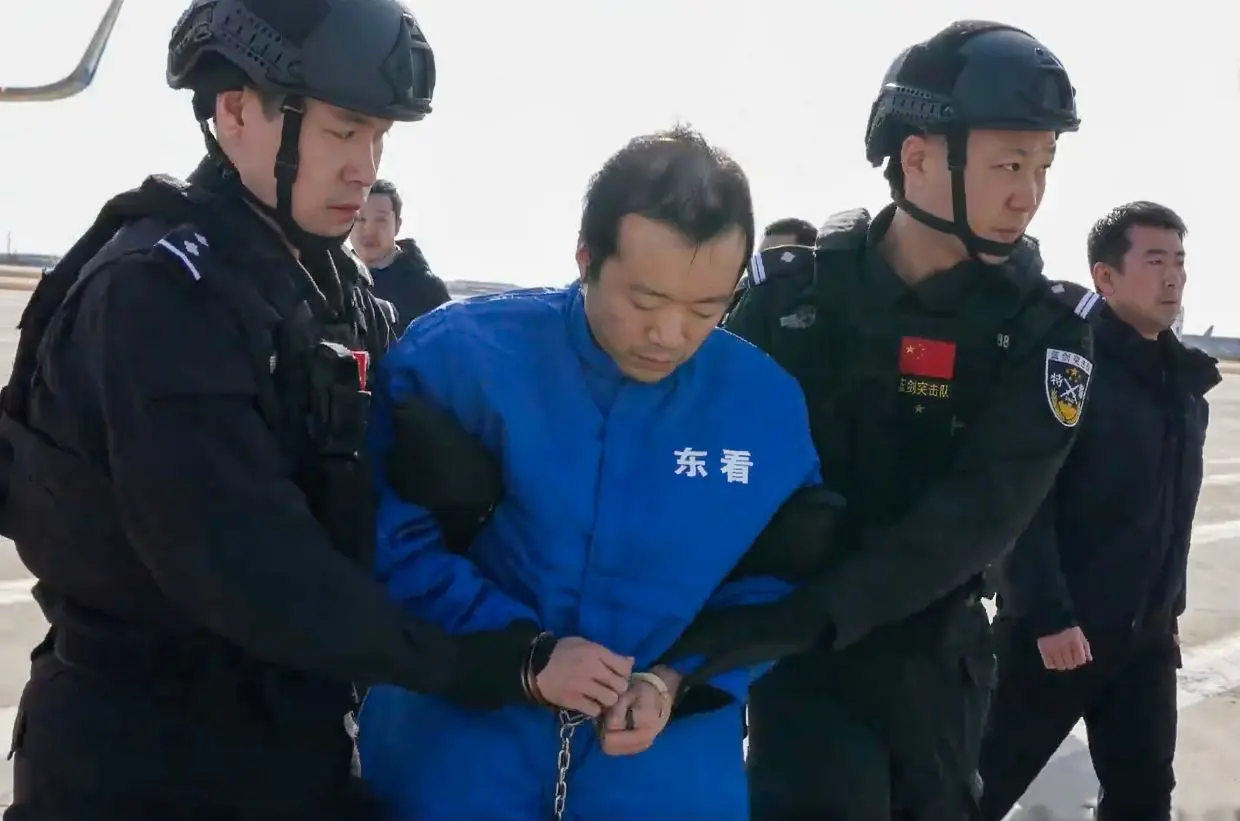
Last October, not long after scam markets dried up across China and the Asian Tigers, then venting rapidly into the West, both US and UK governments were pressured into slapping Prince Holding Group, one of the biggest players in SEA, with a sanction that saw $15b in cryptos plus a multitude of offshore assets seized, and its kingpin Chen Zhi indicted. In January, this Neak Oknha (nobleman), by then also personal adviser to PM Hun Manet and father-predecessor Hun Sen, got nabbed, his Cambodian citizenship revoked, and extradited to Beijing where he has so far denied any wrongdoing. Prosecutions such as this and also the subsequent arrest of Cambodian tycoon Kuong Li come few and far between, only as things spiral out of control and become all too overt. At any rate a key director of the financial giant Huione Group, “privately” owned on paper, is none other than Hun To, a cousin of Hun Manet. For years it has laundered scam cryptos in the billions, only to have gotten so blatant that authorities now struggle to put ever bigger lids on it. In passing we must also bring up Senator Ly Yong Phat, the owner of O’Smach, freshly shelled by the Thai army. Meanwhile competition between the myriad of triads is such that when one goes down, others move in the burrow and the sands simply shift. Among others the Macau-based Hongmen triads (of which the 14K remains the most notorious faction) now stand to profit from Prince’s loss.
But this colossal capital, now legal, the neocolonial state cannot force a weak productive base to absorb, any more than it can wrench its meek financial institutions into investing. Either way risks capital flight, credit bubbles, currency destabilization. Thus like Cambodia, the Lao state has little choice but to preoccupy itself with debt engineering, peddling — principally to China — bonds, state-backed liabilities of all sorts, ever larger claims on the national surplus where none yet exists. Of late, public debt has regularly exceeded 100% of GDP. The bill falls squarely on the workers and peasants, many of whom are now enticed by better-paying gigs in the Golden Triangle SEZ where criminal proceeds may have surpassed $10b per annum.
Worse still is in the pariah State Administration Council of Myanmar where war and crime are explicitly wedded. Estimates of scam revenues go as high as $67b per year. To date, the UN counts 120,000 enslaved across the nation. In late 2025 large-scale crackdowns ensued, sucking in all in the vicinity: the SAC junta, its militias or so-called “Border Guard Forces”, anti-junta ethnic rebels, the Interpol, the Thai army, and above all Beijing bureaucrats deeply vexed with unabashed criminal chaos along one of BRI’s most vital corridors. Cashing in on the anarchy, the junta wielded its allied militias to embed felony across frontiers, masking its existential dependence on it. According to Evidencity, “KK Park, Taichang, and Dongmei have expanded rapidly since the coup, adding docks and informal crossings to Thailand. After Thailand cut grid links, compounds smuggled satellite internet (notably Starlink kits) and diesel to stay online.”
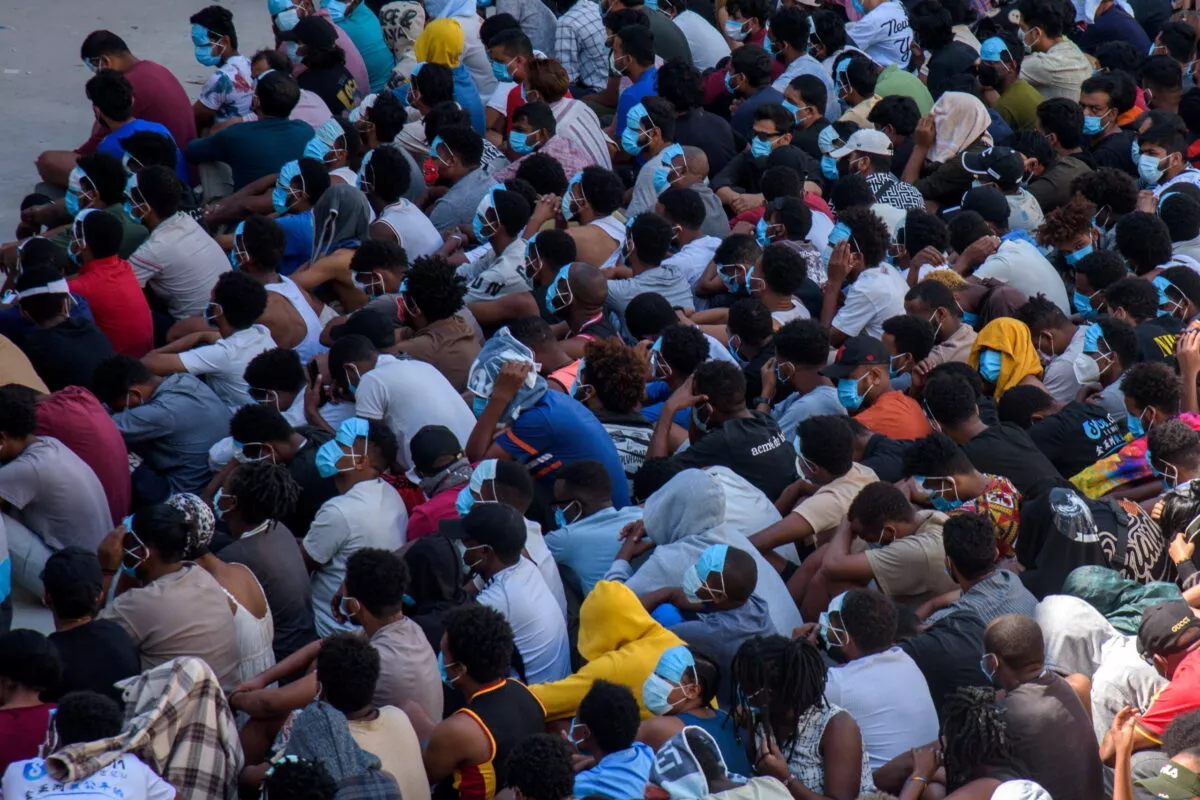
Come showtime, raids as of KK Park in Myawaddy, Karen (bordering Thailand), are as Al-Jazeera noted: “choreographed to vent pressure from Beijing without badly denting profits that enrich the military government’s militia allies”. In all this the rebels struggle to make use of what few compounds they have wrested from the junta’s criminal affiliates. Having “seized” Shunda Park, the Karen National Union (KNU) found itself saddled with thousands of trafficked workers it had “liberated” but had no capacity whatsoever to feed, house, let alone hire. Instead it has had to rely on Thai armed forces to “clean up” compounds, turning them into detention slums and limbos. Adding salt to injury, the Thai state is not without its own endemic corruption. Military, police, immigration officers receive bribes all year round for personally delivering repatriated victims from scam compounds right into the hands of traffickers. Where the blight spreads too far, they chop off a couple heads in Bangkok, like that of one hapless deputy finance minister last October.
The national question, a product of the British Empire’s utter disregard for Myanmar’s historical diversity and overdue feuds, is coming to a head. The neocolonial nation-state was founded upon the expropriation and lumping up of over 100 ethnic groups into an impossible unity project, now ossified under military tyranny — i.e., under the organized arm of imperial capital — and that, too, of gangster capital. The junta’s deepening violation of the right to self-determination as war rages on, annihilating what is left of the legal economy, while allowing mafias and empires alike to keep preying on the most oppressed to the effect that all manner of crimes against humanity now finance its continued weaponizing of the national question, has reduced all notions of sovereignty and statehood to pieces.
On the flip side, the liberal democracy experiment failed by Aung San Suu Kyi’s NLD to all intents and purposes ignored all national liberation demands. Having emboldened the SAC, which has scored landslide victories in the latest “elections”, Myanmar’s “Iron Lady” to this very day denies the genocide of the Rohingya people. All unifying interests of the capitalist nation-state go against those of every struggle for national independence, progressive or not. Nowadays the “progressive” National Unity Government-in-exile for the most part labors to unite a “People Defense Force” with more than ever spinoffs fighting shoulder to shoulder with the other motley of ethnic armed organizations (EAOs), just about as passionately as the latter desire to share a post-junta nation with one another.
Most worrying is the absence of organized and much less independent labor, hunted to near extinction since the coup. Still, what is left of the Confederation of Trade Unions Myanmar leadership calls on “the international labor movement and democratic allies to help monitor violators, help enforce sanctions” — thus inviting more gangsters yet into Naypyidaw — “and apply legal actions to ensure the immediate cessation to all forms of” — largely criminal — “support to the junta”. But by “legal actions”, the union leaders mean “the direct enforcement of existing sanctions regimes under the US, UK, and international law, including the NUG blacklist of companies that collaborate with the junta”. Put bluntly, the bureaucrats are asking “democratic allies” among Western imperialists to lead the “global labor movement”, whose ILO-stipulated duty it is “to encourage collective [i.e., cross-class] measures”.
With no genuine alternative, the national question rests rancid in the pockets of warlords and thugs. The United Wa State Army remains one of Asia’s largest producers of heroin and meth, now quietly of cyber scams too. Runner-ups include the Shan State Army and Kachin Independence Army. To the west, the entire state of Rakhine today comes under the Arakan Army’s rule, barring major cities as in the capital Sittwe and port city Kyaukpyu where BRI projects are at stake. Yet the AA’s “way of Rakhita” has been no less genocidal than the junta’s. It had long abducted Rohingya refugees to smuggle narcotics from “allied” EAOs into Bangladesh and India. Now the junta has such little border control and both sides of the war face such shortages that militias and scammers increasingly recruit beyond the border in places like Manipur, where the BJP is dealing with its own intensifying national question. It was in this void, too, that ASEAN received its newest applicant on January 7, dubbed the Kawthoolei Republic, as yet existing only in the heads of former military elites of the KNU’s armed wing. They wax lyrical about a new order “based on a free market economy, free from monopolies and open to economic cooperation with the world”. The “federalist” KNU denounced this as reactionary delusion, rightfully so. The SAC has not said a word, for there is not much to say.
While Myanmar gets Balkanized, imperial verdicts arrive as late as the death row granted to crooks of the Ming and Bai family mafias. For years their compounds, casinos, and red-light districts flew the BRI flag across the border region of Kokang (in Shan), while Beijing looked the other way. Not until 2023 did the CCP get all tough with one fist on its own foreign protection rackets, and with the other on corrupt SOEs and rogue “communists”. Apart from having robbed its own citizens of billions of dollars, they above all inconvenienced its PR bureau with the blockbuster No More Bets, as yet banned in Myanmar and Cambodia.
With all the combined firepower of ASEAN in the fight against “cybercrime, terrorism, and transnational crimes”, now reinforced with the conditional moral support of Western liberals and more so of “market socialists” in China, only a tiny fraction of the enslaved have been rescued. The US Institute of Peace estimated well over 220,000 to 300,000 victims between mid-2022 and mid-2024. Since then they have been joined by at least another 100,000, bringing the latest sum close to half a million. Of these, repatriations have come to about 20,000, under 5%. And of this extreme minority, the majority rejoin civil society only to be criminalized, if not prosecuted, all while the real scammers and profiteers remain at large.
Meanwhile ASEAN is holding grander talks in the Philippines this year touting still grander strategies to rein in this criminal rot. Having just jailed a mayor for life, Manila is clearly not without its own multibillion-dollar scam problem, disguised as “offshore gaming operators”. Last October, President Marcos declared a total ban on these POGOs just as it dawned on his secretary of finance Ralph Recto that “the costs of keeping them outweigh the benefits”.
The Singaporean state could agree no more. In 2023 alone, its citizens lost about $500m to scams. Its state-of-the-art fintech ecosystem has bred such adept laundromats as the Fujian Gang that sanitized over $2b for compounds in Cambodia. A partner of Chen Zhi oversaw multiple firms all sharing a single address in the lion city. Blockchain firm Fincy was caught smurfing for Myanmar’s Shew Kokko. To insure against all these costs now outweighing the benefits of being ASEAN’s top inter-imperialist hinge, today also its counterterrorism chief, the PAP regime continues to outspend all its neighbors on national defense ($15b in 2024).
But even piecemeal and selective clampdowns eventually exert enough pressure to shove gangster capital into scrambling for cracks in the region. Already syndicates are shifting operations for instance into Malaysia, no surprise given the nation’s own fast-growing “precariat”, compounded only by its capitalists’ addiction to migrant labor — propped up by corruption — so as to keep wages to a bare minimum, and profits to an absurd maximum. More than anywhere in the region, meanwhile, racism as explicitly wedded to the country’s legal and business lives pushes migrants and refugees ever further into the margins.
Where advanced capitalist methods meet archaic, predatory, social and political economies, comes fertile ground for a corrupt system optimized for elite enrichment and dynastic patronage rather than social development. In this era this defining feature of the neocolonial state comes at increasingly fatal costs borne by the most destitute and least protected.
Criminal excess in the imperialist crossfire
In Davos this January, in an exceedingly untenable defense of China’s record $1.2 trillion trade surplus in 2025, Vice Premier He Lifeng assured an unnerved World Economic Forum that “China never deliberately pursued a trade surplus and is willing to be ‘the world’s market’”, vowing to import more. The CCP certainly never did deliberate any of this and is no doubt more than willing to pry its “private” bourgeoisie open more at a time when profit rates flatten if not fall across both its domestic and global markets.
This gargantuan surplus, the “communist” one-party state bureaucracy logged not in spite but because of Trump’s tariffs and more widely the renewed trade and finance war, inasmuch as these catalyze the decay of “market socialism” already playing out in the late 2010s after years of post-2008 “recovery” (not without ¥4 trillion in state bailout) had brought with it stagnant wages and massive debts. In this the “rise of the East and fall of the West” rhetoric once flaunted alongside Xi Jinping’s political debut lost its steam. The pandemic played just as catalytic a role in this historic unraveling. Trump set out as the Bonapartist strongman that the US ruling class depends on in its ongoing crusade against the CCP who had leveraged its authoritarian might over the Chinese working class by resuming national production much earlier than any of the Western democracies could.
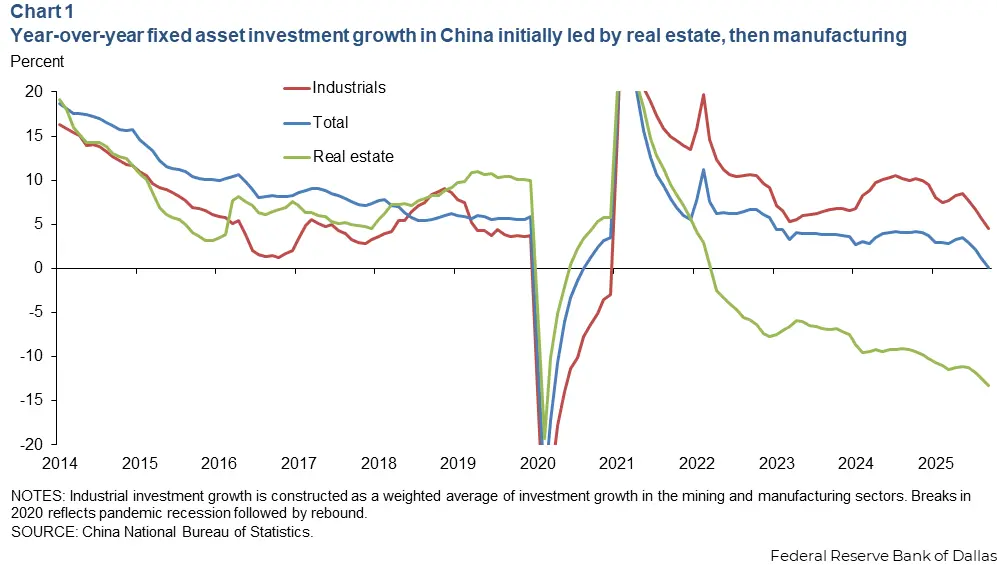
Already by 2019, overproduction and underconsumption had surpassed pre-2008 levels in China. “Zero-Covid” and the “advantage of uninterrupted production” pulled far less capital back home than was pushed abroad. The CCP whipped the “involuting” big bourgeois into dumping their excess anywhere they could, extracting as much back into its coffers. Of this it rendered far less into wages than vouchers and subsidies. Today it has bitten off more than it could chew, so cheapened labor that markets are now glutted with what cannot much more be exported than can be afforded locally. While China-made EVs are everywhere “cheaper than ever”, most workers can never seem to get their hands around a dignified job and a decent home. So burned out are the youth by the “996” culture, even internet euphemisms are taking on a much darker tone, with many now identifying as “leek” or “human mine”.
“Socialism with Chinese characteristics” readily disposes even of its own excessive workforce whose misery it wants not an iota to do with. Of all that gluts the national market has always been its ever frugal working class. Report after report tells of Chinese imperial enclaves contracting Chinese laborers from nickel mines in Sulawesi to EV plant sites in Bahia. In all these places we find workers from the second richest nation toiling (though, as liberal media emphasize, in mildly better conditions) alongside some of the poorest workers in the “Global South”, where more than ever Chinese workers are now also slaving away in scam factories.
The CCP’s record success in exporting away its crisis last year came just as China’s GDP growth plunged below the 5% mark for the first time — since its “factory of the world” days of clocking double-digit growths. The bureaucracy now grapples with having missed the full year’s official “around 5%” target it lauded all these years, publicizing its impotence at every step under continuous deflationary pressures and in the midst of what is now a permanent real estate slump, what with household debt exceeding 60% of GDP.
While the mass of surplus grows and increasingly gets realized in foreign markets, an ever larger share of it, if not hoarded, gets driven into tech expansion, further stifling profit rates, value creation, not least wage growth. The race toward AI supremacy amid US protectionism has severely undercut the CCP’s dual command of accumulation and “redistribution”. Today, progress on this front gets further stalled as Western Big Tech has become much more antagonistic toward Chinese AI, no thanks to the CCP’s latest bout of warmongering fits. In Davos, Google’s DeepMind CEO reassured the American side that “Chinese AI companies remain approximately six months behind leading Western laboratories in terms of frontier AI technology”, which “they have yet to show they can innovate beyond”.
All this as US imperialism leverages the continued dominance of the dollar and its worldly credit institutions. The Fed continues to bolster high rates (however relaxed at times to tame inflation) in Trump’s protracted financial war against China. This has put immense pressure on the yuan, tied still to a basket of currencies dominated by USD, as are most of China’s foreign reserves and assets. Today the People’s Bank of China gets flung against all campist illusions of “dedollarization” into an indefinite balancing act of “selective monetary easing”. Deflation continues to push rates down as well as Chinese capital into dollar-denominated markets, forcing the PBoC to shadow US rates however manageable. Today this mystical act takes the form of ever more aggressive credit expansion, all while BRI projects repeatedly run into defaults in neocolonial state banks. Hence may be deduced the conditions under which neocolonial austerity mutates to such extreme ends as crypto pig-butchering slavery.
The US–Iran war that broke out late February has only sharpened this same contradiction on a world scale. The Strait of Hormuz crisis has disrupted energy flows, while raising shipping and insurance risks. At the same time, Reuters reported in early June that Iranian exports had collapsed to their lowest level in at least six years, followed by a sharp fall in China’s purchases of Iranian crude. Moreover, the boundary between legal and illegal circuits of capital has gotten even blurrier, giving way to increased “darkshipping” through evasion networks and other “grey zone” mechanisms long associated with sanctioned states and illicit trade.
It seems counterintuitive that China’s export sector has thus far proved remarkably resilient. But much of this increased demand — for AI-related goods and semiconductors among other manufactured exports — has been due to increased frontloading, as importers accelerate purchases in anticipation of further disruptions to trade routes, energy prices, and geopolitical stability. Granted the glut of goods, especially industrial goods, there has been no sustained inflation on either factory-gate or retail prices. Producer prices remain under downward pressure as firms compete to offload excess capacity in already saturated markets, whereas consumer prices continue to reflect weak underlying demand and constrained purchasing power in the Chinese economy.
Far from revealing a stable anti-Western alternative, the war has revealed the fragility of every pole of imperialism. Surely the Xi-Putin bloc benefited politically — but even then only negatively and temporarily. It is true the degeneration of US imperialism gives Beijing and Moscow propaganda ammunition; as the Washington Consensus appears less as rules-based order than as piracy with aircraft carriers, Gulf states and other neocolonial regimes may hedge further toward China (while Russia benefits from every diversion of US attention from Ukraine). Economically, however, Chinese access to discounted Iranian oil continues to be squeezed. Refiners face weak demand and were forced to absorb much of the inflation, while the broader energy shock worsens the pressure on national overproduction and underconsumption. In either pole, crisis intensifies the pressure on surplus capital to seek any avenue of valorization, including criminal ones.
Where war has become a reality of global capitalism, the CCP today depends for life on its permanent preparation of war and all its nationalist justifications. Xi’s ongoing second wave of “anti-corruption” purge is not only more massive but more targeted, i.e., on brasses whose profit motives have grown irreconcilable with the Bonapartist interests of Xi and his cracking Fujian clique. The PLA’s ever-growing budget siphons still more off the national surplus. The CCP struggles to appropriate still more of a rowdier bourgeoisie (state and private alike) to keep papering away stagnant wages and middle-class dispossession, while labor militancy is clearly on the rise (but has yet to divorce the labor aristocracy).
To this day no amount of Bonapartist maneuver from the CCP has raised domestic demand in any meaningful way. The true depth of crisis facing “market socialism”, and what remains of Xi’s “common prosperity” slogan, is beyond the scope of this article. Suffice it to say here, where the material basis of “market socialism” rapidly narrows, so too does the bourgeois ideological wedge between organized arms and organized crime. Crisis gives away this indifference as much as it does the dirty businesses to which more than ever “involuting” Chinese capital must today turn, and the “market socialists” must all the more acquiesce. The more free markets seize up, the more the gangster comes across what the gentleman runs out of means to exploit.
Thus such savagery as was bizarrely survived by Khoa and Yui may bloom in the bloated underbelly of imperialism. A growing portion of Chinese capital otherwise left idle having exhausted every legal profit stream back home and abroad, in order to function as capital at all, has now to be valorized in the shackled hands of half-a-million chattels doing only the most grotesque bidding of modern-day capitalism in deep decay.
No socialism can be found in markets. In fact no sooner do markets wither than capital turns right to barbarism. Chinese gangster capital could not flourish without an already swollen reserve army of labor or so-called “precariat” across SEA. Into this army today is drafted ever younger, urban and middle layers of the masses banished to the fringes of imperialism.
International socialist path to liberation
Public outrage against scam slavery grows just as headlines come pouring into mainstream media. But this has not translated into concrete demands in the mass struggles that have lately sparked across the region. This link can only be forged under the conscious leadership of the working class, the only class with the interest to liberate the half-a-million enslaved — for no more reason than this abomination flows from the decay of global capitalism. The revolutionary overthrow of this rotting system and every other cancerous offense it wages on the world’s most exploited rests firmly on the shoulders of the international proletariat.
Liberal impotence has fed into right-wing opportunism channeled via nationalist broadsides against the masses. But broad economic and democratic demands leave little space in the popular consciousness for toxic rhetoric spouted by reactionary elites who have but proved themselves no less oblivious of actual issues than their liberal rivals. Nor does the erosion of the middle class guarantee a social base to buy into their divisive agenda — though the other side of this, the growing reserve army of labor as seen in the scam slavery boom, may lend shock troops to reaction when labor organization is weak, and bourgeois crisis acute. While we must always be on the lookout for counterrevolutionary tendencies, the fact remains neither the lumpenproletariat nor the petty-bourgeoisie constitutes a historically independent political force capable of resolving the crisis in its own interests. Where the working class retains the capacity to organize collectively and enter the political arena as an independent force, and where imperialist crisis pries open the many fault lines running beneath neocolonial states, the appeal of reactionary currents from the right and the reformist “left” takes a dive when popular demands give way to class demands.
The various national “left” reformist parties offer no solution to the scam-trafficking tragedy. To this day the Stalinist dogma of “socialism in one country” keeps their various national minimum programs free from immediate concerns of capitalist decay beyond their various national borders. Those are the responsibility of ASEAN. To pressure it into action is the according task of their “partners” in their loose network of national “socialists” united on anything but an international working-class perspective and program. To those who walk the cinders of Stalin’s “two-stage theory”, there can be no real urgency in foreign affairs.
Among them, “Keynesian” advocates of a “progressive” bourgeois “commons” offer still more “critical support” to technocrat representatives of ASEAN’s wealthiest members. They want equal corporate taxation (c.f. the EU’s “Two-Pillar”), tighter financial regulations (c.f. G7’s FATF), and joint restrictions on bilateral trade deals (lately drowning multilateral ones out). These the reformists believe shall scrape the neocolonial bloc off its “non-interference” birthmark, uniting 11 national bourgeoisies now restlessly jostling one another between US protectionism and criminal “spillovers” from China. This union they believe, too, shall see through the innumerous democratic tasks of settling scores both old and new, from the liberation of West Papua to that of half-a-million scam chattels.
The imperialist nature of this scam-trafficking monstrosity, and still wider implications in light of rising nationalism and militarism, has as much to tell us about the scope of capitalist decay in this region as it has about the international imperative of our tasks as democratic socialists. Today the winds of mass revolutionary forces are just now touching down. No less urgent is our conscious organizing and arming of these forces with an international working-class program that connects our specific objective of liberating the “scammers” to the broader question of capitalist crisis in the region, that of class and power.
The especially fatal nature of the catastrophe, however, begets the most urgent demands. We begin with the unconditional liberation of all forced laborers — open the gates! — immediate moratorium on deportation, universal safe passage, and no criminalization of victims! The state must seize all compounds, assets, infrastructure. We want these nationalized, neither destroyed nor privately “cleaned up”. We press for full public release of ownership structures, money flows, political patrons — open the books! We further demand that victims, families, at-risk communities be given full protection and fair compensation in terms of housing, jobs, healthcare, education — funded by publicly expropriated criminal assets — open the vaults!
While these immediate demands deliberately confront the bourgeois state as is, laying the ground for democratic public oversight, they confront the region’s working class on the task of ripping out the root of this crisis. The material bond between scam slavery in particular and wage slavery in general must therefore be translated with utmost clarity into class demands on wages, employment, public services, etc. The most enthusiastic support must be won over from the rank and file of labor organizations, in part to keep states liable lest liberation devolve into “counterterrorism”, in part to organize general strikes and protests to apply constant pressure. A far more pointed role can be played by workers in key sectors throughout the scam supply network: logistics (esp. where traffickers hustle); construction (where scam factories are built); vital infrastructure: energy, finance, digital (internet, social media, data centers, crypto exchanges, blockchain, AI, etc.), not to forget civil services.
It is hardly avoidable at this point that these movements should unfold on national grounds. But today every step forward in any national struggle against imperialism knocks us back one if not two steps. Even a sustained strike, say, in Cambodia, if not used as a stepping stone toward the liberation of the Myanmar people from military dictatorship, can only push more capital into the Tatmadaw’s war machine, into which even children are now being enlisted. It also pushes ASEAN into more “national security” dialogues, more militaristic border policing, more hawkist rhetoric, more scapegoating of minorities and migrants.
Regardless, imperialism’s pauperization of all but a measly few has in practice already unified the working class across borders. Where capitalist crisis generalizes, not only do popular demands give way to class demands, but national to international also. What is not unified, yet, remains the subjective factor capable of galvanizing these scattered national grievances into a single point of attack against international capital.
The bureaucrats presiding over “socialist” parties and yellow unions continue to lag behind events and suppress this subjective factor. To break this impasse requires internationalism both in theory and in practice. In theory it means national “peculiarities” are no more peculiar than contradictions of the world market, from which all national differences flow. In practice it means no socialist intervention can succeed within national borders, that is, without consciously grafting it to the global class struggle at every given opportunity.
The leadership needed to set in motion this revolutionary transition should be built from the grassroots. This may take the shape of a joint committee comprising rights activists, support groups, socialist organizations, militant unions, progressive youth bodies — democratically organized alongside victims, families, and communities. In place of state detention centers, local defense councils can place rescued victims under the direct protection of workers, not least from state criminalization. National branches should be set up not only in affected countries and in SEA but globally. Chained to the back end of the scam business — and this point bears repeating — has been an untold number trafficked from far beyond the Mekong Delta. Meanwhile victims on the front end as in the US and UK lay concrete grounds for unity in action between “Global North” and “Global South” workers. With national sections on both ends, the CWI indeed has much to offer to the building of this committee.
Rigorous discussions should be held on the key strategic question, again, of bridging specific anti-scam demands to broader anti-capitalist or anti-imperialist resistance in the hardest hit nations, and from these to the most general aspirations of the region’s masses. There is ample material for this committee to hold these discussions ahead of national struggles and prioritize international strategies in its campaigns. The general crisis of capitalism has sowed the seeds of the most universally urgent and potentially most unifying transitional demands for the working class of SEA; from the immediate abolition of SEZ legal exceptions used to shield scam compounds, casinos, and money laundromats; to a regionally enforced living wage and unconditional debt cancellation against all poles of imperialism.
Moreover, the indissoluble tie between mafia and state swiftly being defogged in the death agony of ASEAN has laid another concrete basis for class unity. It provides radically useful political material, for instance, to substantiate the joint anti-militarism campaign Sosialis Alternatif is currently building alongside allied organizations in the region. Given the gravity of the crisis, it is entirely possible for such a campaign and its ensuing program to take up anti-scam demands from the get go.
Any joint action presupposes a joint program, which presupposes a joint perspective. The CWI’s call for the building of independent mass workers’ parties in all countries continues to lay the foundation of this perspective which we campaign daily to the masses and at once wage against all reformist tendencies. The political independence of the working class, which underpins its historical quest to power, stands still as the fundamental question posed to all popular struggles against the barbaric degeneration of world capitalism.
We do not pretend independent mass workers’ parties will emerge from events alone. Even when they appeared to, as when the anti-Omnibus mass protests against Jokowi’s neoliberal rule in Indonesia lent their most radical energy to the revival of Partai Buruh, careerists in the image of Said Iqbal returned it into the safe hands of the bourgeois state now squeaking beneath the militaristic alliance between erstwhile genocidal general Prabowo and Jokowi’s crown prince Gibran, while no revolutionary force was capable of leading the working class on a clear path to independence. Without this subjective factor, no matter how deeply events leave bourgeois morals compromised, how much further class consciousness gets propelled beyond peculiarities and borders, there can be no liberation for all exploited and oppressed under capitalism, nor for the half-a-million “scammers” with nothing to lose but their chains.